

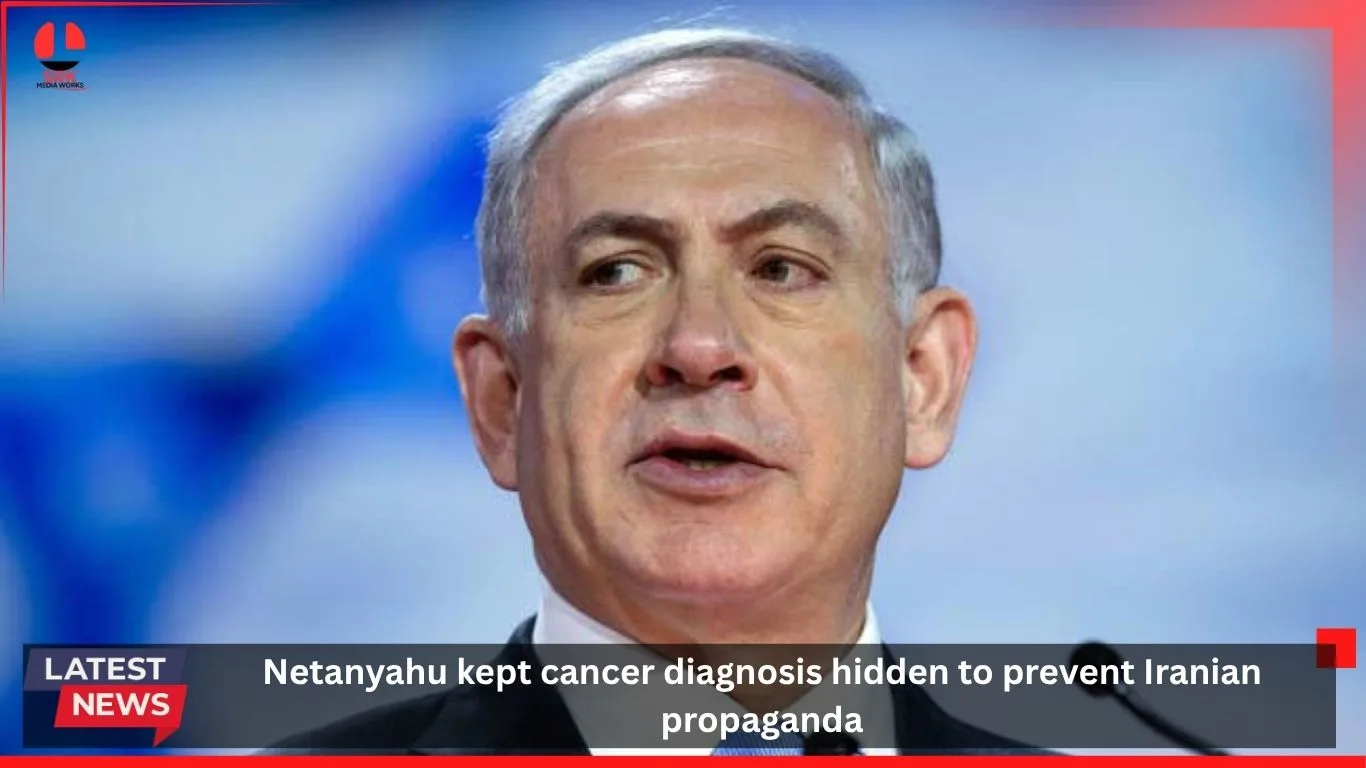
Israeli Prime Minister Benjamin Netanyahu has revealed that he kept his cancer diagnosis private to avoid giving Iran and its allies an opportunity to exploit the situation for propaganda purposes. His disclosure has sparked widespread debate about transparency in leadership, national security concerns, and the delicate balance between personal health and political responsibility.
Netanyahu’s Revelation
Netanyahu explained that his decision to conceal the diagnosis was driven by strategic considerations. He feared that public knowledge of his illness could be weaponized by Iran, which has consistently sought to undermine Israel through propaganda campaigns. By keeping the information private, Netanyahu aimed to prevent adversaries from portraying Israel as vulnerable or unstable.
He stated, “I did not want Iran to use my health as a tool against Israel. Our enemies look for any weakness, and I could not allow that.” This candid admission highlights the intersection of personal health and national security in the life of a political leader.
Political and Security Implications
The revelation raises important questions about the responsibilities of leaders to disclose personal health issues. While transparency is often expected, Netanyahu’s case underscores the unique challenges faced by leaders in conflict-prone regions.
Key Implications:
- National Security: Concealing health issues may be justified when disclosure could embolden adversaries.
- Public Trust: Citizens may feel entitled to know about their leader’s health, creating tension between transparency and security.
- Political Stability: Concealment can prevent instability but may also fuel speculation and criticism.
Reaction Across Political Spectrum
Netanyahu’s disclosure has generated mixed reactions within Israel and internationally. Supporters argue that his decision was pragmatic, prioritizing national security over personal transparency. Critics, however, contend that withholding such information undermines public trust and accountability.
Comparative Reactions
| Group/Community | Reaction to Netanyahu’s Decision | Potential Impact |
|---|---|---|
| Supporters | Praise for prioritizing national security | Reinforces image of strong leadership |
| Critics | Concern over lack of transparency | Erodes trust in political institutions |
| Security Analysts | Recognition of strategic reasoning | Highlights vulnerability in leadership |
| General Public | Mixed feelings, curiosity about timing of disclosure | Increased debate on transparency norms |
Historical Context of Leaders Concealing Illness
Netanyahu’s decision is not unprecedented. Throughout history, leaders have concealed health issues to maintain political stability. Examples include U.S. President Franklin D. Roosevelt, who hid the severity of his polio, and French President François Mitterrand, who kept his cancer diagnosis secret for years.
Such cases illustrate the tension between personal privacy, public trust, and national security. Netanyahu’s revelation adds to this historical narrative, particularly in the context of Israel’s ongoing conflict with Iran.
Impact on Israel-Iran Relations
Iran has consistently used propaganda to challenge Israel’s legitimacy and portray its leadership as weak. Netanyahu’s concern reflects the reality that any perceived vulnerability could be exploited by Tehran. By concealing his diagnosis, he sought to deny Iran an opportunity to amplify narratives of Israeli fragility.
Pivot Analysis: Disclosure vs. Concealment in Leadership
| Factor | Disclosure Outcome | Concealment Outcome |
|---|---|---|
| Public Trust | Strengthens transparency | Risks erosion of trust |
| National Security | Potentially exploited by adversaries | Protects against propaganda use |
| Political Stability | May cause uncertainty | Maintains perception of strength |
| International Relations | Encourages openness | Limits adversary leverage |
Broader Implications for Leadership Transparency
Netanyahu’s case reignites debate about how much leaders should disclose about their health. In democratic societies, transparency is often seen as essential. However, in regions facing constant security threats, concealment may be viewed as a necessary measure.
This raises broader questions:
- Should leaders prioritize national security over transparency?
- How can governments balance public trust with strategic confidentiality?
- What mechanisms can ensure accountability without compromising security?
Public Discourse and Cultural Impact
The revelation has sparked conversations about the role of health in leadership. In Israel, where security concerns dominate political discourse, Netanyahu’s decision resonates with many citizens who prioritize stability. Internationally, however, the disclosure has fueled debates about democratic accountability and the rights of citizens to be informed about their leader’s health.
Future Outlook
Netanyahu’s admission may influence how future leaders handle similar situations. It could set a precedent for prioritizing national security over transparency, particularly in conflict-prone regions. Alternatively, it may encourage calls for clearer guidelines on health disclosures by political leaders.
Looking ahead, the incident may:
- Shape Public Expectations: Citizens may demand greater transparency while acknowledging security concerns.
- Influence Leadership Practices: Leaders may adopt more cautious approaches to disclosure.
- Impact International Relations: Adversaries may adjust strategies based on perceived vulnerabilities.
Conclusion
Benjamin Netanyahu’s decision to conceal his cancer diagnosis highlights the complex interplay between personal health, political responsibility, and national security. While his revelation has sparked debate about transparency, it also underscores the unique challenges faced by leaders in regions where adversaries actively seek to exploit vulnerabilities. The incident will likely remain a significant case study in discussions about leadership, accountability, and the balance between privacy and security.
Disclaimer
This article is based on publicly available information and analysis of political developments. It does not represent endorsement or criticism of any individual or government. The content is intended for informational purposes only, highlighting the dynamics of leadership transparency, national security, and public trust. Readers are encouraged to explore diverse perspectives before forming conclusions.