



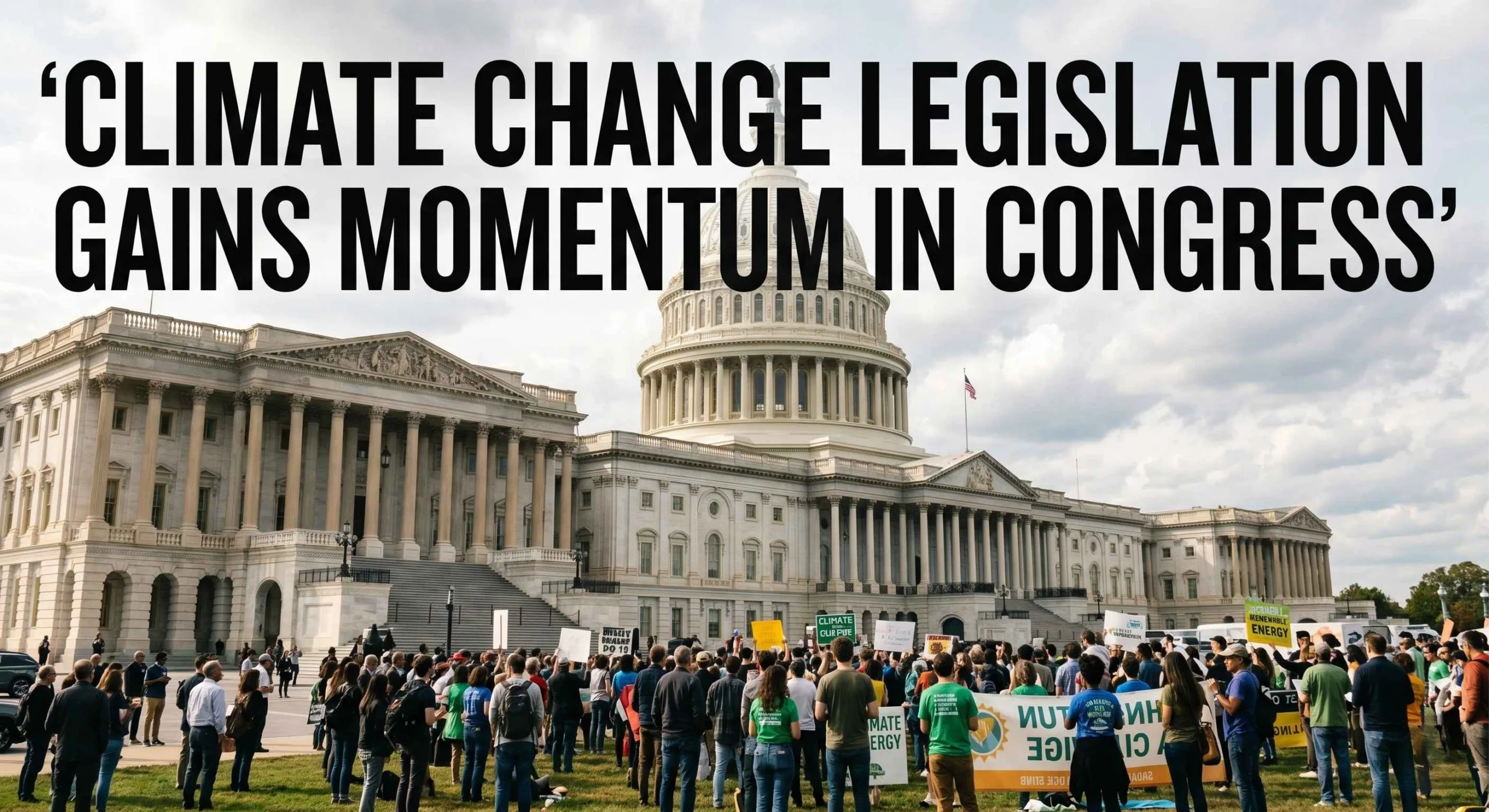
Climate change has emerged as one of the most defining issues in Washington, with lawmakers pushing forward new legislation aimed at reducing carbon emissions and promoting renewable energy. The proposed bill, currently under debate in Congress, seeks to accelerate the transition to clean energy by offering tax incentives for solar, wind, and electric vehicle adoption. It also includes stricter regulations on fossil fuel industries, aiming to cut greenhouse gas emissions significantly over the next decade. The legislation represents one of the most ambitious attempts yet to align U.S. policy with global climate commitments.
Supporters argue that the legislation is critical to combating the climate crisis and positioning the U.S. as a global leader in sustainability. They highlight the economic opportunities in renewable energy, including job creation, technological innovation, and long-term savings for consumers. Renewable energy companies have already seen growth in recent years, and advocates believe that stronger government support will accelerate this trend. Critics, however, warn that the bill could impose heavy costs on traditional energy sectors and lead to higher prices for consumers. The oil and gas industry has voiced strong opposition, claiming that the transition is being rushed without adequate infrastructure in place.
Public awareness of climate change has grown, particularly following extreme weather events across the country. From hurricanes to wildfires, communities are experiencing firsthand the impacts of a warming planet. Rising sea levels threaten coastal cities, while droughts and floods disrupt agriculture and water supplies. These events have made climate change a tangible reality for millions of Americans, fueling calls for urgent action. Environmental groups have mobilized to support the legislation, staging rallies and campaigns to pressure lawmakers into action. Internationally, the U.S. faces pressure to meet its commitments under global climate agreements, making domestic legislation even more urgent.
The debate underscores the broader challenge of balancing environmental responsibility with economic realities. While renewable energy offers long-term benefits, the transition requires significant investment and adaptation. Infrastructure such as charging stations for electric vehicles, upgraded power grids, and storage solutions for renewable energy must be expanded to support the shift. Policymakers must also consider the impact on workers in traditional energy sectors, many of whom face job displacement. Retraining programs and economic support will be essential to ensure a just transition.
The political dynamics surrounding the legislation are complex. Lawmakers are divided along party lines, with some pushing for aggressive climate action and others cautioning against economic disruption. The bill’s passage will likely depend on compromises that balance environmental goals with economic concerns. Public opinion polls suggest that a majority of Americans support stronger climate action, but opinions vary widely depending on region and political affiliation. States with economies tied to fossil fuels often resist stricter regulations, while states investing heavily in renewable energy push for faster progress.
Technology plays a central role in the proposed legislation. Advances in solar panels, wind turbines, and battery storage have made renewable energy more efficient and affordable. Electric vehicles are becoming increasingly popular, with major automakers committing to expanding their EV offerings. The legislation seeks to capitalize on these trends by providing incentives for consumers and businesses to adopt clean technologies. Critics argue that the infrastructure needed to support widespread adoption is not yet sufficient, warning of potential disruptions if the transition is rushed.
Internationally, the U.S. faces scrutiny over its climate policies. As one of the largest emitters of greenhouse gases, America’s actions have significant global implications. Allies and partners are watching closely to see whether the U.S. will fulfill its commitments under agreements such as the Paris Accord. Failure to act could undermine global efforts to combat climate change and damage America’s credibility on the world stage. Conversely, strong leadership could inspire other nations to strengthen their own climate policies, creating momentum for global progress.
The economic opportunities associated with climate legislation are substantial. Renewable energy industries have the potential to create millions of jobs, from manufacturing solar panels to installing wind turbines. Investment in clean technology could also spur innovation, positioning the U.S. as a leader in emerging markets. Supporters argue that the long-term benefits outweigh the short-term costs, making climate legislation a smart economic strategy. Opponents, however, remain skeptical, warning of potential job losses in traditional energy sectors and higher costs for consumers.
Communities across the country are already experimenting with local climate initiatives. Cities are investing in green infrastructure, such as bike lanes, public transit, and energy-efficient buildings. States are setting ambitious renewable energy targets, often going beyond federal requirements. These efforts demonstrate the potential for progress at multiple levels of government, but national legislation is seen as essential to achieving large-scale impact. The proposed bill aims to unify these efforts under a comprehensive national strategy.
In conclusion, climate change legislation in Congress represents a pivotal moment for the United States. The debate reflects the broader challenge of balancing environmental responsibility with economic realities, political divisions, and international commitments. While the path forward is uncertain, the urgency of the climate crisis demands action. The outcome of this legislative effort will not only shape U.S. climate policy but also influence global efforts to address one of the most pressing challenges of our time.
Disclaimer: This article is for informational purposes only and does not constitute environmental or legal advice.