




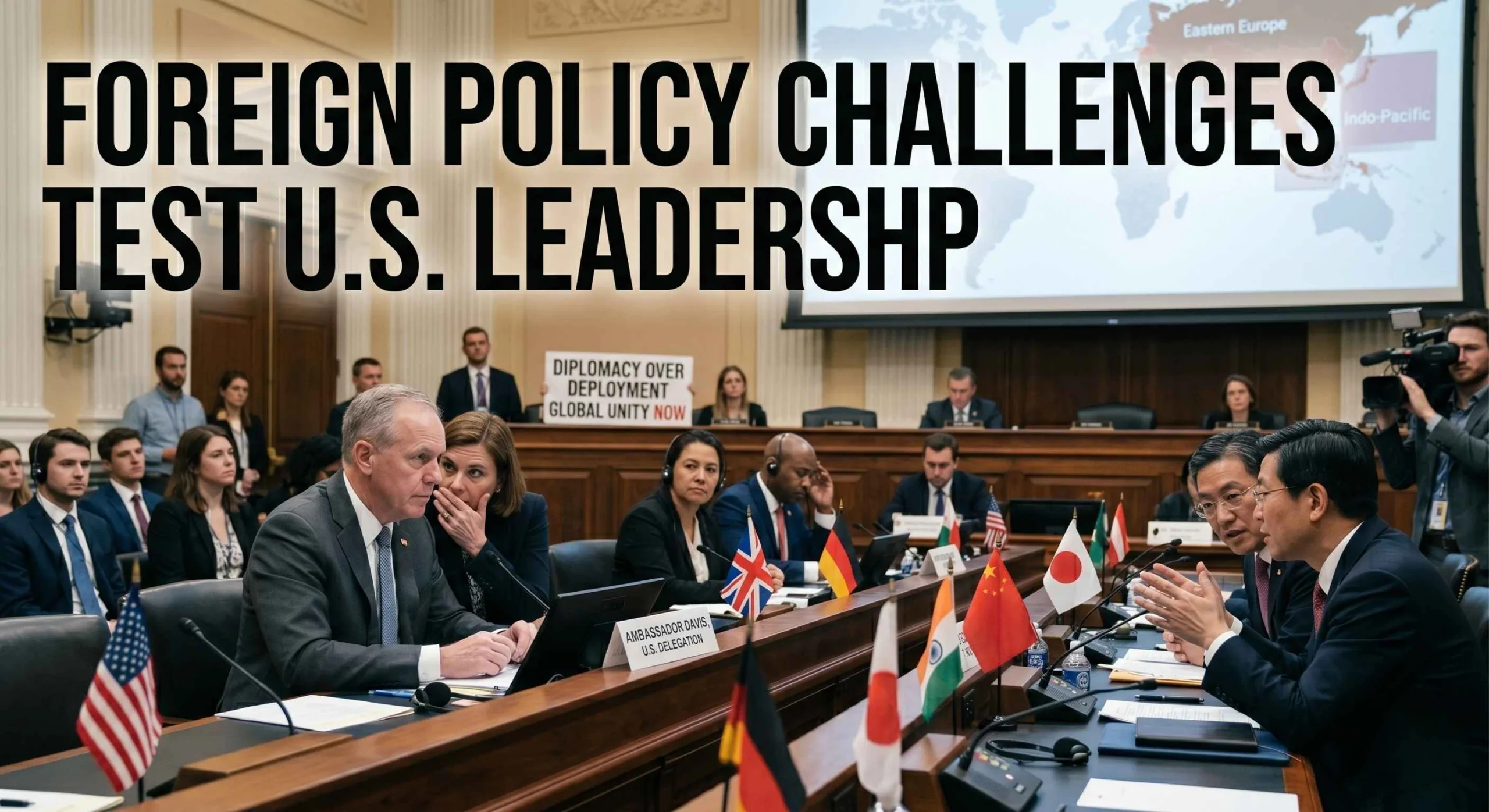
The United States faces mounting foreign policy challenges as global tensions rise, testing its leadership on the international stage. Recent developments in Eastern Europe, the Middle East, and the Indo-Pacific have placed Washington at the center of complex diplomatic negotiations. From military alliances to trade agreements, the U.S. is navigating a landscape marked by uncertainty and competing interests. The decisions made in the coming months will have far-reaching implications for security, diplomacy, and America’s role in the world.
In Eastern Europe, the ongoing conflict has strained relations with Russia, prompting the U.S. to bolster support for allies through military aid and sanctions. Washington has coordinated closely with NATO partners, reinforcing commitments to collective defense and providing assistance to countries directly affected by the crisis. Sanctions targeting Russian industries and individuals have been expanded, aiming to weaken Moscow’s ability to sustain its military operations. While these measures demonstrate U.S. resolve, they also carry economic consequences, affecting global energy markets and trade flows.
In the Middle East, tensions over energy supplies and regional security continue to demand attention. The U.S. has long played a central role in the region, balancing relationships with allies while addressing conflicts and humanitarian crises. Recent developments have highlighted the fragility of these dynamics, with shifting alliances and ongoing instability. Energy security remains a critical concern, as disruptions in supply can have global repercussions. Washington’s ability to manage these challenges will be crucial in maintaining stability and protecting American interests.
The Indo-Pacific region presents another set of challenges. China’s growing influence has prompted the U.S. to strengthen partnerships with countries such as Japan, South Korea, Australia, and India. Initiatives aimed at enhancing military cooperation, trade relations, and technological collaboration are central to Washington’s strategy. The goal is to counterbalance China’s assertiveness while promoting stability and prosperity in the region. However, the complexity of regional dynamics requires careful diplomacy, as nations seek to balance their relationships with both Washington and Beijing.
Domestic politics also play a role in shaping foreign policy. Lawmakers are divided over the extent of U.S. involvement abroad, with some advocating for a more restrained approach and others emphasizing the importance of global leadership. Public opinion reflects similar divisions, as Americans weigh the costs and benefits of international engagement. Military commitments, foreign aid, and trade agreements are often subjects of debate, with voters expressing concerns about the impact on domestic priorities. The administration’s ability to navigate these complexities will be critical in maintaining stability and advancing national interests.
The economic dimension of foreign policy cannot be overlooked. Trade agreements, sanctions, and investment flows are all influenced by diplomatic decisions. The U.S. economy is deeply interconnected with global markets, making foreign policy choices particularly consequential. Efforts to strengthen supply chains, protect intellectual property, and promote fair trade are central to Washington’s agenda. At the same time, economic competition with China and other nations adds another layer of complexity, requiring strategies that balance cooperation with competition.
Security concerns remain at the forefront of U.S. foreign policy. Military alliances, defense spending, and strategic deployments are all shaped by global developments. The U.S. continues to maintain a significant military presence around the world, ensuring readiness to respond to crises. However, questions about sustainability and priorities persist. Some argue that resources should be focused on domestic needs, while others emphasize the importance of maintaining global leadership. The balance between these perspectives will shape the future of U.S. security policy.
Diplomacy is equally important. Washington’s ability to build coalitions, negotiate agreements, and resolve conflicts is central to its role as a global leader. Recent efforts to strengthen ties with allies and partners demonstrate the importance of diplomacy in addressing complex challenges. At the same time, adversaries continue to test U.S. resolve, requiring careful management of tensions. The success of American diplomacy will depend on its ability to balance firmness with flexibility, ensuring that national interests are protected while promoting global stability.
Humanitarian concerns also factor into foreign policy. Conflicts, natural disasters, and economic crises often require international assistance, and the U.S. has traditionally played a leading role in providing aid. These efforts not only address immediate needs but also strengthen relationships with partner nations. However, humanitarian commitments must be balanced with other priorities, and questions about funding and effectiveness often arise. The challenge is to ensure that aid efforts are sustainable and aligned with broader strategic goals.
In conclusion, the United States faces a complex array of foreign policy challenges that test its leadership on the global stage. From Eastern Europe to the Middle East to the Indo-Pacific, Washington must navigate a landscape marked by uncertainty, competition, and shifting alliances. Domestic politics, economic considerations, security concerns, and humanitarian responsibilities all shape the debate. The coming months will reveal how effectively the U.S. can balance these priorities, maintaining stability and advancing its role as a global leader.
Disclaimer: This article is based on publicly available information and is intended for general informational purposes only.