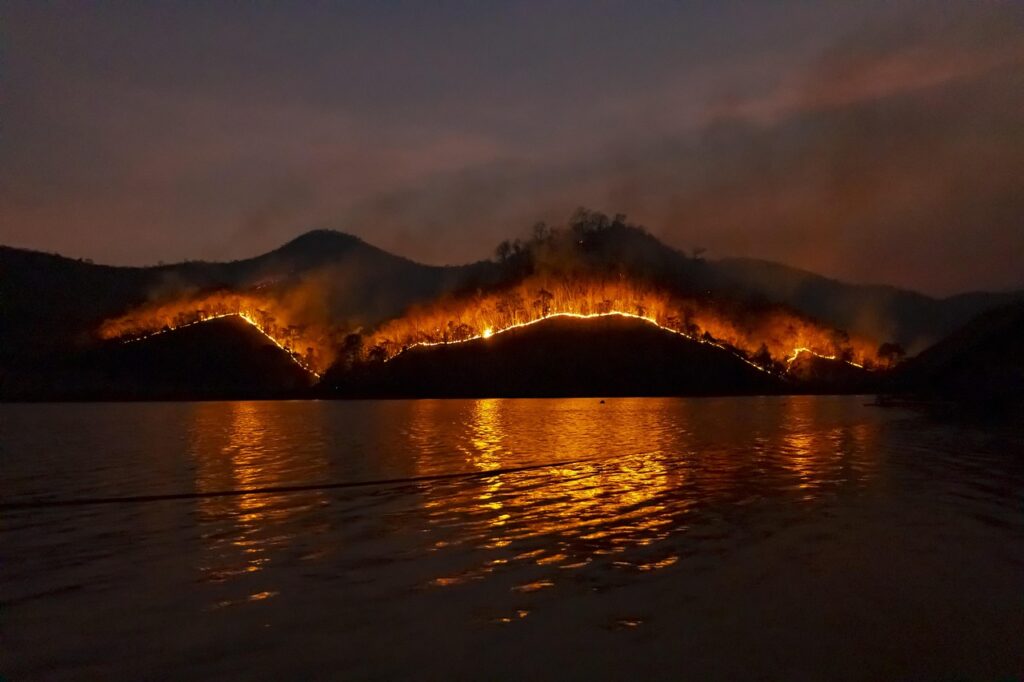

Utah officials have declared a state of emergency and imposed severe fireworks restrictions across the state as crews intensify their battle against the largest wildfire in the United States, fueled by persistent dry conditions and gusting winds across the region this week.
Context of the Crisis
The swift action comes as Utah, like much of the Western U.S., grapples with an exceptionally dry year, leading to critically high fire danger. The largest wildfire, currently unnamed in initial reports but impacting significant wildland areas, has rapidly expanded due to low humidity and strong winds, creating volatile conditions that challenge containment efforts. This season’s fire activity is a stark reminder of the increasing frequency and intensity of wildfires driven by prolonged drought and rising temperatures.
According to the U.S. Drought Monitor, over 90% of Utah is currently experiencing severe or extreme drought conditions, a critical factor contributing to the current crisis. Vegetation, dried to tinder-like conditions, acts as an ideal fuel bed for rapid fire spread, making even small sparks a significant threat.
The Unfolding Situation
The declaration of emergency, issued by Governor Spencer Cox, unlocks additional state resources and allows for more agile deployment of personnel and equipment to combat the growing inferno. A key component of this emergency response is the immediate implementation of widespread fireworks restrictions, aiming to prevent new ignitions during the peak of the fire season.
These restrictions include a complete ban on the sale and use of certain types of fireworks, with specific limitations on others in unincorporated areas and designated high-risk zones. Local municipalities retain the authority to impose even stricter bans based on their specific risk assessments. Officials emphasize that preventing human-caused fires is paramount, especially with the current weather patterns.
Firefighting crews, including local, state, and federal resources, are working around the clock to establish containment lines and protect critical infrastructure and communities. Aerial resources, including air tankers and helicopters, are conducting water and retardant drops, though gusting winds often complicate these operations. Evacuation orders have been issued for several areas deemed at immediate risk, displacing hundreds of residents.
Expert Perspectives and Data
“Our priority is the safety of our residents and the protection of their property,” stated Governor Cox during a recent press briefing. “These fireworks restrictions are not taken lightly, but they are absolutely necessary to prevent further devastation when our landscapes are so incredibly dry.”
Data from the National Interagency Fire Center (NIFC) indicates that human activity accounts for nearly 90% of all wildfires in the U.S., underscoring the importance of public compliance with fire restrictions. “Every spark has the potential to become a catastrophic event in these conditions,” warned a spokesperson for the Utah Division of Forestry, Fire & State Lands. “We are seeing fuels respond to fire in ways we haven’t witnessed in decades, making initial attack and containment extremely challenging.”
Meteorological forecasts offer little immediate relief, predicting continued hot and dry weather with intermittent high winds for the coming days. This grim outlook further stresses the need for sustained firefighting efforts and public vigilance.
Implications for Residents and the Region
The escalating wildfire crisis carries significant implications for Utah’s residents, economy, and environment. For homeowners, the threat of property loss remains high, necessitating adherence to defensible space guidelines and evacuation readiness. Air quality has also deteriorated in many areas due to smoke plumes, posing health risks, especially for vulnerable populations.
Economically, the fires impact tourism, agriculture, and local businesses, with long-term recovery costs potentially running into the tens of millions. Environmentally, vast tracts of forest and rangeland are being consumed, leading to habitat loss, soil erosion, and long-term ecological shifts. The strain on firefighting resources is also a growing concern, highlighting the need for continued investment in prevention and suppression capabilities.
Looking ahead, the effectiveness of the fireworks ban and public adherence will be crucial in mitigating additional human-caused ignitions. Authorities will closely monitor weather patterns, particularly any shifts toward increased humidity or precipitation, which could aid firefighting efforts. The long-term challenge will involve adapting land management practices and community planning to a future with more frequent and intense wildfire seasons, driven by a changing climate. Discussions are ongoing regarding enhanced forest thinning, prescribed burns, and public education campaigns to build greater resilience against future fire threats.