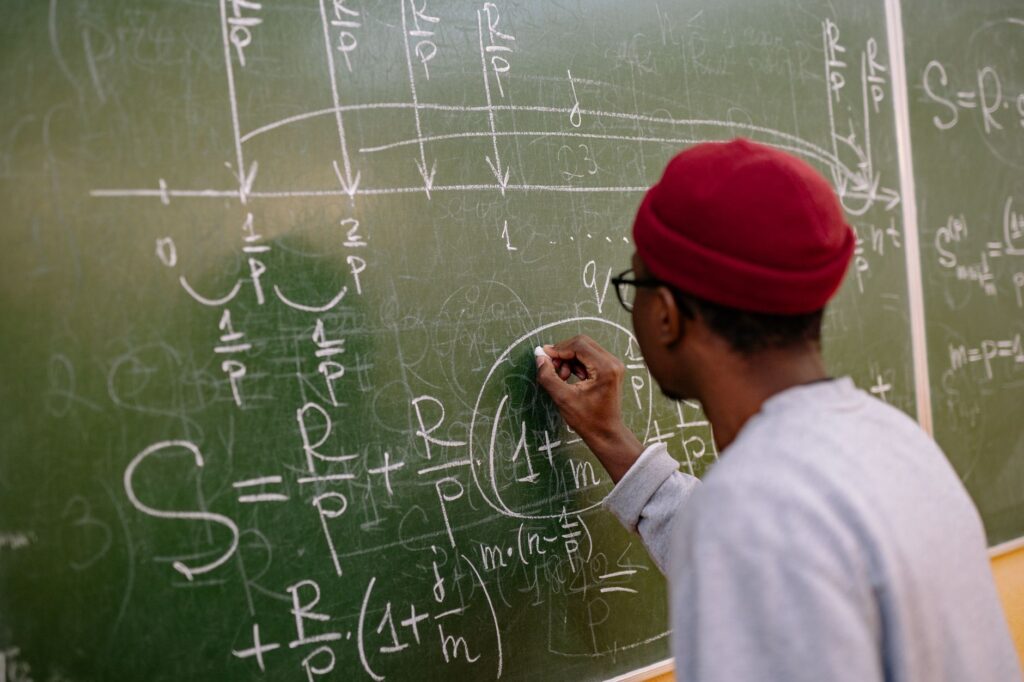

Artificial intelligence continues to break new ground across scientific disciplines. Recently, OpenAI announced a massive breakthrough regarding one of the most enduring mathematical puzzles in modern history. By leveraging advanced machine learning capabilities, researchers have made significant progress on the complex equations that govern fluid dynamics. This development showcases the growing potential of artificial intelligence to solve challenges that have stymied human mathematicians for decades.
Understanding the Navier Stokes Equations
Named after engineers and physicists Claude Louis Navier and George Gabriel Stokes, these equations form the foundation of fluid mechanics. Formulated nearly a century ago, they describe how liquids and gases move. Weather forecasting, aerodynamic design for aircraft, ocean current tracking, and pipe network optimization all rely heavily on these mathematical models.
Despite their practical utility, the equations remain notoriously difficult to resolve. Mathematicians have struggled for generations to prove whether smooth, physically reasonable solutions always exist in three dimensions. This specific inquiry is recognized globally as one of the great unsolved challenges in mathematics, carrying a prestigious prize for anyone who can formally prove or disprove its core assertions.
The Role of Artificial Intelligence
OpenAI applied specialized computational models to analyze the complex behaviors described by the equations. Traditional computing methods often hit a wall when dealing with the extreme non-linearity and turbulence inherent in fluid dynamics. Machine learning algorithms, however, excel at recognizing subtle patterns within massive datasets and approximating complex physical states with high precision.
Instead of relying purely on conventional analytical proofs, the AI system approached the problem through sophisticated pattern recognition and numerical optimization. By simulating millions of fluid scenarios under varying conditions, the technology successfully navigated around traditional mathematical bottlenecks.
Implications for Science and Industry
Solving or effectively managing the complexities of fluid motion carries massive practical implications. Industries ranging from aerospace engineering to climate science stand to benefit immensely. Aircraft designers could optimize wing shapes much faster, reducing fuel consumption and emissions. Meteorologists might achieve unprecedented accuracy in predicting severe weather patterns, potentially saving countless lives.
Furthermore, this achievement highlights a broader shift in how scientific research is conducted. Artificial intelligence is no longer just a tool for automation or data analysis; it is becoming an active partner in theoretical discovery. Researchers can now test complex hypotheses and explore mathematical spaces that were previously deemed too difficult to compute.
Looking Ahead
While this milestone represents a monumental leap forward, experts emphasize that further validation is required. The mathematical community will scrutinize the computational methods and resulting models to ensure absolute rigor. Nevertheless, the announcement signals a transformative era where artificial intelligence accelerates human progress, turning decades-old theoretical roadblocks into solvable puzzles.