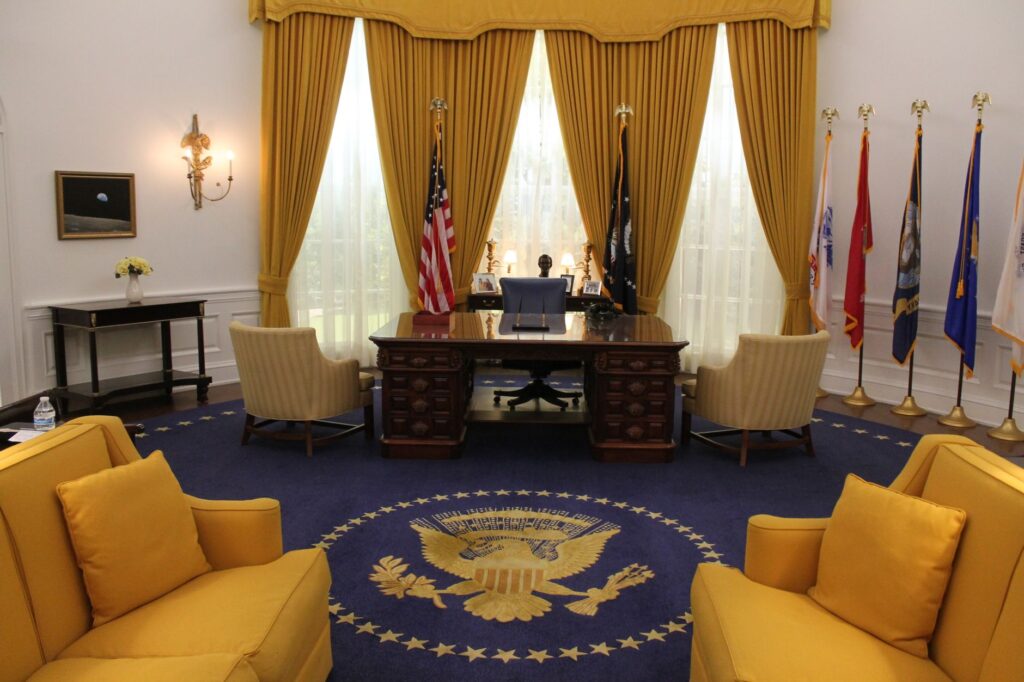

President Donald Trump has taken the unusual step of designating the Oval Office as a national monument. This administrative action arrives at a time when political opponents and Democratic lawmakers are preparing for heightened oversight and scrutiny of the current administration. By establishing this formal designation, the administration aims to cement physical modifications made to the iconic presidential workspace during his tenure.
Preserving White House Aesthetics
The decision to classify the workspace under a national monument framework is designed to safeguard the distinct visual and architectural updates introduced to the room. White House redesigns have historically reflected the personal tastes of each incoming commander-in-chief, ranging from drapery and carpeting choices to specific artwork and historical artifacts. Under the new designation, current modifications are granted a layer of administrative protection, altering the traditional trajectory of executive office evolution.
Authority of Future Administrations
Despite the newfound monument status, constitutional scholars and legal analysts point out that future occupants of the executive branch will retain a degree of flexibility. The executive authority inherent in the presidency means that subsequent leaders can still implement interior design changes, update furnishings, and redecorate the space to align with their personal preferences and administrative branding. While the monument classification introduces bureaucratic hurdles, it does not permanently freeze the interior decor of the room in perpetuity.
Political Context and Scrutiny
This preservation move coincides with a shifting political landscape in Washington. As opposition lawmakers gear up for investigative committees and renewed legislative oversight, the administration has focused on cementing its legacy through administrative and executive actions. The timing of the Oval Office declaration underscores a broader strategy to solidify policy and structural milestones before any potential shifts in congressional power or public policy debates take center stage.
Historical Precedent and White House Traditions
The White House has continuously evolved since its initial construction, serving simultaneously as a private residence, a public museum of American history, and a bustling corporate office for the leader of the free world. Past chief executives have regularly updated the West Wing to accommodate their working styles and aesthetic sensibilities. The introduction of a national monument framework within the executive domain represents a novel intersection of preservation law and presidential prerogative, setting a unique precedent for how future leaders interact with the most famous office in global politics.
Conclusion
As the debate surrounding executive overreach and administrative preservation continues to unfold, the Oval Office remains at the center of both architectural interest and political maneuvering. Whether this monument status will successfully deter future redesigns or simply serve as a temporary administrative milestone remains to be seen as the political cycle progresses and new leaders prepare to take the reins of government.