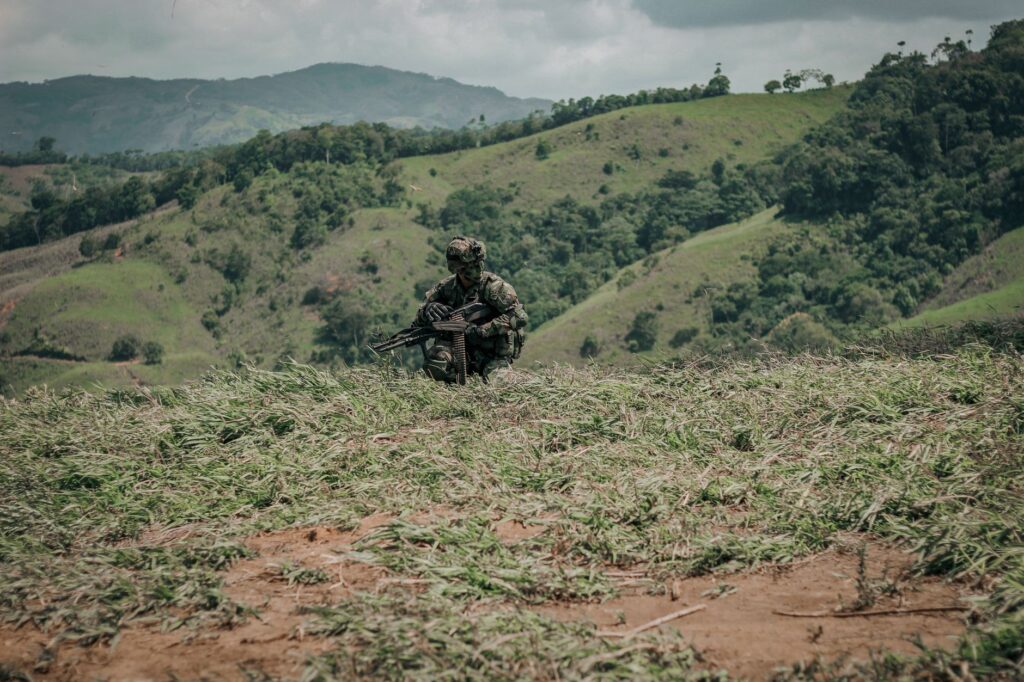

Indian security forces launched a massive joint search operation in Jammu and Kashmir’s Rajouri district on Friday after closed-circuit television (CCTV) cameras captured two suspected terrorists moving through a residential area. The high-alert operation, mobilizing the Indian Army, Jammu and Kashmir Police, and the Central Reserve Police Force (CRPF), aims to neutralize the armed infiltrators before they can execute attacks in the region. Authorities have cordoned off several villages and forest fringes, initiating intense combing operations to track down the suspects.
Background of the Pir Panjal Security Challenge
The Rajouri and Poonch districts, situated south of the Pir Panjal mountain range, have emerged as highly volatile zones over the last two years. Historically peaceful compared to the Kashmir Valley, this rugged border region has seen a significant spike in sophisticated tactical ambushes against security forces. The geographic location, characterized by dense alpine forests and deep ravines, provides ideal cover for guerrilla tactics.
According to official security data, over three dozen soldiers and several civilians have lost their lives in this sector in various encounters since late 2021. The proximity to the Line of Control (LoC) allows infiltrating groups to receive logistical support and cross-border reinforcement. Security analysts point out that a shift in militant strategy has redirected focus toward the Jammu division to stretch thin the deployment of Indian security forces across the Union Territory.
The CCTV Sighting and Immediate Mobilization
The current operation began immediately after local authorities reviewed CCTV footage from a commercial establishment on the outskirts of Rajouri town. The footage, which circulated widely on social media, depicted two individuals carrying assault rifles and heavy tactical backpacks navigating a dark alleyway during the late-night hours. The stealthy movement suggested familiarization with the local geography and potential local facilitation.
Upon verifying the authenticity of the footage, security agencies immediately cordoned off the entry and exit points of the targeted sector. Security personnel established multiple mobile vehicle checkpoints (MVCPs), intensifying the frisking of vehicles and pedestrian identity verification along the main highways. Educational institutions and local markets in the immediate vicinity observed partial closures as a precautionary measure.
To assist the ground troops navigating the complex topography, the military deployed advanced quadcopters and thermal imaging drones. Sniffer dog squads are currently tracking scents from the last known location of the suspects, guiding elite para-commandos into the nearby dense foliage. Helicopter sorties were also spotted conducting low-altitude aerial reconnaissance over the rugged ridges bordering the town.
Tactical Shifts and Intelligence-Led Operations
Defense experts emphasize that the reliance on CCTV footage highlights the growing role of technological surveillance in modern counter-insurgency operations. The integration of public and private camera networks has increasingly provided crucial early warnings for security agencies in semi-urban areas. This digital dragnet reduces reaction times and allows forces to deploy targeted cordons rather than relying on broad, disruptive lockdowns.
“The immediate detection of these individuals prevents them from blending into the local population or establishing safe houses,” stated retired Lieutenant General Sanjay Kulkarni, a seasoned veteran of counter-insurgency operations. He noted that swift public reporting and digital footprints are vital in denying terrorists the element of surprise. “Modern militancy relies on anonymity, and pervasive surveillance strips them of that shield,” Kulkarni added.
Local police officials have urged residents to remain vigilant and report any suspicious activity or unfamiliar individuals immediately. Authorities have also issued stern warnings to the public against providing shelter or logistical support to active militants. Under current laws, properties found housing insurgents face immediate attachment by the state administration.
Strategic Implications and Future Outlook
This latest intrusion underscores the persistent threat of infiltration along the border areas, even as winter snow begins to block traditional high-altitude passes. Security agencies must now determine whether these individuals are part of a freshly infiltrated group or remnants of existing sleeper cells operating in the Pir Panjal forests. Identifying their origin will dictate whether forces focus on border fence integrity or internal counter-intelligence networks.
Observers will closely watch how the administration balances heightened security measures with the daily lives of local residents. The success of this search operation will likely rely heavily on human intelligence (HUMINT) working in tandem with the technological assets deployed on the ground. A prolonged standoff could disrupt local trade and tourism, which are vital to the regional economy.
In the coming days, security forces are expected to expand the search perimeter to adjacent forest belts, potentially leading to prolonged combing operations. The outcome of this mobilization will serve as a critical indicator of the security apparatus’s readiness to counter evolving asymmetric threats in the Jammu region. Analysts will also monitor whether this event prompts a redeployment of additional central forces to fortify the southern slopes of the Pir Panjal range.