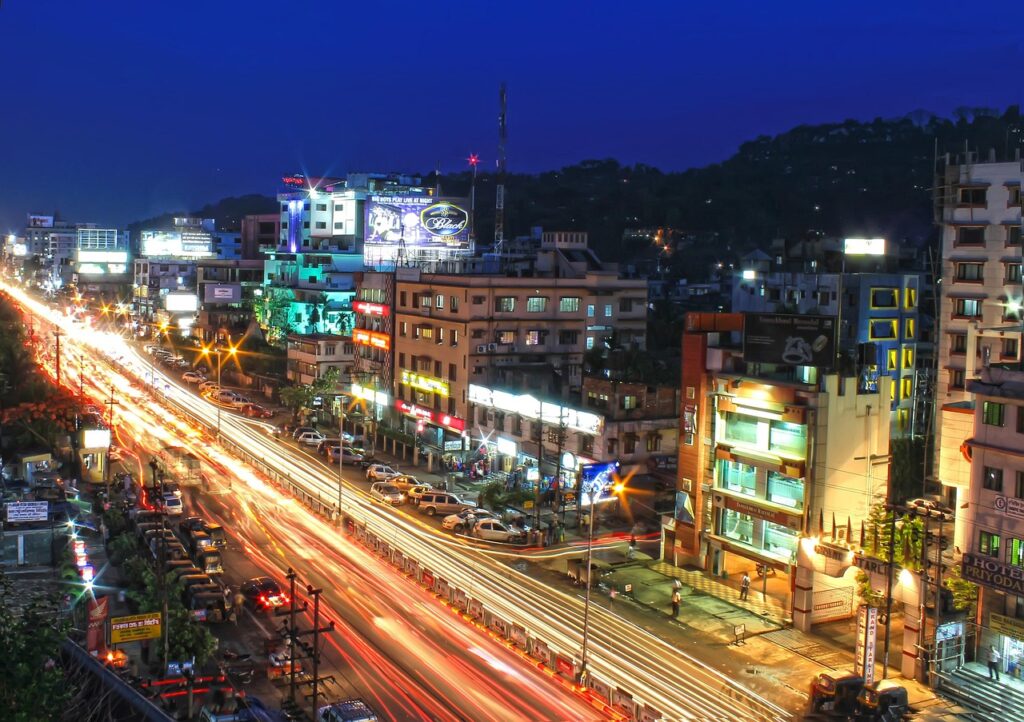

On October 24, resident welfare associations and civic activists in Anna Nagar, Chennai, intensified their campaign demanding that the Greater Chennai Corporation (GCC) and local traffic police implement a permanent, systemic solution to the neighborhood’s escalating traffic congestion. The mobilization follows years of temporary traffic diversions and ad-hoc measures that residents argue have failed to address the root causes of gridlock on major arterial roads. The community is now calling for a comprehensive urban mobility plan that prioritizes pedestrian infrastructure, strict parking enforcement, and public transit integration.
The Evolution of an Urban Bottleneck
Planned in the late 1960s as a premier residential township, Anna Nagar was designed with a spacious gridiron pattern, wide avenues, and abundant green spaces. Over the past two decades, however, rapid commercialization has transformed the quiet neighborhood into one of Chennai’s busiest commercial and retail hubs. This rapid transition has occurred without a corresponding upgrade to the local transportation infrastructure, leaving the existing road network overwhelmed by modern vehicular volumes.
Today, key junctions such as the Anna Nagar Roundtana, Shanthi Colony Fourth Avenue, and the Thirumangalam intersection experience severe daily bottlenecks. During peak morning and evening hours, commuters report that crossing a mere two-kilometer stretch can take upwards of 40 minutes. The opening of the Thirumangalam flyover provided temporary relief, but urban planners note that it has ultimately funneled larger volumes of traffic into bottleneck zones further down the corridor.
The Impact of Temporary Diversions on Residential Lanes
In an effort to keep traffic moving on main arterials, the Chennai Traffic Police have implemented numerous one-way systems, median closures, and mandatory U-turns. While these measures are designed to reduce right-turning conflicts at major intersections, residents argue they have merely displaced the problem. Motorists seeking shortcuts frequently navigate through narrow interior residential streets, creating safety hazards in formerly quiet neighborhoods.
“The interior streets were never designed to handle transit traffic,” says a representative from a local resident welfare association. “We now have heavy SUVs and delivery vehicles speeding past homes, schools, and parks. It has compromised the safety of children and senior citizens while doing very little to solve the overall congestion on the main avenues.”
The Parking Crisis and the Gig Economy
At the core of Anna Nagar’s traffic crisis is a severe shortage of off-street parking. Data from local civic audits reveals that over 70% of the commercial establishments lining Second Avenue and Shanthi Colony lack dedicated parking spaces for their patrons. Consequently, visitors park their private vehicles on the roadside, effectively reducing four-lane arterials to single-lane bottlenecks.
The rise of the gig economy has further complicated the situation. Food delivery executives and quick-commerce couriers frequently double-park near popular restaurants and cloud kitchens. Without designated pick-up bays, these short-term stops accumulate, causing sudden and unpredictable traffic disruptions. Additionally, the widespread encroachment of footpaths by commercial vendors forces pedestrians onto the active carriageway, slowing traffic speeds and increasing the risk of accidents.
Expert Perspectives and Sustainable Solutions
Urban planning experts from the Institute for Transportation and Development Policy (ITDP) India emphasize that traffic congestion cannot be solved through road-widening or police enforcement alone. Analysts point out that Chennai’s private vehicular population has crossed 6 million, necessitating a shift toward sustainable public transport and non-motorized transit infrastructure.
Experts suggest that while Anna Nagar is uniquely positioned with three operational Chennai Metro stations, the lack of safe, shaded pedestrian pathways and reliable first-and-last-mile connectivity prevents commuters from abandoning their personal vehicles. Urban planners advocate for the implementation of tactical urbanism principles, such as creating dedicated pedestrian plazas, introducing high-frequency feeder bus services, and developing multi-level car parking (MLCP) facilities near transit hubs.
Implications for the Neighborhood and Wider City
The challenges facing Anna Nagar serve as a critical case study for other rapidly developing metropolitan areas across India. As historical residential zones transition into high-density commercial corridors, municipal corporations must balance economic development with residential livability. Failure to integrate land-use planning with robust transport management risks turning premium residential neighborhoods into dysfunctional, congested zones, ultimately impacting property values and public health.
To address these systemic issues, the GCC and the Chennai Traffic Police have announced plans to conduct a joint comprehensive traffic study in the coming weeks. This study will utilize camera feed data and traffic flow sensors to map congestion patterns. Observers will be watching closely to see if the municipal authorities transition from temporary traffic management to long-term infrastructural reforms, such as implementing a smart, metered parking policy and reclaiming footpaths for pedestrian use.