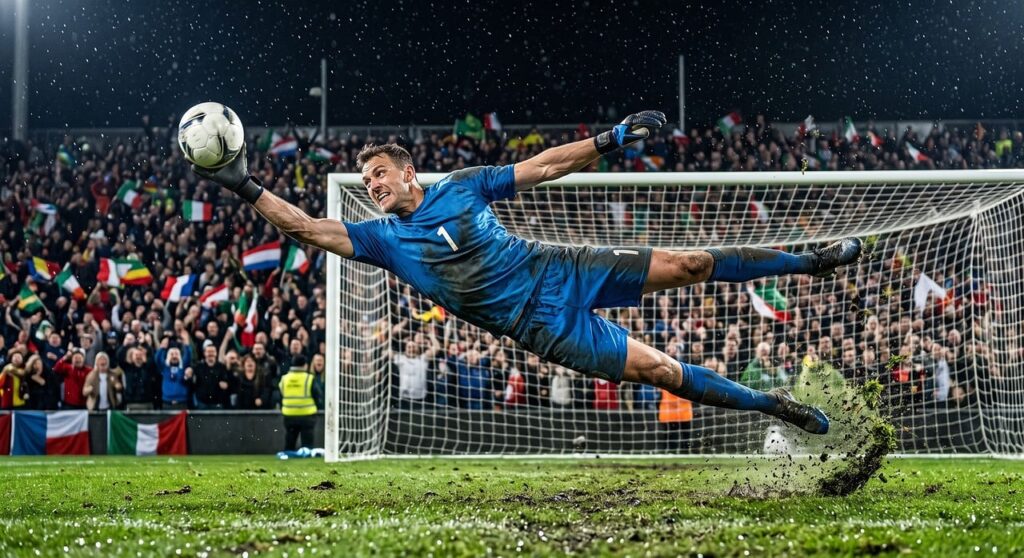

LUSAIL, Qatar — Substitute Ferran Torres scored a dramatic extra-time goal in the 106th minute to guide Spain to their second FIFA World Cup trophy, defeating Argentina 1-0 in a tense final on Sunday night. The decisive strike shattered Argentina’s hopes of consecutive titles and marked a bittersweet end to Lionel Messi’s legendary international career, in what the 37-year-old superstar had confirmed would be his final World Cup match.
A Historic Clash of Eras
The highly anticipated final at Lusail Stadium brought together two footballing giants with contrasting narratives. Spain sought to recapture the global crown for the first time since their maiden triumph in South Africa in 2010, fielding a young, possession-heavy squad. Argentina, the reigning champions, aimed to secure back-to-back titles and provide Messi with a fairytale ending to his unmatched international career.
Prior to the kickoff, Messi had reiterated that this tournament would be his final bow on the world stage. Having finally captured the elusive trophy in Qatar four years prior, the Argentine captain carried the hopes of a nation desperate to send their icon off with a historic double. The atmosphere inside the stadium was electric, with over 88,000 fans witnessing what many considered the end of an era.
Spain’s journey to the final had been marked by tactical fluidity and the emergence of teenage talents. Under manager Luis de la Fuente, the team moved away from the sterile possession of previous tournaments, adopting a more direct and lethal attacking style that tested every opponent they faced.
The Tactical Stalemate and Torres’ Moment
The match began as a tactical chess match, with Spain dominating possession through their trademark short-passing game while Argentina looked to exploit spaces on the counter-attack. Both defenses held firm through 90 minutes of regulation time, with Spanish goalkeeper Unai Simón denying Messi on two crucial occasions in the second half. Argentina’s veteran defender Nicolás Otamendi also put in a masterclass performance, neutralizing several Spanish attacks.
As fatigue set in during extra time, Spanish manager Luis de la Fuente made the tactical decision to introduce Ferran Torres in the 98th minute to inject pace into the attack. The gamble paid off in the 106th minute when Torres latched onto a brilliant through-ball from midfield, cut inside his defender, and fired a low, powerful shot past Argentine goalkeeper Emiliano Martínez.
The goal sparked wild celebrations among the Spanish contingent and left Argentina with just 14 minutes to find an equalizer. Despite a late flurry of attacking pressure led by Messi, Spain’s disciplined defensive block held firm until the final whistle blew, sealing their place in football history.
Data and Tactical Analysis
According to post-match statistics from Opta, Spain controlled 58% of the possession and completed 642 passes compared to Argentina’s 412. The Spanish defensive unit successfully limited Argentina to just three shots on target throughout the 120 minutes of grueling play, demonstrating their defensive organization.
Football analysts have praised De la Fuente’s squad rotation and tactical flexibility throughout the tournament. “Spain showed a maturity that belies their average squad age of just 25,” noted veteran football analyst Michael Cox. “While Argentina relied heavily on Messi’s creative sparks, Spain’s collective pressing game ultimately wore down the defending champions.”
Torres, who had started several games on the bench, proved to be the ultimate super-sub. His goal was his fourth of the tournament, making him Spain’s joint-top scorer alongside young sensation Lamine Yamal.
The Dawn of a New Spanish Era
For Spain, this victory cements the arrival of a new golden generation of footballing talent. Players like Gavi, Pedri, and Lamine Yamal, who played pivotal roles throughout the tournament, have now established themselves at the pinnacle of the sport, echoing the legendary era of Xavi and Andres Iniesta. The victory is expected to boost Spanish football’s commercial appeal and inspire a new generation of players across the country.
For Argentina, the defeat marks the end of the most successful era in their modern football history. Messi’s departure leaves a massive void in the national team, forcing manager Lionel Scaloni to begin a rebuilding process centered around younger talents like Enzo Fernández and Alexis Mac Allister.
The global football landscape now prepares for a significant shift as the era of Messi’s dominance draws to a close. Brands, sponsors, and fans will watch closely to see which young stars step up to fill the vacuum left by one of the greatest players to ever play the game.
As the football world processes this transition of power, attention now shifts to the upcoming continental championships. Spain will enter the UEFA European Championship as clear favorites, looking to consolidate their global dominance with a continental crown. Meanwhile, Argentina faces the immediate challenge of the Copa América, where they must quickly adapt to life without Messi’s leadership on the pitch. The development of Spain’s young core and Argentina’s tactical evolution will dominate the international football landscape over the next two years.