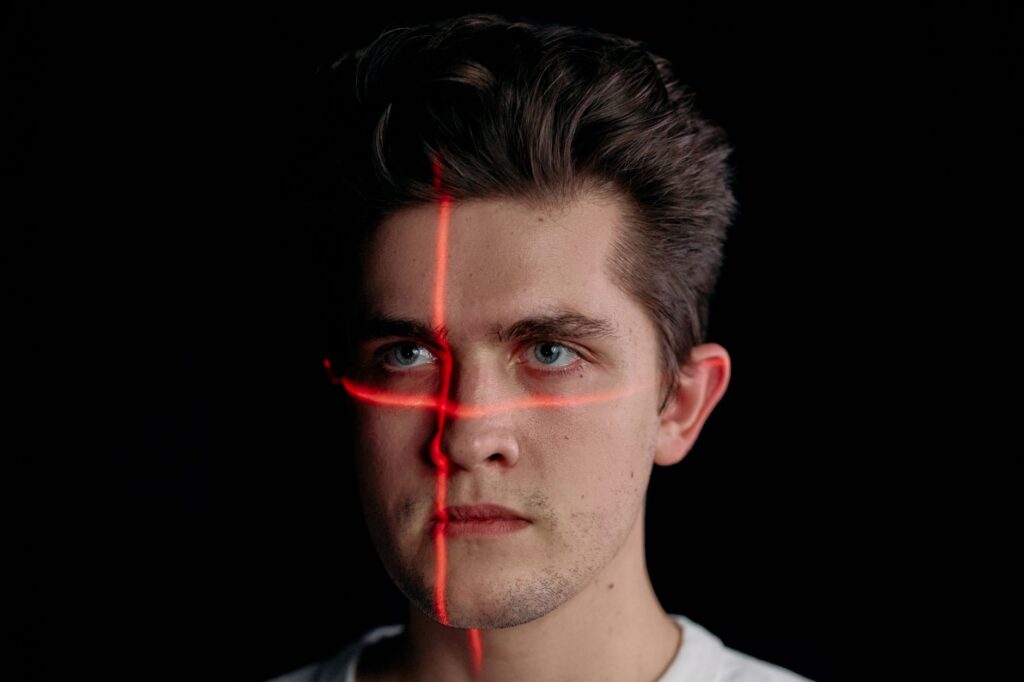

A series of public digital literacy tests released this month has revealed a stark reality: the average internet user can no longer reliably distinguish between real photographs and AI-generated images. As generative artificial intelligence platforms undergo rapid updates, the obvious visual flaws that once exposed synthetic media have virtually vanished. This shift has caught digital forensics experts off guard, transforming what was once a minor nuisance into a critical challenge for global information security.
The Evolution of Synthetic Media
For the past several years, identifying an AI-generated image required only a brief, close inspection. Early iterations of tools like Midjourney, Stable Diffusion, and DALL-E struggled with the complex mathematics of rendering human anatomy and physical lighting. Viewers could easily spot extra fingers, distorted limbs, melting background structures, and asymmetrical eyes.
These rendering errors acted as an informal defense mechanism for the public. Social media users quickly learned to scrutinize hands and ears to verify the authenticity of viral images. However, the latest generation of diffusion models has systematically corrected these geometric and anatomical anomalies, rendering those old tricks obsolete.
The Disappearance of ‘Dead Giveaways’
Recent online quizzes designed by cybersecurity firms and academic institutions have put the public’s detection skills to the test. The results indicate a steep decline in human accuracy. In many of these tests, participants scored no better than random chance, frequently misidentifying genuine photographs as AI-generated and vice versa.
AI experts explain that the technology has transitioned from merely predicting pixel patterns to understanding the physics of light, texture, and human anatomy. Modern AI models now render realistic skin pores, natural eye reflections, and mathematically correct hand structures. The classic “telltale signs” have disappeared as algorithms train on larger, higher-quality datasets with refined feedback loops.
Furthermore, the integration of text-to-image generators into mainstream software has democratized the creation of hyper-realistic imagery. Anyone with an internet connection can now generate photorealistic scenes in seconds. This ease of access has flooded digital platforms with high-quality content that easily bypasses traditional visual verification methods.
Expert Warning: The Death of the Visual Clue
Digital forensics specialists warn that relying on visual inspection is now an obsolete strategy for spotting fakes. Dr. Hany Farid, a professor at the University of California, Berkeley, and a leading expert in digital forensics, has frequently noted that synthetic media is evolving faster than human detection capabilities. Experts agree that the era of looking for six fingers or weird reflections is officially over.
Data from recent academic studies support this assertion. A study published by researchers at University College London found that humans could only detect AI-generated speech and images about 62% of the time. As the generative models continue to improve, that number is expected to drop to 50%, which represents pure guesswork.
This rapid improvement has forced a pivot in how security experts approach the problem. Instead of training the public to look for visual glitches, the focus is shifting toward technical detection tools and provenance tracking.
The Societal and Political Implications
The inability to distinguish real from fake has profound implications for democratic institutions, journalism, and the legal system. In political campaigns, bad actors can deploy hyper-realistic images to sway public opinion or discredit opponents. Because the images lack obvious flaws, they can circulate widely before fact-checkers can verify their authenticity.
This dynamic creates a phenomenon known as the “liar’s dividend.” When real evidence of wrongdoing is dismissed as AI-generated, public trust in all media erodes. If any image can be faked convincingly, then any real image can be claimed as fake, undermining the concept of objective visual truth.
Furthermore, the legal system relies heavily on photographic evidence. Courts are already beginning to grapple with challenges regarding the admissibility of digital photographs, as lawyers argue that images could have been seamlessly manipulated or entirely generated by AI.
What to Watch Next: The Battle for Provenance
As human eyes lose the ability to detect synthetic media, the tech industry is turning to cryptographic solutions. Watch for the widespread adoption of the Coalition for Content Provenance and Authenticity (C2PA) standard. This technology embeds secure, invisible metadata directly into digital files at the moment of creation, detailing whether an image was captured by a physical camera or generated by an algorithm.
Major camera manufacturers, including Sony, Canon, and Nikon, have begun integrating these digital signatures into their professional hardware. Simultaneously, social media platforms are testing systems to read this metadata and automatically label AI content for users.
Ultimately, the future of digital trust will not rely on looking closely at a person’s hands or eyes in a photo. Instead, it will depend on a silent infrastructure of cryptographic certificates working behind the scenes to verify what is real.