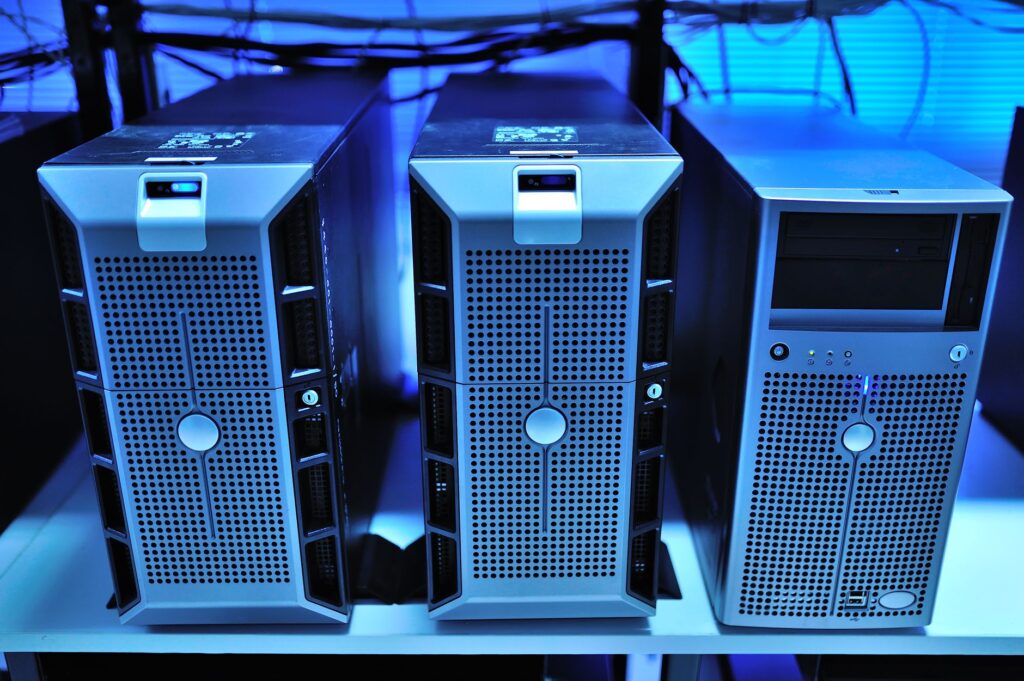

Union Minister for Earth Sciences Kiren Rijiju publicly voiced deep dissatisfaction in New Delhi this week over severe procurement delays by French technology firm Atos, which has failed to deliver high-performance supercomputers essential for advancing India’s weather forecasting and climate prediction capabilities.
A High-Stakes Procurement Stalled by Corporate Restructuring
The Ministry of Earth Sciences signed a contract valued at over $100 million with the European IT giant in mid-2023 to procure state-of-the-art supercomputers designed to scale India’s computational power to 18 petaflops. Under the agreement, the new hardware was scheduled for deployment at the Indian Institute of Tropical Meteorology (IITM) in Pune and the National Centre for Medium Range Weather Forecasting (NCMRWF) in Noida by early 2024.
However, Atos faced severe financial headwinds, debt restructuring challenges, and internal corporate spin-offs over the past year. These financial disruptions crippled the vendor’s supply chain, causing prolonged delays in the manufacturing and shipment of the BullSequana supercomputing units promised to India.
Government officials confirmed that despite financial commitments and advance payments made by India, the hardware deliveries stalled completely, triggering sharp warnings from the ministry.
The Critical Need for Enhanced Computing Capacity
India’s current meteorological supercomputers, named ‘Pratyush’ at IITM and ‘Mihir’ at NCMRWF, were commissioned in 2018 with a combined processing speed of 6.8 petaflops. While ground-breaking at the time, these systems are currently operating at maximum capacity, limiting scientists’ ability to run ultra-high-resolution climate models.
Upgrading to an 18-petaflop architecture would allow meteorologists to increase the spatial resolution of local weather forecasts from 12 kilometers down to 6 kilometers. This improvement is vital for accurately predicting sudden extreme weather events, such as cloudbursts, severe cyclones, and localized flash floods.
Agriculture remains a primary driver of the Indian economy, with over 50 percent of the nation’s workforce relying on climate-dependent yields. Precise, timely monsoon predictions directly impact crop planting schedules, water resource allocation, and disaster management protocols across the subcontinent.
Government Demands Swift Execution or Legal Consequences
Addressing senior scientists and press representatives, Minister Rijiju highlighted that national interest and public safety cannot be held hostage to vendor insolvency or operational inefficiencies. He indicated that the Indian government is weighing strict contractual penalties and legal remedies if the delivery timeline is not immediately restored.
Reports suggest that executive-level talks between Indian officials and French corporate representatives are underway to expedite the release of the remaining components. The ministry emphasized that the government has met all its contractual obligations on time and expects equal compliance from international partners.
Industry analysts note that international tech tenders often carry geopolitical and operational risks, particularly when global supply chains face semiconductor shortages and corporate reorganizations.
Shifting Focus Toward Indigenous Supercomputing Infrastructure
The operational deadlock with Atos highlights the risks of relying heavily on foreign hardware suppliers for critical national infrastructure. To mitigate future vulnerabilities, India is accelerating initiatives under the National Supercomputing Mission (NSM), jointly led by the Centre for Development of Advanced Computing (C-DAC) and the Indian Institute of Science (IISc).
Domestic research facilities are expanding efforts to design and assemble high-performance systems locally, reducing import dependencies for hardware architecture, interconnects, and cooling technology.
Moving forward, industry observers are closely watching whether Atos can honor its commitments through its specialized brand, Eviden, or if India will be forced to cancel the contract and seek alternative international or domestic suppliers. The resolution of this dispute will determine how quickly India can deploy next-generation weather modeling ahead of upcoming monsoon cycles.