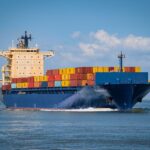
At the East Asia Summit, Indian External Affairs Minister S. Jaishankar issued a stern warning against rising maritime threats, declaring that international waterways must remain safe, open, and unimpeded for global commerce. Delivering India’s position on global trade security, Jaishankar emphasized that targeted attacks on seafarers, civilian shipping vessels, and maritime infrastructure cannot be countenanced under any circumstances. Simultaneously, India’s diplomatic delegation delivered a robust rebuttal to remarks made by Pakistan’s Deputy Prime Minister concerning Jammu and Kashmir and the historic Indus Waters Treaty.
Escalating Risks in Global Maritime Routes
The minister’s intervention comes at a critical juncture for international logistics and maritime commerce. Over recent months, commercial shipping lanes across the Red Sea, the Indian Ocean, and the South China Sea have faced unprecedented disruption from non-state actors, piracy, and aggressive geopolitical posturing.
These maritime corridors carry nearly 80 percent of global merchandise trade by volume and over 70 percent of value, according to data from the United Nations Conference on Trade and Development (UNCTAD). Interruptions in these strategic bottlenecks threaten supply chain stability, inflate freight costs, and jeopardize international energy security.
India has progressively expanded its naval presence across the Western Indian Ocean to counter maritime piracy and drone attacks aimed at merchant vessels. By calling out attacks on civilian crews at a major multilateral summit, New Delhi sought to build a stronger consensus among Indo-Pacific nations regarding collective maritime security responsibility.
Enforcing UNCLOS and Freedom of Navigation
Central to Minister Jaishankar’s address was an unwavering commitment to the United Nations Convention on the Law of the Sea (UNCLOS). India stressed that strict adherence to international law remains non-negotiable for maintaining peace across vital maritime choke points.
Strategic analysts note that India’s stance serves a dual purpose: discouraging non-state aggression in West Asian transit corridors while reinforcing rules-based order in the South China Sea. Several East Asian summit participants share lingering concerns regarding maritime territorial claims and contested sea lanes.
Security experts note that unimpeded freedom of navigation is an economic imperative for developing and developed economies alike. Jaishankar’s statements signal India’s growing willingness to act as a preferred security provider in regional waters.
Diplomatic Rebuttal on Kashmir and Water Security
Beyond maritime security, the summit served as the backdrop for a sharp diplomatic exchange between South Asian neighbors. India’s Ministry of External Affairs forcefully rejected comments made by Pakistan’s Deputy Prime Minister regarding the status of Jammu and Kashmir and the longstanding Indus Waters Treaty.
New Delhi reiterated its firm position that the union territory of Jammu and Kashmir remains an integral and inalienable part of India. Indian officials urged Pakistan to focus on internal stability and cease cross-border terrorism rather than raising bilateral disputes at multilateral platforms.
The Indus Waters Treaty, signed in 1960 under World Bank auspices, has faced growing strain in recent years due to evolving hydrological demands, climate pressures, and ongoing security concerns. India has repeatedly called for modifications to the treaty’s dispute resolution mechanism to reflect modern operational realities.
Strategic and Economic Implications
The outcomes of the summit highlight India’s dual strategy of asserting its role as a net security provider at sea while maintaining a firm defensive posture regarding its land borders and sovereign water rights.
For international shipping lines and logistics operators, India’s proactive naval stance offers reassurance against maritime piracy and asymmetric threats. Enhanced naval patrols and intelligence sharing among East Asia Summit partners could help stabilize skyrocketing marine insurance premiums in high-risk transit zones.
Regionally, the strong pushback against Pakistan underlines India’s refusal to allow multilateral trade and security forums to be repurposed for regional political grievances.
Key Developments to Watch
Moving forward, industry observers should monitor whether East Asia Summit member states translate diplomatic consensus into joint naval exercises, coordinated maritime patrols, and shared surveillance infrastructure.
In South Asia, developments surrounding formal notifications regarding the Indus Waters Treaty review process will serve as a key metric for regional hydro-diplomacy. Stakeholders will also watch how global shipping alliances adjust their transit routes as naval deployments intensify across critical trade choke points.