
President Donald Trump will attend the rescheduled White House Correspondents’ Association dinner on Friday evening in Washington, D.C., returning to the podium months after an armed intruder violently interrupted the original April gathering.
The high-stakes appearance at the Washington Hilton comes under unprecedented security protocols following what law enforcement officials called one of the most serious breaches of a presidential event in recent memory.
Friday’s event aims to restore a decades-old Washington tradition while testing enhanced federal security measures in high-density political settings.
The April Incident: A Breach in Capital Security
The original April dinner was abruptly halted when a 34-year-old armed assailant bypassed outer perimeter checkpoints near the hotel’s subterranean ballroom access.
United States Secret Service agents intercepted the suspect inside the facility’s secondary screening zone before any shots were fired, but the immediate threat forced an emergency evacuation of top government officials and media executives.
Federal prosecutors subsequently charged the suspect with multiple felony counts, including carrying a firearm without a license and assaulting federal officers.
The breach marked the first time a White House Correspondents’ Dinner was cancelled mid-event due to an active security threat in its 103-year history.
Heightened Protection and Structural Changes
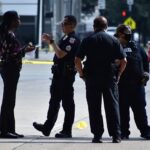
Law enforcement agencies have overhauled security protocols for Friday’s rescheduled gala, establishing a multi-layered defense perimeter extending two blocks around the venue.
The District of Columbia Metropolitan Police Department and federal law enforcement partners have deployed advanced surveillance equipment, anti-drone tech, and specialized tactical units.
Attendance capacity has been reduced by 15 percent to facilitate stricter screening protocols and maintain clear emergency exit corridors throughout the main ballroom.
Every guest, including accredited journalists and senior administration officials, faces multi-stage biometric checks and physical sweeps prior to entry.
Evolving Dynamics Between the Press and the Executive Office
The president’s decision to attend the makeup event underscores a complex dynamic between the executive branch and the press corps.
Historical records show presidential attendance at the annual dinner has been standard practice since Calvin Coolidge attended in 1924, serving as a symbol of constitutional press freedom.
While administration officials initially debated whether to reschedule the event, White House Press Secretary personnel confirmed the president prioritized demonstrating stability after the April attack.
Organizers confirmed that traditional scholarship presentations for journalism students will proceed as originally planned during the condensed program.
Expert Analysis and Security Costs
Security analysts note that the incident has permanently altered logistical planning for major public appearances involving executive leadership.
“The April breach exposed vulnerabilities in public-private venue security integration that federal agencies cannot ignore,” said Michael Vance, a former Secret Service assistant director. “Tonight’s operational footprint reflects a permanent shift toward zero-trust security zones at non-governmental sites.”
Department of Homeland Security data indicates total operational costs for securing Friday’s event are projected to exceed $3.5 million, nearly triple the budget allocated for the April gathering.
Despite the elevated costs, event organizers emphasized the necessity of upholding civic traditions in the face of security threats.
Long-Term Implications for Public Political Galas
The successful execution of Friday’s gala will set a fresh benchmark for how high-profile political events operate in urban environments amid heightened threat levels.
Industry experts predict that commercial venues hosting federal figures will face stricter federal compliance mandates and increased insurance requirements moving forward.
Observers will closely watch how federal agencies balance rigorous physical security with open press access during the upcoming election cycle.