
President Donald Trump signaled a major potential escalation in the Middle East this week, warning that the United States is prepared to open an aggressive new front against Iran-backed Houthi militants if the group launches additional attacks on international shipping lanes. The commander-in-chief announced the posture following updated military assessments detailing persistent drone and missile threats targeting commercial vessels in the Red Sea corridor. Defense experts warn that expanding military operations in Yemen could severely strain U.S. naval readiness and deplete high-end missile inventories already stressed by months of continuous combat operations.
Context Behind the Red Sea Escalation
The maritime conflict across the southern Red Sea and the strategic Bab al-Mandab Strait has intensified continuously since late 2023, when Houthi rebels initiated strikes against international commercial shipping. The Yemen-based militant group claims its campaign supports Palestinians in Gaza, though attacks have routinely targeted non-combatant merchant ships from dozens of nations.
In response, the Pentagon initiated Operation Prosperity Guardian, an international coalition aimed at providing defensive cover for global commerce. Over the past year, U.S. Navy warships and carrier-based aircraft have intercepted hundreds of Houthi attack drones, anti-ship ballistic missiles, and cruise missiles. Despite sustained American airstrikes on Houthi radar installations, missile depots, and command infrastructure, the insurgent force retains substantial offensive capability supported by Iranian logistics.
Pentagon Facing Operational Strain
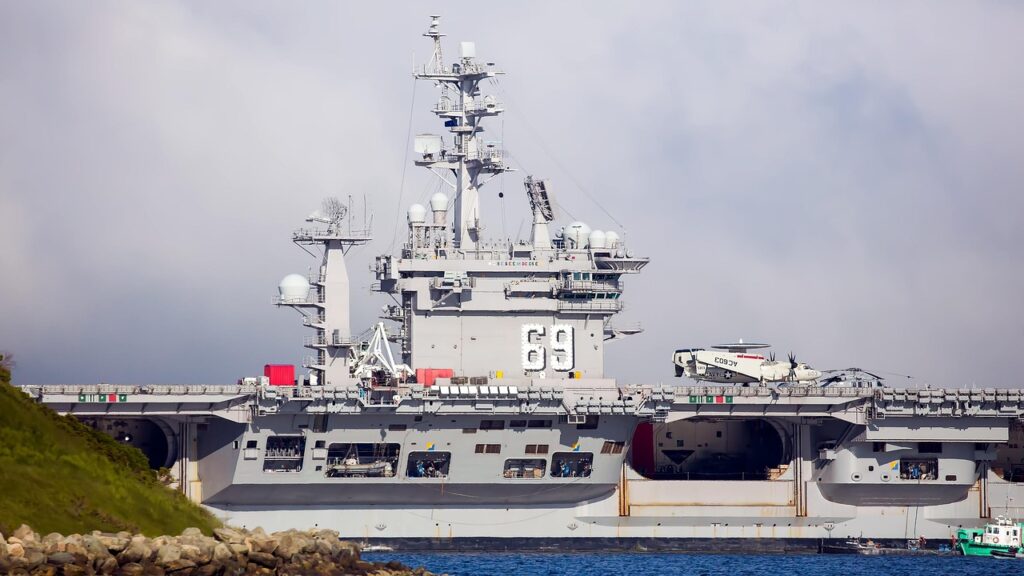
Expanding U.S. offensive strikes against Houthi forces presents complex logistical and operational challenges for American defense leaders. U.S. Navy aircraft carrier strike groups, including deployments led by the USS Dwight D. Eisenhower and USS Abraham Lincoln, have faced extended rotations to maintain continuous deterrence in the region.
Maintaining a heavy naval presence in the Middle East requires sustained deployment of Aegis-equipped guided-missile destroyers and specialized electronic warfare aircraft. Fleet commanders have raised quiet concerns regarding crew fatigue, deferred maintenance schedules, and the operational wear on surface vessels operating under heightened readiness states for extended periods.
Resource depletion presents an equally urgent operational issue for military planners. U.S. warships frequently fire advanced Standard Missile-2 (SM-2) and Standard Missile-6 (SM-6) interceptors—which cost between $2 million and $4 million per launch—to neutralize low-cost Houthi attack drones valued at approximately $20,000 each.
Asymmetric Warfare and Strategic Trade-Offs
Defense analysts emphasize that an expanded campaign against Houthi targets threatens to pull critical military assets away from other global priorities, particularly deterrence operations in the Indo-Pacific region.
“The United States is burning through specialized naval munitions at a rate that directly impacts strategic stockpiles reserved for potential high-intensity peer conflict,” said Dr. Marcus Vance, a senior fellow at the Center for Maritime Security. “The Houthis are successfully leveraging an asymmetric financial advantage, forcing Washington to expend high-value defensive capabilities against low-cost proxy weapons.”
Data from military research organizations indicates that U.S. naval forces in the Middle East have launched hundreds of advanced surface-to-air missiles over the past 12 months. Defense contractors acknowledge that replenishing these specialized interceptor stockpiles could take several years due to existing supply chain constraints and manufacturing bottlenecks.
Regional Stability and Global Supply Chain Risks
A sustained expansion of hostilities carries direct consequences for global trade networks and commercial shipping costs. The Red Sea maritime corridor normally carries roughly 12 percent of total global trade, serving as the primary energy and container passage between Europe, Asia, and the Middle East.
Major commercial shipping lines have increasingly abandoned the Red Sea route, opting instead to direct vessels around Africa’s Cape of Good Hope. This detour adds 10 to 14 days to standard transit times and has driven global container freight rates up by over 150 percent over baseline levels. Further escalation risks making these cost increases permanent, reinflating international shipping costs and consumer prices.
Key Developments to Monitor
In the coming weeks, military analysts will closely monitor pending carrier strike group deployment schedules to determine whether the Pentagon maintains its current force layout or shifts additional land-based aviation squadrons into neighboring Gulf partner nations.
Observers should also track upcoming defense supplemental spending requests sent to Congress for emergency munition procurement intended to replace depleted missile stockpiles. Additionally, diplomatic communications between Washington, Riyadh, and regional Gulf partners will indicate whether diplomatic pressure can de-escalate the crisis before additional American surface forces are committed to a protracted campaign in Yemen.