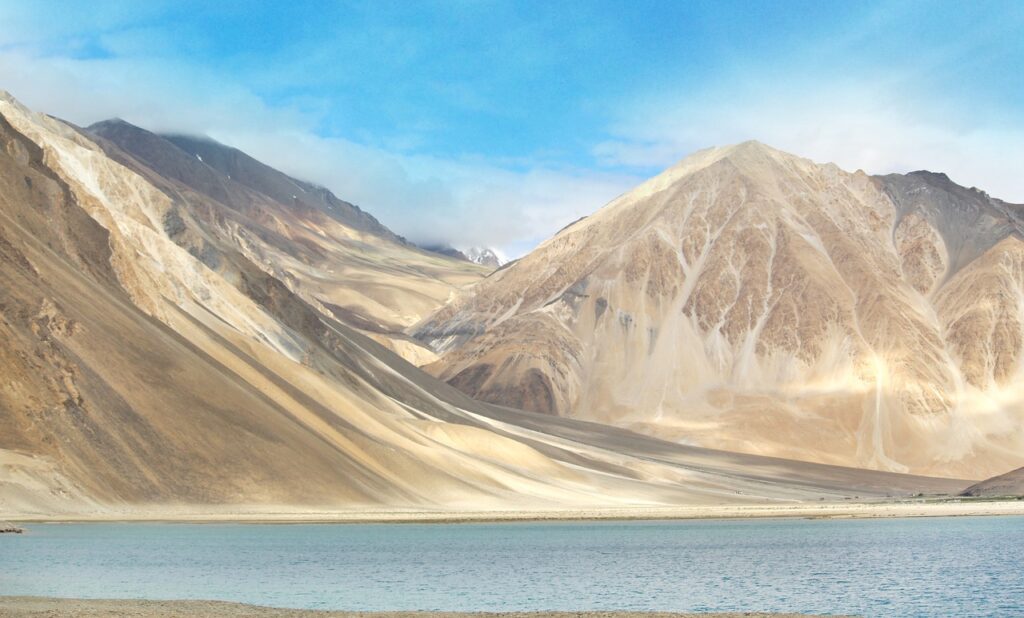

LEH, Ladakh — The Apex Body Leh, a collective of political, religious, and civil society organizations in Ladakh, officially welcomed the conclusion of climate activist Sonam Wangchuk’s 21-day hunger strike on Tuesday in Leh. The activist ended his climate fast following sustained public support and renewed appeals from regional leadership, marking a critical juncture in the high-altitude territory’s ongoing struggle for statehood and environmental protections under the Sixth Schedule of the Indian Constitution.
Background to the Himalayan Governance Dispute
The political landscape of Ladakh underwent a fundamental transformation in August 2019 when the Indian government revoked Article 370, reorganizing the former state of Jammu and Kashmir into two distinct Union Territories. While residents in Leh initially celebrated separation from Jammu and Kashmir, widespread concern soon emerged over the loss of legislative representation and local land rights.
Without a local legislative assembly, governance fell directly under a central government-appointed Lieutenant Governor. This administrative shift raised fears among indigenous communities regarding unchecked commercial exploitation, demographic changes, and environmental degradation in the fragile high-altitude desert ecosystem.
To articulate these grievances, two influential bodies formed: the Apex Body Leh (ABL) representing the Buddhist-majority Leh district, and the Kargil Democratic Alliance (KDA) representing the Muslim-majority Kargil district. Together, they outlined four core demands: full statehood for Ladakh, constitutional guarantees under the Sixth Schedule, dedicated parliamentary constituencies for both districts, and an independent regional public service commission.
Sub-Zero Agitation and Widespread Mobilization
Innovator and Ramon Magsaysay Award winner Sonam Wangchuk initiated his climate fast on March 6 in Leh, surviving solely on water and salt under extreme weather conditions where temperatures plummeted to minus 10 degrees Celsius. The venue became a focal point for thousands of local residents, monastic orders, and youth groups who gathered daily to demonstrate solidarity.
Throughout the three-week fast, thousands of residents participated in parallel community fasts across local villages. Local organizers estimate that over 60,000 citizens engaged in supportive demonstrations during the 21-day period.
Talks between the Ministry of Home Affairs and a joint delegation from ABL and KDA reached a deadlock in early March after federal officials expressed unwillingness to extend Sixth Schedule status or grant statehood. Wangchuk’s fast aimed to draw national attention back to these stalled negotiations before the announcement of India’s general elections.
Ecological Vulnerabilities and Statistical Demands
Environmental scholars and local leaders argue that Ladakh’s unique ecology requires immediate statutory safeguards. Data from the Indian Space Research Organisation (ISRO) indicates that more than 85 percent of glaciers in the Ladakh region are experiencing significant retreat due to rising global temperatures, directly threatening water security for regional agriculture.
According to census data, over 97 percent of Ladakh’s population belongs to scheduled tribes. Advocates argue that this demographic reality fulfills all traditional criteria for inclusion under the Sixth Schedule, which grants autonomous administrative powers to tribal regions to pass laws on land, forests, and local customs.
“The environmental threat in the Himalayas is not theoretical; it is an immediate crisis,” said Dr. Stanzin Norboo, a regional policy analyst. “Granting autonomous decision-making power to local indigenous bodies is the most effective mechanism to prevent destructive heavy industry from accelerating glacier melt.”
Shifting Tactics and Future Implications
With the conclusion of Wangchuk’s fast, civil society leaders announced that the agitation will transition into a new phase. Local women’s organizations and youth groups are set to begin a series of relay hunger strikes to sustain public momentum.
The Apex Body Leh and the Kargil Democratic Alliance are also planning a border march to highlight land encroachment concerns along the Line of Actual Control (LAC). Activists intend to demonstrate how local pastoralists are losing access to traditional grazing lands due to geopolitical tensions and industrial expansion.
As India enters a general election cycle, political analysts will be watching closely to see how the central government addresses the growing discontent in this strategically vital border region. The outcome of ongoing civil resistance in Ladakh could establish important precedents for environmental governance and regional autonomy across sensitive border zones throughout South Asia.