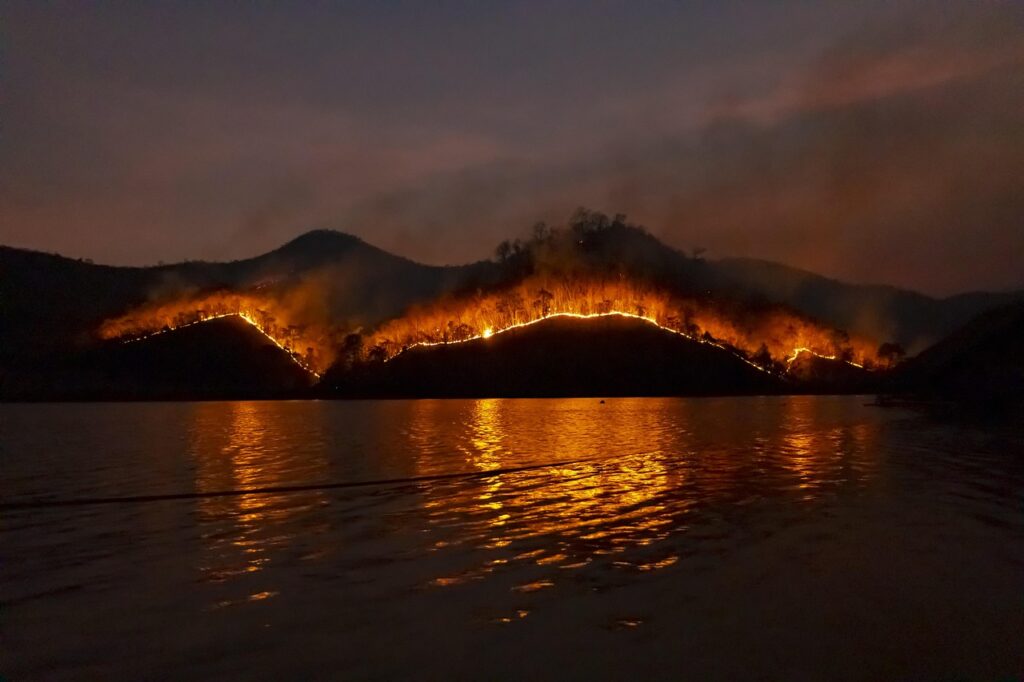

A series of rapidly spreading wildfires erupted across the Spokane area in Washington state, destroying hundreds of residential properties and forcing widespread evacuations. The sudden outbreak, which began during a period of high heat and dry conditions, overwhelmed local emergency responders as flames swept through several neighborhoods. According to official reports, the destructive blazes left behind a trail of charred debris and displaced numerous families within a matter of hours.
The emergency response focused on three distinct fire incidents operating simultaneously in the region: the Old Trails Fire, the Fairview Fire, and the Autumn Lane Fire. State and local firefighting agencies deployed heavy air support and ground crews to establish containment lines around the affected perimeters. Unpredictable wind gusts significantly hampered these containment efforts, pushing embers across dry vegetation and igniting new spot fires.
Official data shows that the combination of prolonged drought conditions and seasonal high temperatures created an extreme fire risk environment throughout the Pacific Northwest. Emergency management officials issued mandatory evacuation orders for residents living in the immediate path of the advancing flames. Local shelters quickly reached capacity as displaced individuals sought refuge from the dense smoke and advancing fire fronts.
The agricultural and residential sectors in Spokane County suffered severe losses as outbuildings, power infrastructure, and livestock were caught in the fast-moving infernos. Utility providers reported extensive damage to local power grids, leaving thousands of customers without electricity as repair crews waited for safe access to the affected zones. Economic analysts note that the local housing market and community resources will face prolonged recovery efforts in the wake of this disaster.
Emergency coordinators continue to monitor weather patterns closely as shifting winds pose ongoing challenges for containment crews on the ground. State authorities have launched a comprehensive investigation to determine the exact ignition sources for each of the three fires. Residents in adjacent zones remain on high alert as regional fire danger levels persist through the end of the dry season.
Disclaimer: This article is published for general news and informational purposes only. While every effort has been made to ensure accuracy, readers are advised to verify important information from official sources. The publisher shall not be responsible for any loss or inconvenience arising from reliance on the information published.