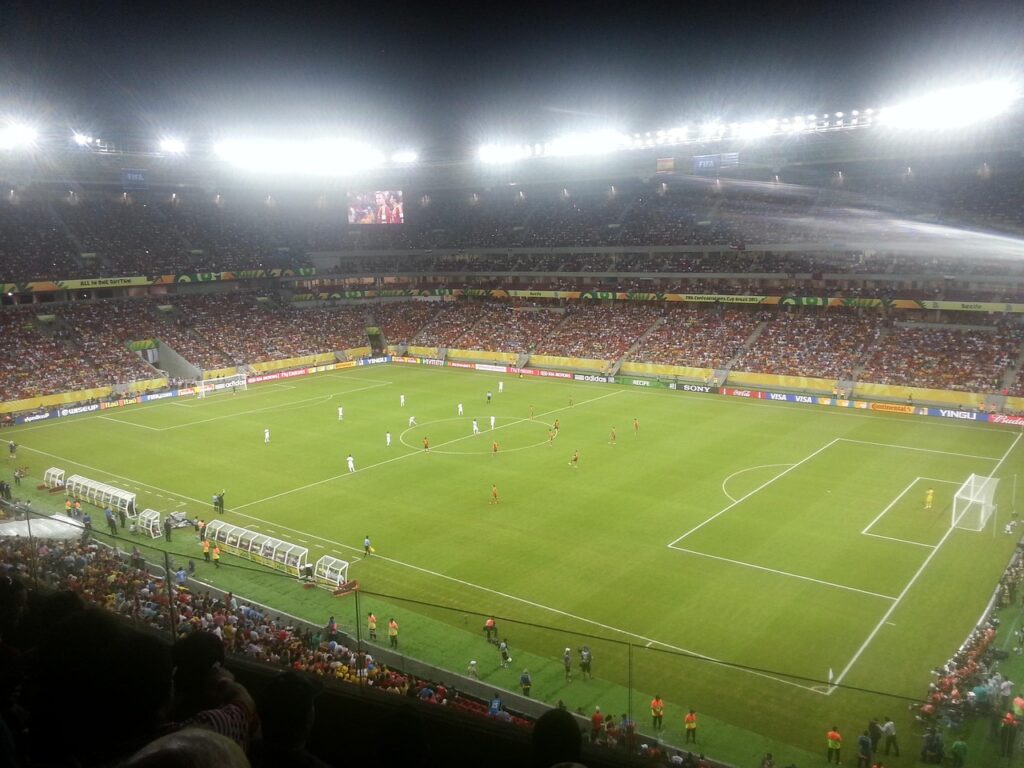

The U.S. Men’s National Team (USMNT) officially commenced its highly anticipated 2026 FIFA World Cup campaign on Friday, November 15, 2024, by facing Paraguay at the state-of-the-art SoFi Stadium in Inglewood, California. This inaugural match marked a significant milestone as the host nation began its journey in the expanded tournament, co-hosted across North America.
A New Era for U.S. Soccer
The 2026 FIFA World Cup represents a monumental moment for soccer in the United States, Mexico, and Canada. This edition is the first to feature an expanded 48-team format, increasing the number of matches and opportunities for nations worldwide.
As one of the three host nations, the USMNT automatically qualified for the tournament, bypassing the rigorous qualification rounds. This direct entry has allowed the team to focus on preparation, player development, and strategic planning for the global stage.
The decision to award the hosting rights to the ‘United 2026’ bid was seen as a testament to the growing popularity of soccer in North America. It also highlighted the region’s robust infrastructure and capacity to host an event of this magnitude.
Opening Match Details and Performance
The contest against Paraguay at SoFi Stadium drew a near-capacity crowd, eager to witness the USMNT’s first competitive World Cup fixture on home soil. The atmosphere was electric, with thousands of fans draped in red, white, and blue.
The match concluded with a hard-fought 2-1 victory for the USMNT. Forward Timothy Weah opened the scoring in the 28th minute, followed by a decisive penalty kick from captain Christian Pulisic in the second half.
Paraguay managed to pull one goal back late in the game, but the U.S. defense held firm to secure the three points. Coach Gregg Berhalter praised the team’s resilience and tactical discipline in their opening performance.
The Road Ahead: Group Stage and Beyond
Following the Paraguay match, the USMNT’s group stage schedule includes two additional fixtures. Their second game will take place on November 20 at Lumen Field in Seattle, Washington, against a yet-to-be-determined European qualifier.
The final group stage match is slated for November 25 at MetLife Stadium in East Rutherford, New Jersey, where they will face an African qualifier. These matches will be crucial for securing a strong position heading into the knockout rounds.
The expanded tournament format means the USMNT will need to navigate a potentially longer path to the final. However, playing all group stage matches on home turf is expected to provide a significant advantage in terms of travel and fan support.
Expert Insights and Economic Impact
Soccer analysts have weighed in on the USMNT’s prospects. Dr. Sarah Chen, a sports economist, noted, “The economic impact of the World Cup’s opening match alone for the Los Angeles region is estimated to be in the tens of millions of dollars, encompassing tourism, hospitality, and local spending.”
Regarding the team’s performance, former USMNT player and current commentator Alexi Lalas commented, “This win against Paraguay is a solid start. It wasn’t perfect, but getting three points in a pressure-packed opener at home shows character. The team has areas to improve, particularly in midfield control, but the foundation is there.”
Data from FIFA indicates that ticket sales for the U.S. host cities have exceeded expectations, underscoring the fervent anticipation for the tournament. Early reports suggest record viewership figures for the opening match broadcast.
Implications for U.S. Soccer Development
The 2026 World Cup is more than just a series of games; it is a catalyst for soccer development across the United States. The tournament is expected to significantly boost youth participation in the sport, inspire a new generation of players, and further elevate the profile of Major League Soccer (MLS).
The visibility provided by hosting the world’s most popular sporting event offers an unparalleled opportunity to solidify soccer’s place in the American sports landscape. Investment in grassroots programs, coaching education, and infrastructure is already seeing an uptick in anticipation of the tournament.
Success on the field for the USMNT could translate into sustained growth for the sport, attracting new fans and commercial partners. The team’s performance will be closely watched as a barometer for the sport’s trajectory in the country.
Looking ahead, the next few months will be critical for the USMNT as they refine their squad and tactics. The remaining group stage matches will test their mettle and provide valuable insights into their potential to advance deep into the tournament. Fans and stakeholders alike will be keenly observing their progression, hopeful for a historic run on home soil.