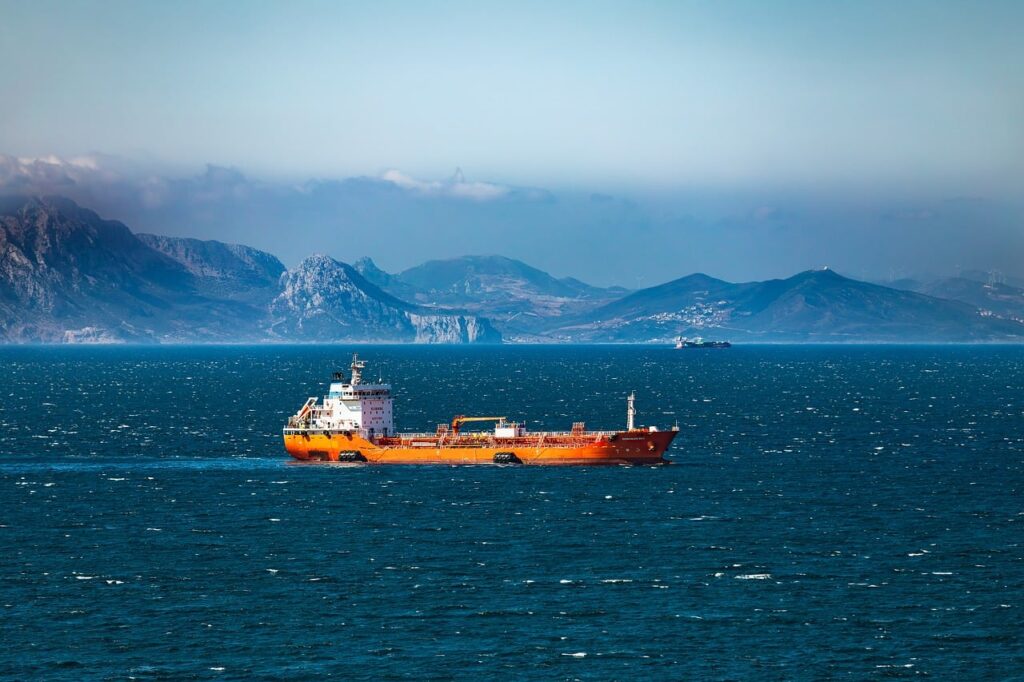

A commercial vessel was struck by Iran in the strategic Strait of Hormuz on Thursday, a U.S. official confirmed, an act widely seen as a direct challenge to ongoing U.S.-Iran diplomatic efforts and prompting a United Nations agency to immediately pause a critical humanitarian evacuation operation in the region.
Context: A Volatile Strait and Delicate Diplomacy
The Strait of Hormuz, a narrow waterway between the Persian Gulf and the Gulf of Oman, is one of the world’s most critical chokepoints for global oil transit. Approximately one-fifth of the world’s total oil supply, along with significant volumes of liquefied natural gas, passes through this strait daily. Its strategic importance makes any disruption a matter of international concern, capable of sending ripple effects across global energy markets and supply chains.
This incident unfolds against a backdrop of persistently strained relations between the United States and Iran. While specific details of a ‘U.S.-Iran deal’ remain largely undisclosed, diplomatic channels have been active in recent months, aiming to de-escalate regional tensions and potentially revive broader negotiations concerning Iran’s nuclear program and its regional activities. Such efforts often involve delicate understandings regarding maritime security and freedom of navigation.
Furthermore, the pause of a United Nations evacuation effort underscores the broader humanitarian impact of regional instability. The UN agency was reportedly engaged in evacuating vulnerable populations from a conflict-affected zone in the vicinity, an operation now jeopardized by the heightened security risks in international waters.
The Incident: A Direct Challenge
Details emerging from U.S. defense officials indicate that the commercial vessel, whose identity remains undisclosed for security reasons, sustained damage following a strike attributed to Iranian forces. While the exact nature of the strike, whether by missile, drone, or other means, has not been fully clarified, the U.S. official characterized it as a deliberate act of aggression. The vessel was reportedly operating in international waters within the strait when the incident occurred.
Maritime security analysts quickly pointed to the strike as a calculated move by Tehran. “This isn’t a random act; it’s a clear signal,” stated Dr. Anya Sharma, a maritime security expert at the International Policy Institute. “Iran is demonstrating its capacity to disrupt vital shipping lanes, potentially as leverage in ongoing diplomatic discussions or as a response to perceived pressures.”
The immediate consequence was the suspension of the UN’s humanitarian evacuation. A spokesperson for the UN agency stated that the safety of their personnel and those being evacuated could no longer be guaranteed in the immediate aftermath of the attack, forcing a temporary cessation of operations.
International Reactions and Market Impact
The U.S. State Department issued a swift condemnation, calling the attack an “unprovoked and destabilizing action” that threatens regional and global security. While no direct military response has been announced, U.S. naval assets in the region reportedly increased their alert level and surveillance activities. Other international powers, including the United Kingdom and France, also expressed deep concern, urging all parties to exercise restraint and uphold international law.
Global oil markets reacted with immediate volatility. Crude oil futures saw an initial spike, reflecting fears of potential supply disruptions from the critical chokepoint. Shipping insurance premiums for vessels transiting the Strait of Hormuz are also anticipated to rise, adding to operational costs for international trade.
Data from Lloyd’s List Intelligence indicates that over 17 million barrels of oil per day, along with significant volumes of LNG, typically traverse the Strait of Hormuz. Any prolonged disruption or increase in perceived risk could have substantial economic consequences worldwide.
Implications: A Precarious Path Forward
The attack in the Strait of Hormuz significantly complicates the already fragile diplomatic landscape between the U.S. and Iran. It raises questions about Iran’s commitment to de-escalation and its willingness to use its strategic position to exert pressure. The incident could either prompt a more robust international response to maritime security or lead to a further entrenchment of positions, making future negotiations more challenging.
For the humanitarian community, the pause in UN evacuation efforts highlights the severe human cost of geopolitical tensions. The ability to conduct critical aid operations in conflict zones relies heavily on safe passage, which is now directly undermined. International efforts will likely focus on securing guarantees for humanitarian corridors and ensuring the safety of non-combatant shipping.
Observers will closely watch for the specific U.S. and international responses, the duration of the UN evacuation pause, and any further statements or actions from Tehran. The incident serves as a stark reminder of the volatile nature of the Middle East and the profound global implications of events in this critical region.