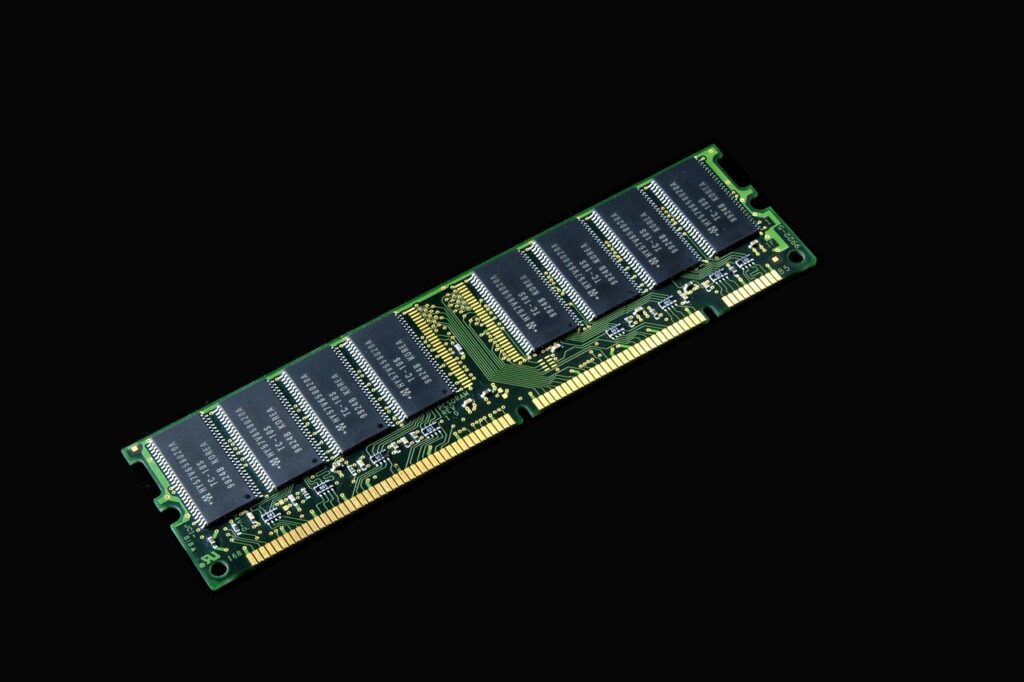

Innovation in Chip Architecture
IBM researchers announced a breakthrough in semiconductor technology this week that promises to deliver computer chips with 50 percent higher performance while simultaneously achieving significant reductions in energy consumption. This development, revealed at the company’s New York research facility, marks a pivotal shift in how manufacturers approach the physical limitations of current silicon-based transistor designs.
The Context of Scaling Limits
For decades, the semiconductor industry has relied on Moore’s Law—the observation that the number of transistors on a microchip doubles approximately every two years. However, as transistors have shrunk to the nanometer scale, engineers have hit a “power wall,” where heat and energy leakage prevent further performance gains without exponential increases in electricity usage.
The industry is currently transitioning toward gate-all-around (GAA) transistor architectures to overcome these hurdles. IBM’s latest advancement builds upon this transition, utilizing refined materials and manufacturing processes to optimize electron flow at the sub-atomic level.
Technical Advancements and Performance Gains
The core of this innovation lies in the vertical integration of transistor components. By stacking transistors in a vertical orientation rather than the traditional lateral layout, IBM engineers have effectively increased the density of the chip without increasing its physical footprint.
Data provided by IBM indicates that this architectural shift allows for a 50 percent increase in performance compared to current industry-standard chips. More importantly, the power-efficiency gains suggest that devices utilizing these chips could see battery life improvements of up to 30 percent, depending on the workload intensity.
Industry analysts note that such improvements are essential for the next generation of artificial intelligence models and high-performance computing (HPC) clusters. As AI workloads become more complex, the demand for chips that can process vast datasets while maintaining a manageable thermal profile has reached a critical inflection point.
Industry Implications
This development carries broad implications for both consumer electronics and enterprise infrastructure. For the smartphone market, the efficiency gains could enable longer periods of high-intensity tasks like video rendering or augmented reality applications without the device overheating.
For the data center industry, the impact is even more profound. Reducing power consumption by a significant margin lowers operational costs and contributes to corporate sustainability goals. As data centers currently account for approximately one to two percent of global electricity usage, even incremental efficiency gains at the chip level create massive aggregate energy savings.
Future Outlook
Looking ahead, the focus shifts to the scalability of this manufacturing process. While the technology has been successfully tested in a laboratory setting, transitioning to mass production requires new fabrication equipment and standardized manufacturing techniques.
Market observers will be watching to see how quickly IBM can license or integrate this technology into existing global supply chains. The success of this rollout will likely dictate the pace at which the next generation of energy-efficient AI-driven hardware reaches the public market.