






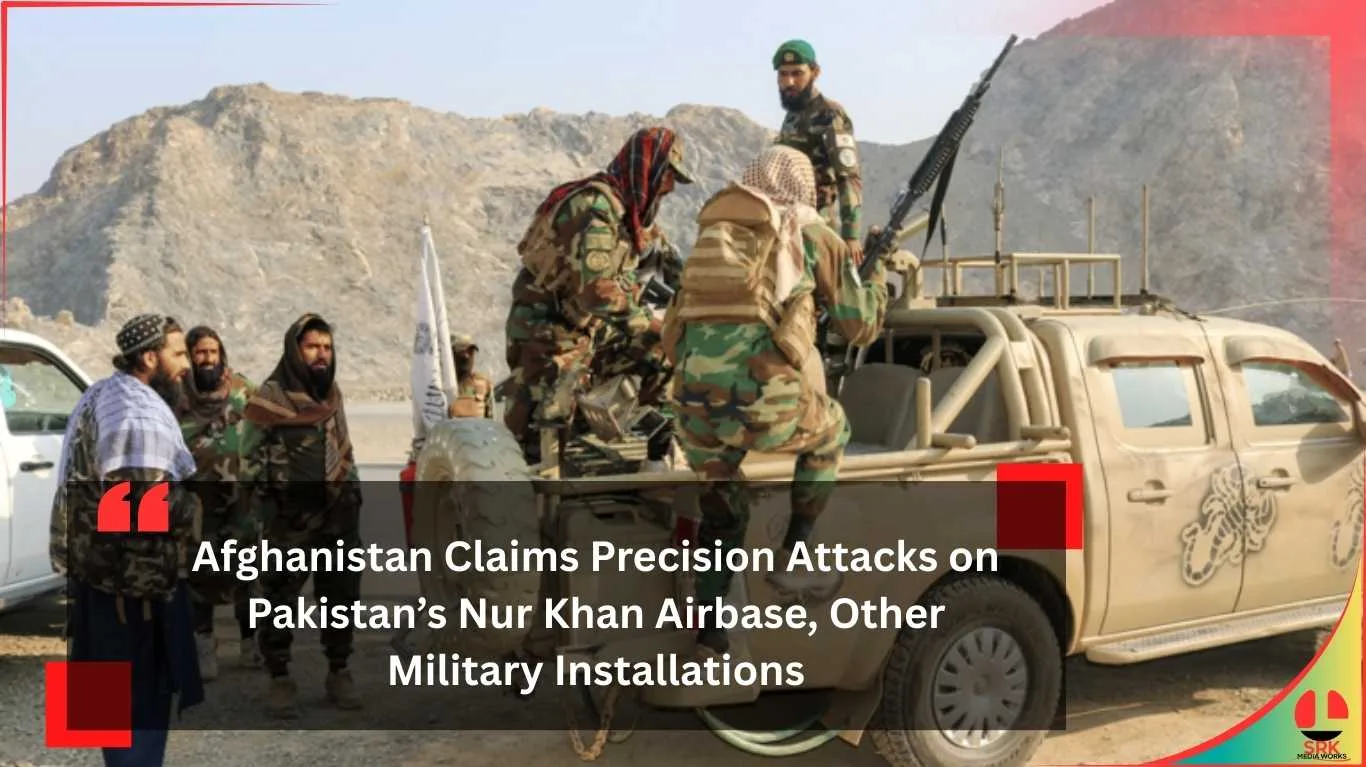
In a dramatic escalation of regional hostilities, Afghanistan has claimed responsibility for precision strikes on Pakistan’s Nur Khan Airbase and other military installations, intensifying tensions between the two neighbors. The announcement has drawn global attention, raising concerns about stability in South Asia and the potential for further military confrontation.
Background of the Strikes
- Nur Khan Airbase Targeted: Afghanistan’s defense officials claimed that precision-guided munitions were used to strike Pakistan’s Nur Khan Airbase, a key military facility near Rawalpindi.
- Other Installations: Reports suggest additional strikes on Pakistani military infrastructure, though details remain limited.
- Strategic Context: The attacks come amid ongoing border clashes and accusations of cross-border militancy.
- Pakistan’s Response: While official confirmation is pending, Pakistani authorities have condemned the claims, calling them provocative and destabilizing.
Strategic Importance of Nur Khan Airbase
- Military Hub: Serves as a critical base for Pakistan Air Force operations.
- Symbolic Value: Targeting the airbase sends a strong message about Afghanistan’s military capabilities.
- Regional Security: Any damage to such installations could disrupt Pakistan’s defense readiness.
- Diplomatic Fallout: Raises the stakes in already strained Afghanistan-Pakistan relations.
Comparative Analysis of Regional Military Tensions
| Country | Recent Actions | Strategic Concerns | Diplomatic Position |
|---|---|---|---|
| Afghanistan | Claimed precision strikes on Nur Khan Airbase | Assertion of military capability | Calls for recognition of sovereignty |
| Pakistan | Condemned Afghan claims | Security of military infrastructure | Denies escalation, seeks stability |
| India | Monitoring developments | Regional security, border stability | Advocates restraint |
| Global Powers | Watching closely | Energy routes, counter-terrorism | Urging de-escalation |
Implications of the Strikes
- Escalation Risk: Precision strikes on military installations could trigger retaliatory measures.
- Regional Security Concerns: Raises fears of broader conflict spilling across borders.
- Global Attention: International powers may intervene diplomatically to prevent escalation.
- Civilian Anxiety: Populations near conflict zones express heightened concern over safety.
Public and Expert Reaction
- Afghan Citizens: Expressed mixed reactions, with some supporting the show of strength and others fearing retaliation.
- Pakistani Citizens: Concerned about potential escalation and its impact on daily life.
- Analysts: Warned that the incident could destabilize South Asia if not addressed diplomatically.
- International Observers: Called for restraint and renewed dialogue between Afghanistan and Pakistan.
Lessons from the Incident
- Defense Preparedness: Strong military infrastructure is vital to withstand precision strikes.
- Diplomatic Engagement: Dialogue remains essential to avoid escalation.
- Regional Cooperation: Neighboring countries must prioritize stability over confrontation.
- Global Mediation: International actors may need to step in to facilitate peace.
Conclusion
Afghanistan’s claim of precision attacks on Pakistan’s Nur Khan Airbase and other military installations underscores the fragility of regional peace and the risks of escalating conflict. While the strikes highlight Afghanistan’s military capabilities, they also raise urgent questions about the future of Afghanistan-Pakistan relations. As tensions mount, the path forward lies in diplomacy, restraint, and collective efforts to safeguard regional stability.
Disclaimer
This article is based on publicly available information and aims to highlight Afghanistan’s claim of precision strikes on Pakistan’s Nur Khan Airbase and other military installations. It does not intend to criticize or promote any individual, country, or organization. The content is for informational and educational purposes only, reflecting broader issues in regional security, diplomacy, and conflict management.



Если вы ищете надежный автосервис для вашей Тойота в Москве, вам повезло. Профессионалы помогут вам с ремонтом и техническим обслуживанием.
Если вам нужен качественный и надежный автосервис Тойота, мы предлагаем широкий спектр услуг для вашего автомобиля.
Работа с автомобилями этой марки требует особого подхода. Мастера сервиса постоянно повышают свою квалификацию для качественного обслуживания.
В нашем сервисе используются современные технологии и оборудование. Благодаря этому, мы можем гарантировать качество выполняемых работ.
Обращаясь в автосервис Тойота, вы можете рассчитывать на высокое качество услуг. Наши клиенты всегда остаются довольны результатом работ.
I’ve just been exploring the rich summer color palette and how it works with different skin tones, especially porcelain skin with yellow undertones. Using tools like color analysis pro and unpaid online color analysis quizzes can actually help determine what season I am and which clothing colors work with my skin best—this was a turning point when I found out soft summer and dark summer color palettes bring different vibes for my skin tone. If you’re unclear about your undertone, the vein test undertone and skin tone chart can be very helpful in establishing whether you have olive skin, amber skin tone, or more of a neutral skin tone.
For anyone trying to dig deeper into seasonal color analysis, I’d suggest checking out references that include a skin shade chart and analysis of what colors complement best on pale skin or yellow undertone skin. Understanding your skin color palette, whether it’s closer to deep autumn colour palette or light spring color palette, can make selecting clothes and hair color try on considerably easier and more enjoyable. For a solid overview and some handy tools, here’s a excellent site with information on color-analysis pro and more yellow undertone skin .