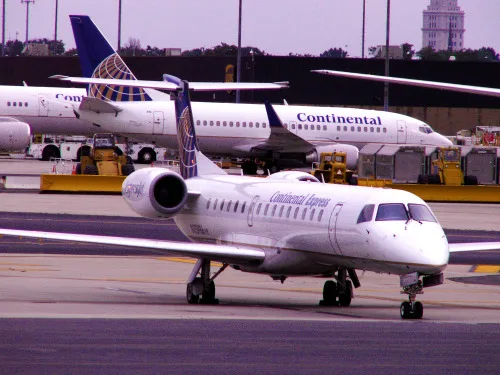
Major U.S. carriers and international aviation entities faced a turbulent news cycle this week as Southwest Airlines navigated widespread technical disruptions, Delta Air Lines reported historic passenger demand, and a French court reached a final verdict regarding the 2009 Air France Flight 447 crash.
Technical Disruptions and Operational Resilience
Southwest Airlines grounded flights across its network this week following what the company described as intermittent technology issues. The disruption caused cascading delays for thousands of passengers, highlighting the vulnerability of aging legacy airline IT systems.
Airlines increasingly rely on complex, interconnected software to manage flight crews, scheduling, and baggage handling. When these systems fail, the impact is immediate and often requires hours or days to fully stabilize.
The Surge in Summer Travel Demand
Despite operational challenges, the aviation sector is experiencing a significant financial rebound as Delta Air Lines announced record-breaking booking volumes for the upcoming summer season. Data from the International Air Transport Association (IATA) suggests that global air travel is approaching or exceeding pre-pandemic passenger levels.
This surge in demand presents a double-edged sword for airlines. While revenue metrics are hitting historic highs, the pressure on ground staff, maintenance crews, and air traffic control infrastructure remains intense.
Legal Resolution for a Decade-Old Tragedy
In a separate development, a French court acquitted Air France and Airbus of involuntary manslaughter charges related to the 2009 crash of Flight 447. The disaster, which claimed 228 lives over the Atlantic Ocean, became one of the most scrutinized incidents in modern aviation history.
The trial focused on the failure of pitot tubes—speed sensors—and the subsequent reactions of the flight crew. While the court acknowledged technical failures, it found insufficient evidence to prove criminal negligence on the part of the manufacturers or the airline.
Implications for the Future of Aviation
For the aviation industry, the immediate focus remains on digital infrastructure modernization. As airlines scale to meet record demand, the stability of reservation and dispatch systems will be the primary bottleneck for operational efficiency.
Industry analysts suggest that the acquittal in the Air France case will likely prompt further debates regarding pilot training standards for automated systems. Moving forward, stakeholders should monitor how airlines balance aggressive growth strategies with the necessity of investing in robust, redundant technological frameworks to avoid future widespread outages.