









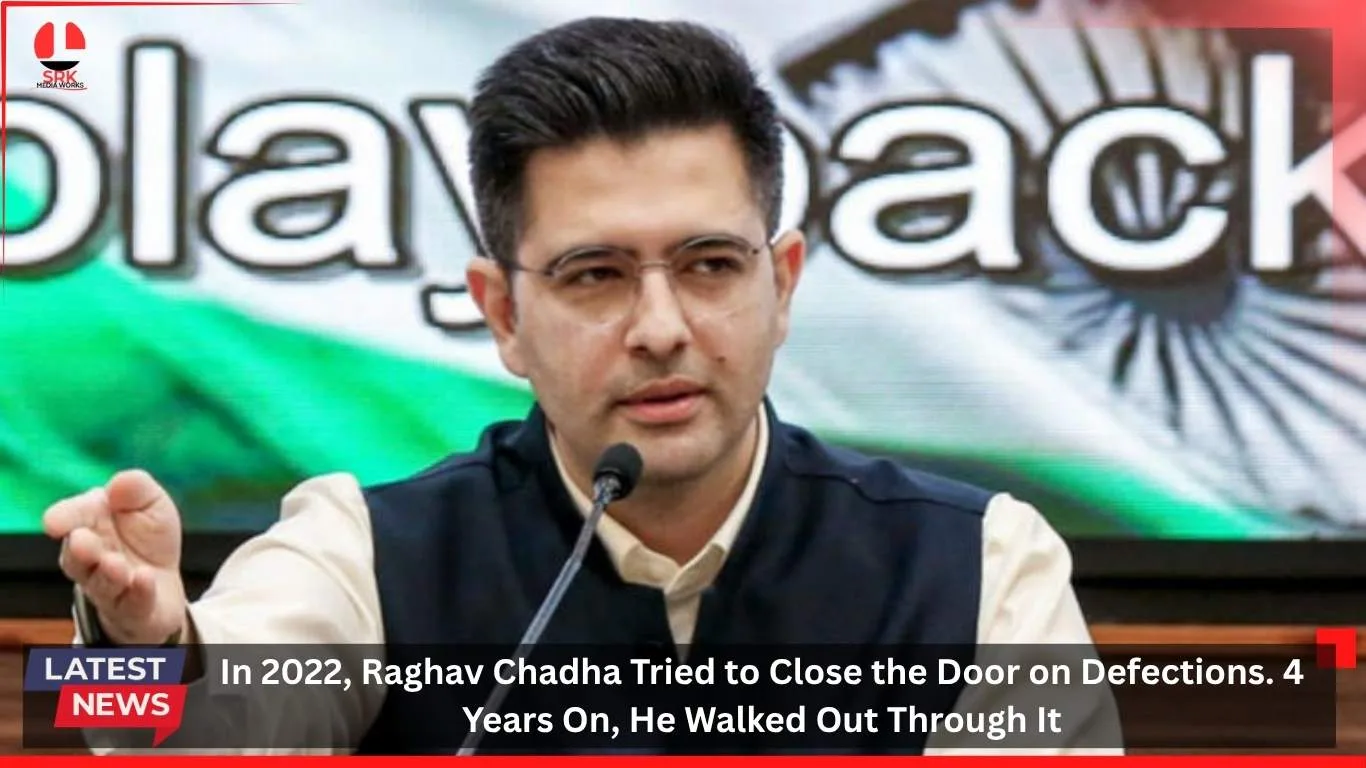
Raghav Chadha’s political journey has taken a dramatic turn. In 2022, the young parliamentarian was among the most vocal advocates for anti-defection measures, pushing for stricter rules to prevent elected representatives from switching sides. Four years later, Chadha himself has walked through the very door he once sought to close, leaving his party and sparking a wave of debate about loyalty, ideology, and the realities of Indian politics.
The 2022 Stand Against Defections
Back in 2022, Chadha had positioned himself as a reformist voice. He argued that defections weakened democracy, betrayed voter trust, and destabilized governance. His proposals included:
- Stricter Enforcement of the Anti-Defection Law under the Tenth Schedule.
- Disqualification of Defectors without delay to prevent manipulation of legislative numbers.
- Public Accountability Measures to ensure voters were informed about representatives switching sides.
At the time, Chadha’s stance was seen as a bold attempt to strengthen democratic institutions.
The 2026 Exit
Fast forward to 2026, Chadha’s decision to leave his party has raised eyebrows. Critics point out the irony of his move, while supporters argue that political realities often force leaders to reassess their positions. His exit has triggered discussions about whether defections are always opportunistic or sometimes a reflection of deeper ideological differences.
Comparative Analysis of Defection Trends
| Year | High-Profile Defections | Impact on Politics | Public Reaction |
|---|---|---|---|
| 2019 | Multiple state-level shifts | Coalition instability | Mixed |
| 2022 | Raghav Chadha’s anti-defection push | Strengthened debate | Positive reformist image |
| 2024 | Several MPs switched sides | National debates on loyalty | Critical of opportunism |
| 2026 | Chadha’s own exit | Renewed debate on hypocrisy vs pragmatism | Divided opinions |
This timeline shows how defections have remained a recurring theme in Indian politics, shaping both governance and public perception.
Expert Opinions
Political analysts suggest Chadha’s move reflects the tension between idealism and pragmatism. While his earlier stance was rooted in principle, his exit may have been driven by strategic calculations, personal ambitions, or disagreements with party leadership. Experts argue that defections are often symptomatic of deeper structural issues within parties.
Public Reactions
- Critics: Accuse Chadha of hypocrisy, pointing to his 2022 campaign against defections.
- Supporters: Defend his decision as a necessary step in a changing political landscape.
- Neutral Observers: Highlight the broader issue of party discipline and ideological coherence in Indian politics.
Historical Context
Defections have long plagued Indian politics. The anti-defection law introduced in 1985 sought to curb the practice, but loopholes and political maneuvering have kept it alive. Chadha’s journey from reformist to defector reflects the enduring challenge of balancing principle with political survival.
Future Implications
Chadha’s exit could have ripple effects:
- Party Dynamics: His departure may weaken his former party’s position in certain regions.
- Policy Debates: Renewed calls for strengthening anti-defection laws.
- Public Trust: Voter skepticism about political loyalty may deepen.
Conclusion
Raghav Chadha’s transformation from an anti-defection crusader in 2022 to a defector in 2026 encapsulates the contradictions of Indian politics. His journey highlights the tension between principle and pragmatism, raising questions about whether defections are acts of betrayal or reflections of political reality. As debates continue, Chadha’s move will remain a case study in the complexities of democratic politics.
Disclaimer
This article is a political news analysis created for informational and educational purposes. It is based on expert opinions, historical context, and publicly available information. The content does not represent official statements from political parties, leaders, or institutions. Readers are advised to consult multiple sources for a comprehensive understanding of the subject.