
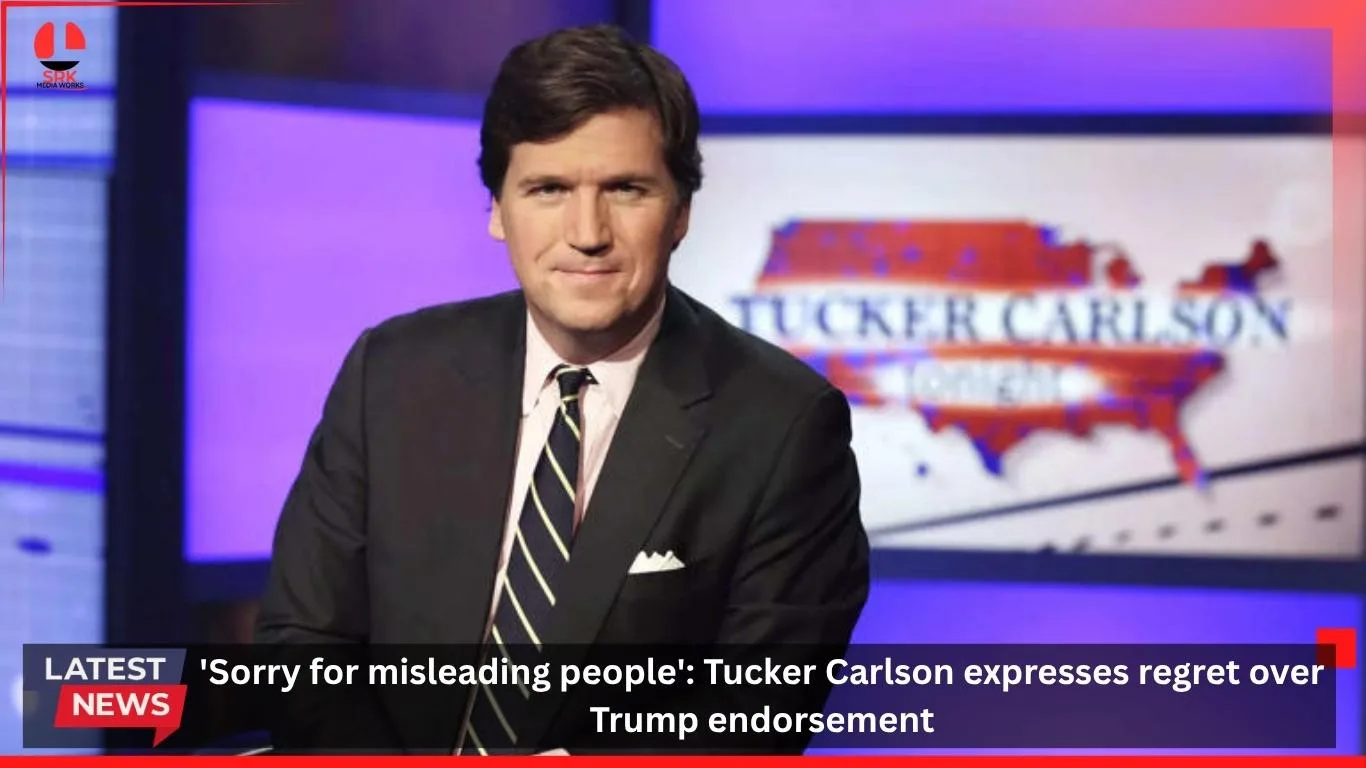
In a surprising turn of events, conservative commentator Tucker Carlson has publicly expressed regret over his endorsement of Donald Trump, admitting that his earlier support may have misled viewers and followers. This revelation has sparked intense debate across political circles, media platforms, and among the American public, raising questions about the influence of media personalities on political outcomes and the responsibility they bear in shaping public opinion.
Carlson’s Statement and Context
Carlson’s admission came during a recent discussion where he acknowledged that his endorsement of Trump was not fully aligned with his personal convictions. He stated, “Sorry for misleading people. I should have been more careful with my words and the weight they carried.” This candid reflection marks a rare moment of self-criticism from one of the most influential voices in conservative media.
The timing of Carlson’s regret is significant. With Trump continuing to dominate headlines and political discourse, Carlson’s shift in tone highlights the growing divisions within conservative ranks. His statement has been interpreted by many as a recognition of the broader consequences of media endorsements in shaping political narratives.
Media Influence and Political Endorsements
The role of media figures in endorsing political candidates has long been a subject of scrutiny. Endorsements from high-profile commentators can sway public opinion, mobilize voter bases, and even alter the trajectory of political campaigns. Carlson’s regret underscores the ethical dilemma faced by media personalities: balancing personal beliefs with professional responsibilities.
Key Implications:
- Trust in Media: Carlson’s admission may erode trust among viewers who relied on his commentary for guidance.
- Political Accountability: It raises questions about whether media figures should be held accountable for the political consequences of their endorsements.
- Public Perception: The statement could influence how audiences perceive both Carlson and Trump, potentially reshaping conservative discourse.
Reaction Across Political Spectrum
Carlson’s statement has elicited mixed reactions. Supporters of Trump have criticized him for backtracking, accusing him of betraying the movement. Meanwhile, critics of Trump have welcomed Carlson’s honesty, viewing it as a step toward greater transparency in media.
Comparative Reactions Table
| Group/Community | Reaction to Carlson’s Regret | Potential Impact |
|---|---|---|
| Trump Supporters | Anger, disappointment, accusations of betrayal | Possible decline in Carlson’s influence |
| Trump Critics | Approval, cautious optimism | Strengthened credibility among moderates |
| Media Analysts | Highlighting ethical responsibility of endorsements | Renewed debate on media accountability |
| General Public | Mixed feelings, curiosity about motives | Increased skepticism toward endorsements |
Historical Context of Media Endorsements
Carlson’s regret is not unprecedented. Throughout history, media figures have played pivotal roles in shaping political landscapes. From newspaper endorsements in the 20th century to television personalities in the modern era, the influence of media has been undeniable. However, rare are the occasions when such figures openly admit to regretting their endorsements.
This moment may serve as a turning point, encouraging other commentators to reflect on their roles in political discourse and the potential consequences of their influence.
Impact on Trump’s Political Narrative
While Carlson’s regret may not drastically alter Trump’s political standing, it does contribute to the broader narrative surrounding his leadership. Trump’s reliance on media endorsements has been a cornerstone of his political strategy. Losing the unequivocal support of a prominent figure like Carlson could signal cracks in the foundation of his media-driven influence.
Pivot Analysis: Media Endorsements vs. Public Trust
| Factor | Positive Outcome for Candidate | Negative Outcome for Candidate |
|---|---|---|
| Strong Media Endorsement | Boosts visibility, mobilizes base | Risk of backlash if endorsement is regretted |
| Public Trust in Media | Reinforces credibility | Decline in trust damages candidate’s image |
| Endorser’s Reputation | Adds legitimacy | Regret undermines candidate’s support |
Broader Implications for Conservative Media
Carlson’s statement may prompt a reevaluation within conservative media circles. As audiences become more critical of endorsements, commentators may adopt more cautious approaches. This shift could lead to:
- Greater Transparency: Clearer distinctions between personal opinions and professional analysis.
- Reduced Polarization: Encouraging balanced discussions rather than outright endorsements.
- Ethical Standards: Establishing guidelines for media figures to avoid misleading audiences.
Public Discourse and Future Outlook
The admission has sparked conversations about the responsibility of media figures in democratic societies. As platforms like television, radio, and digital media continue to shape political narratives, the accountability of commentators becomes increasingly vital. Carlson’s regret may serve as a catalyst for broader discussions on media ethics, political endorsements, and the intersection of journalism and opinion.
Looking ahead, the incident could influence how future endorsements are perceived. Audiences may demand greater authenticity and transparency, while commentators may exercise more caution in aligning themselves with political figures.
Conclusion
Tucker Carlson’s expression of regret over his Trump endorsement is more than a personal admission—it is a reflection of the complex relationship between media, politics, and public trust. By acknowledging his mistake, Carlson has opened the door to critical discussions about the role of media personalities in shaping political outcomes and the ethical responsibilities they bear. Whether this moment leads to lasting change in media practices remains to be seen, but it undoubtedly marks a significant chapter in the ongoing dialogue about influence, accountability, and democracy.
Disclaimer
This article is a journalistic analysis based on publicly available information and commentary. It does not represent endorsement or opposition to any political figure. The content is intended for informational purposes only, highlighting the dynamics of media influence and political discourse. Readers are encouraged to form their own opinions based on diverse sources and perspectives.