








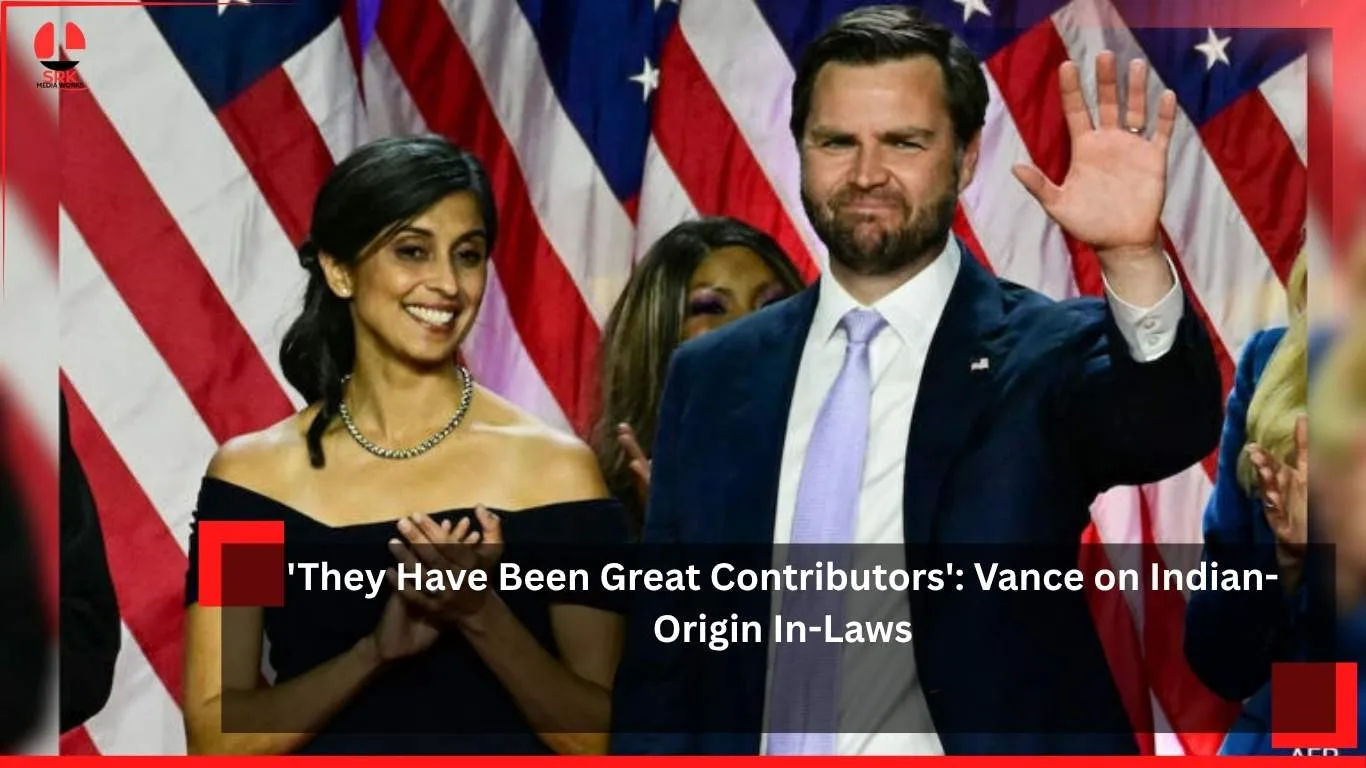
Senator JD Vance has spoken warmly about his Indian-origin in-laws, describing them as “great contributors” to both his family and society. His remarks, made during a public interaction, highlight the growing influence of Indian-origin communities in the United States and the personal connections that shape political narratives. Vance’s comments have drawn attention not only to his family ties but also to the broader role of Indian-Americans in shaping cultural, economic, and political landscapes.
Vance’s Statement
- Acknowledgment of Contribution: Vance praised his in-laws for their hard work, values, and dedication.
- Cultural Appreciation: He emphasized the importance of Indian traditions and how they have enriched his family life.
- Broader Message: His remarks were framed as recognition of the Indian-American community’s role in strengthening the US.
- Personal Connection: By highlighting his in-laws, Vance underscored the personal dimension of cultural integration.
Indian-Origin Influence in the US
The Indian diaspora has become one of the most influential immigrant communities in America.
- Economic Impact: Indian-origin professionals dominate sectors such as technology, medicine, and finance.
- Political Presence: Increasing representation in Congress and state legislatures.
- Cultural Contribution: Festivals, cuisine, and traditions have become part of mainstream American life.
- Educational Excellence: Indian-origin students consistently excel in academics, contributing to innovation and research.
Comparative Overview of Indian-Origin Contributions
| Sector | Contribution | Impact |
|---|---|---|
| Technology | CEOs of major firms (Google, Microsoft) | Global innovation leadership |
| Medicine | Surgeons, researchers, healthcare providers | Strengthened US healthcare system |
| Politics | Lawmakers, advisors, community leaders | Representation and advocacy |
| Culture | Cuisine, festivals, arts | Enriched American diversity |
This overview shows the breadth of Indian-origin contributions across multiple sectors.
Pivot Analysis: Personal Ties vs. Community Recognition
| Scenario | Political Impact | Social Impact | Cultural Impact |
|---|---|---|---|
| Personal ties highlighted | Humanizes political figure | Builds relatability | Promotes inclusivity |
| Community recognition emphasized | Strengthens diaspora support | Encourages integration | Expands cultural acceptance |
The pivot analysis highlights how Vance’s remarks serve both personal and political purposes.
Reactions
- Indian-American Community: Welcomed Vance’s comments as acknowledgment of their role in US society.
- Political Analysts: Noted that personal connections often influence political narratives and voter perceptions.
- Public Sentiment: Many praised the inclusivity of his remarks, while others viewed them as strategic outreach.
Broader Implications
Vance’s statement reflects the growing importance of immigrant communities in shaping American politics. By recognizing his Indian-origin in-laws, he not only personalizes his political image but also underscores the broader narrative of diversity and contribution. The remarks highlight how family ties can serve as bridges between cultures, reinforcing the idea of America as a nation enriched by immigrants.
Conclusion
JD Vance’s acknowledgment of his Indian-origin in-laws as “great contributors” resonates beyond personal appreciation. It reflects the broader story of Indian-Americans’ role in the United States, from economic innovation to cultural enrichment. His remarks serve as both a tribute to his family and a recognition of the diaspora’s enduring impact on American society.
Disclaimer
This article is a journalistic analysis created for informational purposes. It does not represent official government statements or endorsements. Readers are encouraged to consult multiple perspectives for updates. The content is intended for educational and news reporting use only, without promoting any political agenda.