






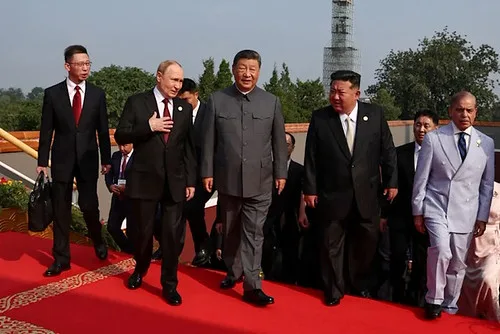
Diplomatic Maneuvering in Pyongyang
Chinese President Xi Jinping arrived in Pyongyang on Thursday for a high-stakes summit with North Korean leader Kim Jong Un, marking the first visit by a Chinese head of state to the country in 14 years. The two-day visit aims to recalibrate the relationship between the longtime allies as both nations navigate intensifying pressure from the United States regarding trade, regional security, and nuclear proliferation.
The summit comes at a critical juncture for both leaders. President Xi seeks to leverage his influence over Pyongyang as a diplomatic bargaining chip in his ongoing trade and geopolitical disputes with the Trump administration. Simultaneously, Kim Jong Un is looking to secure economic support and diplomatic legitimacy as his negotiations with Washington regarding denuclearization have stalled.
The Context of Sino-North Korean Relations
The relationship between Beijing and Pyongyang has historically been described as being as close as “lips and teeth,” though it has suffered from significant friction in recent years. China, North Korea’s primary economic benefactor, has previously supported United Nations sanctions aimed at curbing Pyongyang’s nuclear and ballistic missile programs. However, Beijing has consistently prioritized regional stability over the total collapse of the North Korean regime, fearing that a unified, pro-Western Korea on its border would pose a direct national security threat.
For Kim Jong Un, the visit serves as a vital signal of international support. By hosting the Chinese leader, Kim demonstrates to his domestic audience and the international community that he is not isolated, despite the stringent economic sanctions currently in place. Analysts suggest that the visit is calculated to bolster Kim’s position ahead of any future talks with the United States, providing him with a stronger hand by demonstrating a restored “strategic alignment” with Beijing.
Strategic Implications and Expert Analysis
Geopolitical analysts note that Xi’s presence in Pyongyang is not merely about bilateral ties; it is a clear message to Washington. According to the Council on Foreign Relations, Beijing views North Korea as a critical buffer zone. By re-engaging directly with Kim, Xi is signaling that China remains the primary power broker in East Asian security, effectively pushing back against U.S. efforts to isolate North Korea entirely.
Data from the Chinese Ministry of Commerce indicates that while trade between the two nations has plummeted due to sanctions, China remains the destination for over 90% of North Korea’s exports. This economic dependency provides Beijing with significant leverage. Experts suggest that Xi may offer limited sanctions relief or increased humanitarian aid in exchange for a commitment from Kim to refrain from further nuclear testing, which would be a welcome development for regional stability.
Looking Ahead
The success of these talks will likely be measured by the tone of upcoming communications from the U.S. State Department and the subsequent actions of the North Korean military. Observers should monitor whether this visit leads to a resumption of the Six-Party Talks or if it merely serves to solidify a new status quo where North Korea remains a nuclear-armed state under a protective Chinese umbrella. The international community will watch closely to see if this diplomatic summit results in any concrete policy shifts or if it remains a symbolic gesture intended to influence upcoming negotiations with the West.