

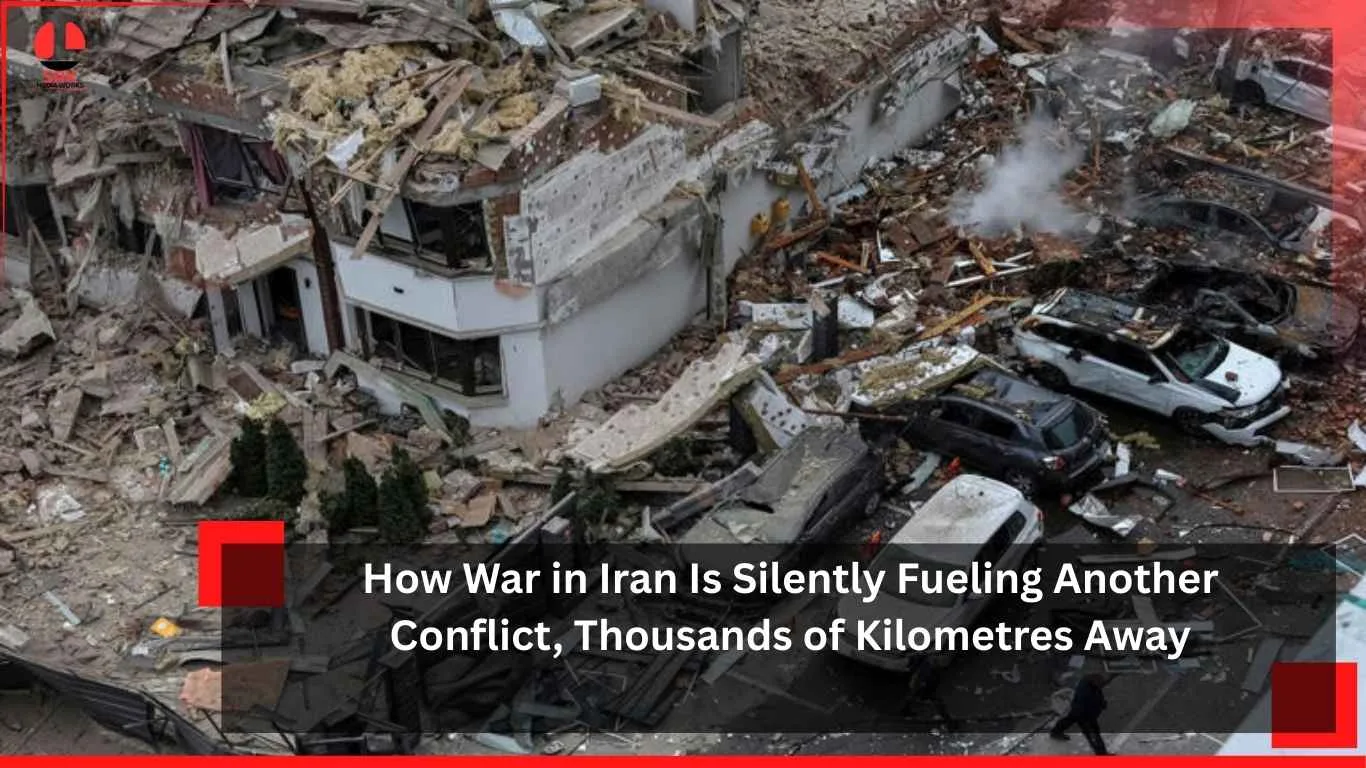
The ongoing war in Iran is not only destabilizing the Middle East but also silently fueling another conflict thousands of kilometres away, according to analysts who warn of ripple effects across regions. While the battles inside Iran dominate headlines, the indirect consequences are reshaping geopolitics, trade, and security in distant parts of the world.
The Ripple Effect of Iran’s War
Iran’s war has triggered a chain reaction that extends far beyond its borders. The key drivers of this spillover include:
- Energy Disruptions – Iran’s role as a major oil and gas supplier means that instability affects global energy markets, sparking tensions in regions dependent on imports.
- Proxy Networks – Iran’s alliances with militias and non-state actors extend influence into Africa, South Asia, and Latin America.
- Information Warfare – Propaganda and cyber campaigns originating from the conflict are destabilizing political landscapes abroad.
- Arms Transfers – Iranian drones and weapons are finding their way into other conflicts, intensifying wars far from the Middle East.
- Diplomatic Realignments – Countries are forced to choose sides, creating new rivalries in regions previously unaffected.
Comparative Analysis of Iran’s Spillover Effects
| Region Affected | Nature of Impact | Example of Spillover Conflict | Strategic Consequence |
|---|---|---|---|
| Eastern Europe | Weapons transfers, cyber attacks | Drone use in Ukraine conflict | Escalation of warfare |
| Africa | Proxy militias, arms smuggling | Intensified Sahel insurgencies | Regional instability |
| South Asia | Energy price shocks, propaganda | Border tensions exacerbated | Economic strain |
| Latin America | Diplomatic influence, cyber ops | Political unrest in Venezuela | Polarization |
This table illustrates how Iran’s war indirectly fuels conflicts across multiple continents.
Analytical Perspective
From an analytical standpoint, the war in Iran demonstrates how localized conflicts can have global consequences. Unlike traditional wars confined to national borders, modern conflicts are interconnected through energy markets, cyber networks, and transnational alliances. Iran’s ability to project influence beyond its immediate geography makes its war a catalyst for instability elsewhere.
Key Themes Emerging
| Theme | Explanation |
|---|---|
| Global Interconnectivity | Modern wars affect distant regions through trade, cyber, and energy links. |
| Proxy Influence | Iran’s alliances extend conflict zones beyond the Middle East. |
| Economic Fallout | Energy disruptions strain economies worldwide. |
| Security Risks | Arms transfers and cyber warfare intensify distant conflicts. |
Public and Political Reactions
- Governments Abroad: Expressed concern about Iranian drones and weapons appearing in unrelated conflicts.
- Analysts: Warned that ignoring Iran’s spillover effects could destabilize fragile regions.
- Citizens: In countries affected by rising fuel prices, frustration grows over distant wars impacting daily life.
- Global Institutions: Called for stronger monitoring of arms transfers and cyber campaigns linked to Iran.
Broader Implications
The silent fueling of distant conflicts by Iran’s war has several implications:
- Energy Security: Countries dependent on imports face rising costs and shortages.
- Military Escalation: Proxy wars intensify, drawing in new actors.
- Diplomatic Strain: Nations are pressured to align with or against Iran.
- Global Governance: Highlights the need for international mechanisms to monitor spillover effects.
Conclusion
The war in Iran is not confined to its borders. By disrupting energy markets, empowering proxies, and exporting weapons, it is silently fueling conflicts thousands of kilometres away. This interconnectedness underscores the fragility of global stability in the 21st century, where a war in one region can ignite crises in another. Policymakers and citizens alike must recognize that the consequences of Iran’s war are not just regional—they are global.
Disclaimer
This article is a journalistic analysis based on publicly available information and expert commentary. It is intended for informational purposes only and does not represent endorsement of any government or policy. Readers should interpret the content as part of ongoing global discourse rather than a definitive judgment.