




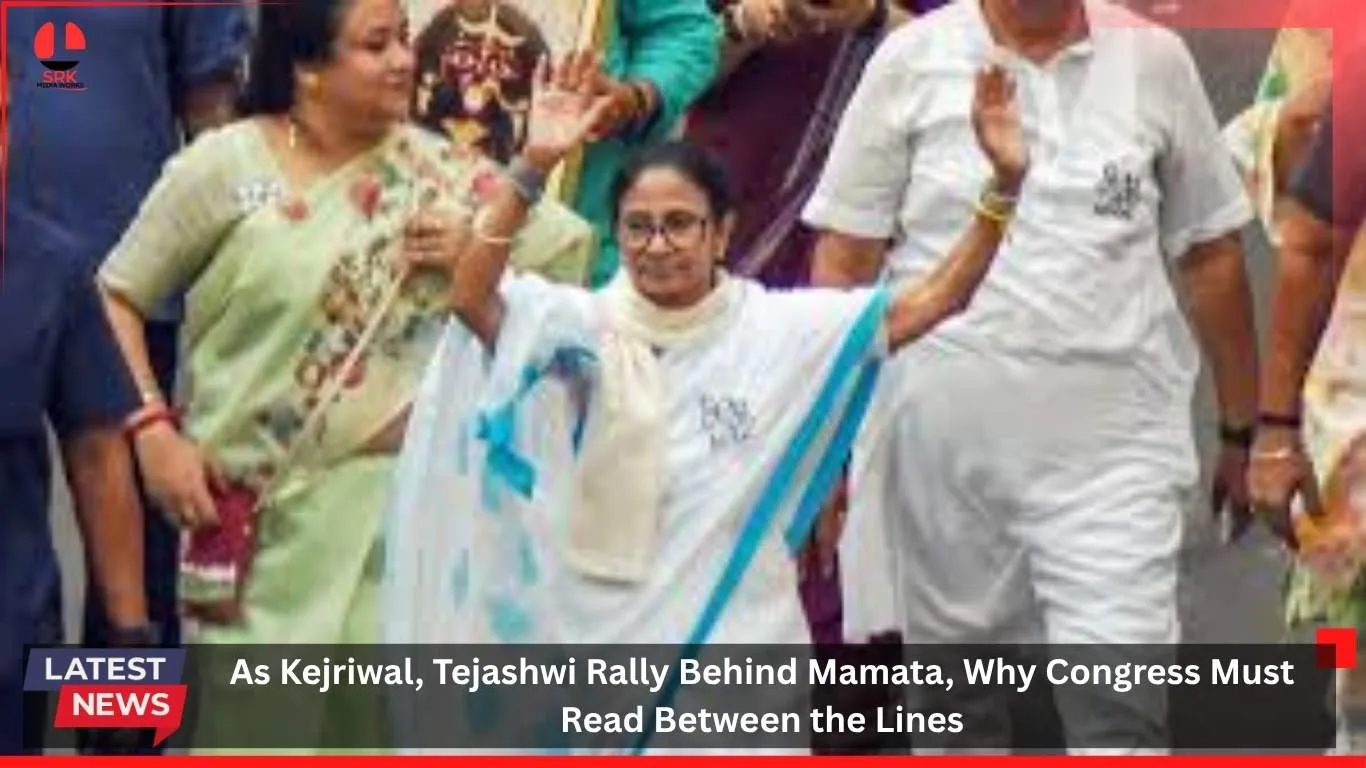
The political landscape in India is witnessing a significant shift as leaders like Arvind Kejriwal and Tejashwi Yadav rally behind Mamata Banerjee, signaling a new phase of opposition unity. While this show of solidarity strengthens Mamata’s position as a central figure in anti-BJP politics, it also raises critical questions for the Congress party, which must carefully interpret these developments to avoid marginalization in the broader opposition narrative.
Key Highlights
- Opposition Unity: Kejriwal and Tejashwi openly support Mamata Banerjee’s leadership.
- Congress Challenge: Risks being sidelined if it fails to adapt.
- Strategic Implications: Signals a shift in opposition power centers.
- Electoral Impact: Could reshape alliances ahead of 2026 and beyond.
- Public Sentiment: Growing demand for a strong, united opposition front.
Why Mamata’s Leadership Matters
Mamata Banerjee has emerged as a formidable opposition leader, especially after her decisive victories in West Bengal. Her ability to mobilize support across regional parties positions her as a potential rallying point for anti-BJP forces.
- Regional Strength: TMC dominates West Bengal politics.
- National Appeal: Increasingly seen as a voice of federalism and resistance.
- Symbolic Value: Represents resilience against BJP’s electoral machinery.
Snapshot of Opposition Rally
| Leader | Position |
|---|---|
| Mamata Banerjee | Central figure in opposition unity |
| Arvind Kejriwal | Rallying support, emphasizing governance model |
| Tejashwi Yadav | Aligning with Mamata, highlighting youth leadership |
| Congress | Facing challenge to maintain relevance |
Congress’s Dilemma
The Congress party, historically the backbone of opposition politics, now faces a dilemma:
- Leadership Question: Struggles to project a strong national leader.
- Alliance Management: Risks losing ground to regional leaders.
- Electoral Strategy: Needs to adapt to shifting power dynamics.
Comparative Snapshot of Opposition Strategies
| Party/Leader | Strategy |
|---|---|
| Mamata Banerjee | Build pan-India opposition unity |
| Arvind Kejriwal | Showcase governance model, align with Mamata |
| Tejashwi Yadav | Youth-driven narrative, support Mamata |
| Congress | Traditional approach, needs recalibration |
Public Sentiment
The public increasingly demands a united opposition capable of challenging BJP’s dominance. Mamata’s growing coalition resonates with voters who seek alternatives, while Congress risks appearing outdated if it fails to adapt.
- Supporters of Unity: Applaud Mamata’s leadership.
- Congress Loyalists: Concerned about party’s diminishing influence.
- Neutral Observers: See this as a test of Congress’s adaptability.
Strategic Implications
- For Mamata: Strengthens her national profile.
- For Kejriwal and Tejashwi: Positions them as key allies in opposition politics.
- For Congress: A wake-up call to rethink strategy and leadership.
- For BJP: Signals a more coordinated opposition challenge.
Conclusion
The rallying of Kejriwal and Tejashwi behind Mamata Banerjee marks a pivotal moment in Indian politics. For Congress, the message is clear: adapt or risk irrelevance. Reading between the lines, the party must recognize the shifting dynamics of opposition unity and recalibrate its strategy to remain a central player.
Disclaimer
This article is a political news analysis created for informational purposes only. It reflects reported statements, public reactions, and interpretations of opposition dynamics in India. Official electoral outcomes and alliance decisions are subject to confirmation by political parties and the Election Commission of India.