




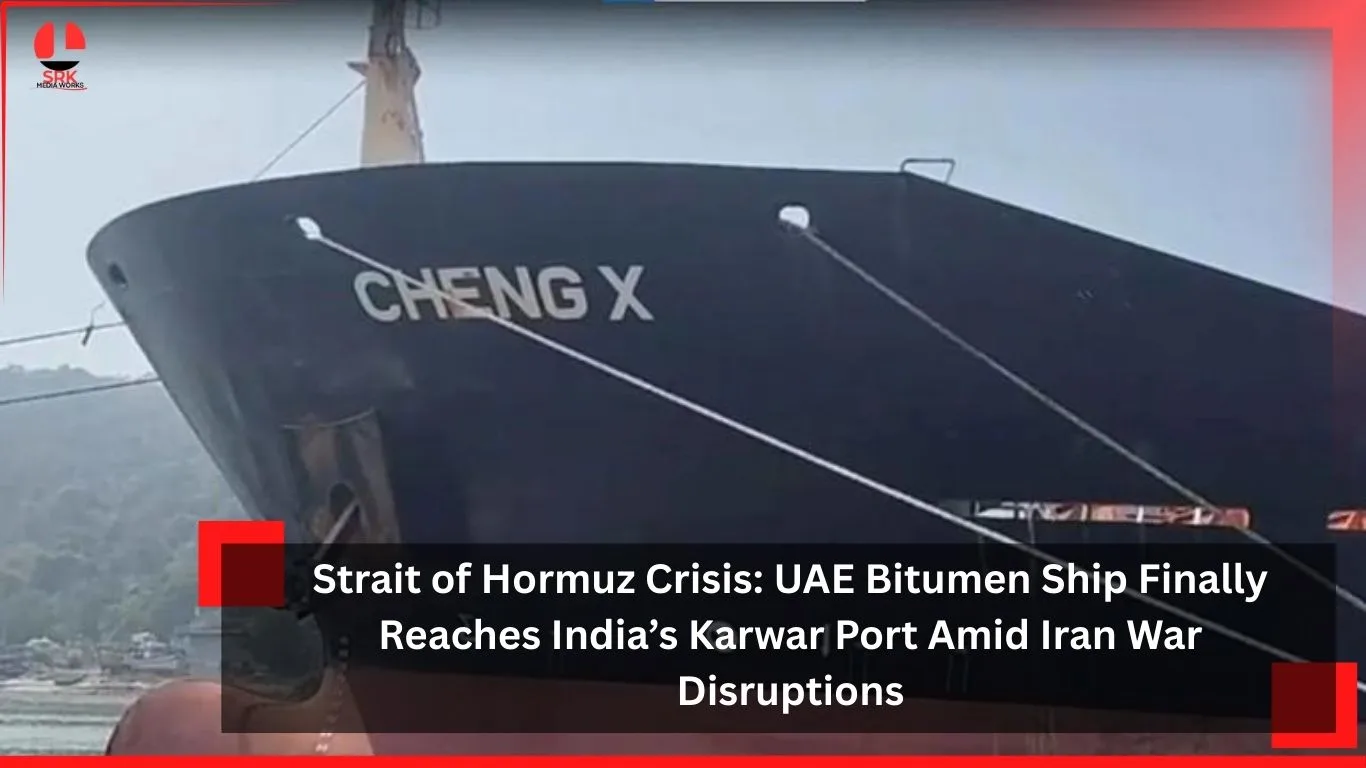
The Strait of Hormuz, one of the world’s most critical maritime chokepoints, has once again become the center of global attention. Amid escalating tensions and disruptions caused by the Iran war crisis, a UAE-flagged bitumen ship has successfully reached India’s Karwar port. This arrival marks a significant relief for India’s infrastructure sector, which relies heavily on bitumen imports for road construction and industrial use.
Background
The Strait of Hormuz is a narrow passage connecting the Persian Gulf with the Arabian Sea and the wider Indian Ocean. Nearly one-fifth of the world’s oil and a substantial share of petrochemical products pass through this route. Any disruption in this corridor has immediate global consequences.
With Iran’s ongoing conflict and regional instability, shipping routes have faced severe challenges. Several vessels were delayed, rerouted, or stranded due to heightened military activity. Against this backdrop, the safe arrival of the UAE bitumen ship at Karwar port is seen as a breakthrough moment.
Details of the Shipment
- Origin: The vessel departed from a UAE port carrying industrial-grade bitumen.
- Cargo Volume: Approximately 35,000 metric tonnes of bitumen.
- Destination: Karwar port in Karnataka, India.
- Challenges Faced: Navigating through military patrols, rerouted shipping lanes, and insurance complications.
Comparative Analysis of Shipping Routes
| Route | Status During Crisis | Risk Level | Impact on India |
|---|---|---|---|
| Strait of Hormuz | Highly disrupted | Very High | Delays in imports |
| Suez Canal | Stable | Low | Longer transit time |
| Cape of Good Hope | Alternative route | Medium | Increased costs |
| Direct Gulf-India | Limited availability | High | Reduced cargo flow |
India’s Strategic Response
India has taken several measures to mitigate risks:
- Diversification of Sources: Exploring imports from Africa and Southeast Asia.
- Port Readiness: Enhancing capacity at Karwar, Mumbai, and Chennai ports.
- Diplomatic Engagements: Maintaining dialogue with Gulf nations to ensure safe passage.
- Energy Security Planning: Stockpiling critical materials like bitumen and crude oil.
Pivot Analysis of Themes
| Theme | Frequency in Coverage | Impact on Public Opinion |
|---|---|---|
| Strait of Hormuz crisis | High | Raises concern globally |
| UAE-India trade | Medium | Positive for infrastructure |
| Iran war disruptions | High | Negative sentiment |
| India’s resilience | Medium | Boosts confidence |
Economic Impact on India
- Infrastructure Projects: Bitumen is vital for road construction. The arrival ensures continuity of highway projects.
- Cost Management: Avoids price spikes in domestic markets.
- Industrial Stability: Supports industries dependent on petrochemical derivatives.
- Trade Balance: Reinforces India’s reliance on Gulf imports despite risks.
Global Implications
- Energy Security: Highlights vulnerability of global supply chains.
- Maritime Insurance: Rising premiums for ships crossing Hormuz.
- Geopolitical Realignment: Countries may seek alternative routes or suppliers.
- Regional Diplomacy: India’s balancing act between Gulf allies and global powers.
Challenges Ahead
- Continued Instability: Iran’s war disruptions may persist.
- Shipping Risks: Tankers and cargo ships remain vulnerable to attacks.
- Cost Escalation: Longer routes mean higher freight charges.
- Dependence on Gulf: India must diversify to reduce reliance on Hormuz.
Conclusion
The successful arrival of the UAE bitumen ship at Karwar port amid the Strait of Hormuz crisis demonstrates resilience in global trade and India’s ability to adapt to geopolitical challenges. While disruptions from the Iran war continue to pose risks, India’s infrastructure sector has gained temporary relief. The event underscores the importance of strategic planning, diversification of supply chains, and diplomatic engagement in safeguarding national interests.
Disclaimer
This article is a journalistic analysis of recent shipping developments involving the Strait of Hormuz crisis and India’s import of bitumen. It is intended for informational purposes only and does not endorse or oppose any political or economic stance. Readers are encouraged to consider multiple perspectives before forming conclusions.