



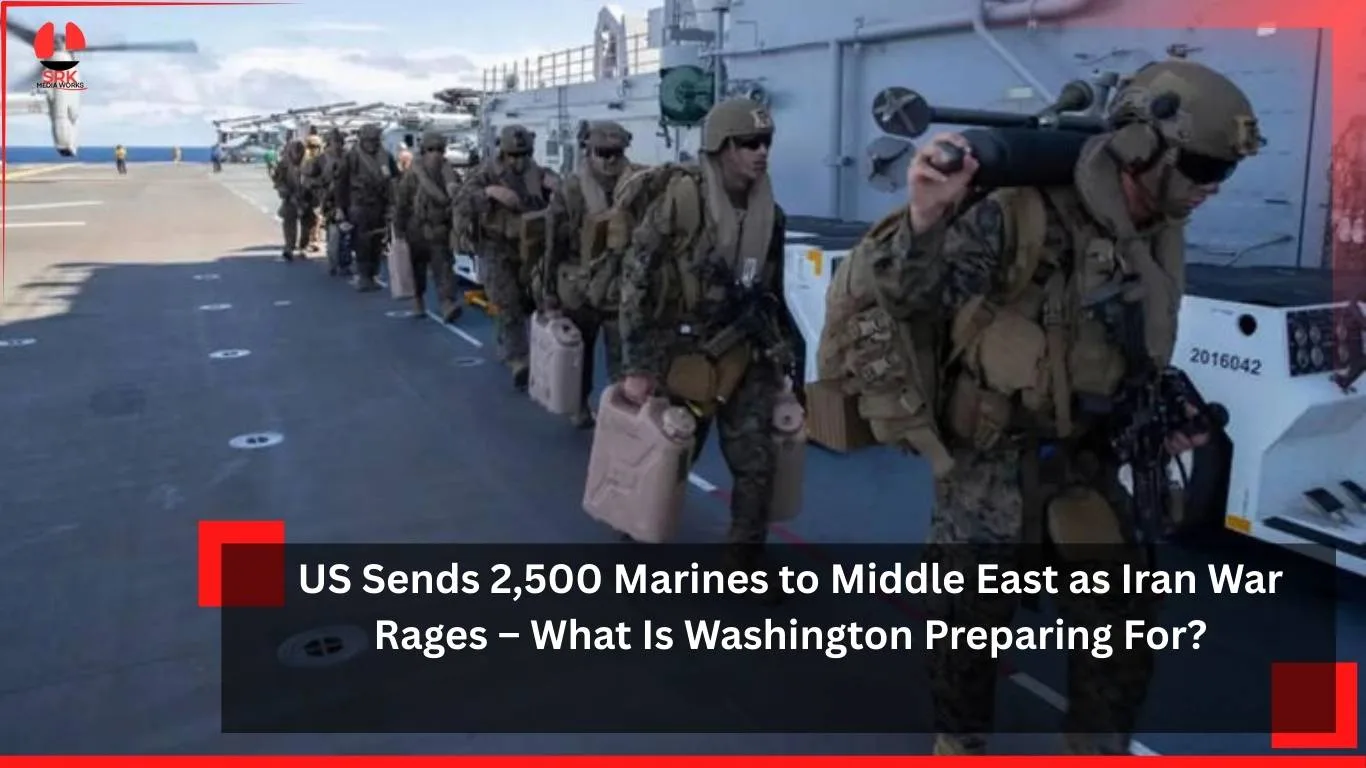
The United States has deployed 2,500 Marines to the Middle East amid escalating conflict between Iran and regional powers, raising questions about Washington’s strategic objectives. The move signals a significant military buildup at a time when tensions in the Strait of Hormuz and across the Gulf have disrupted global energy supplies and heightened fears of a wider war.
Background
The Iran war has destabilized the Middle East, with clashes threatening shipping routes and regional security. The Strait of Hormuz, through which nearly one-fifth of the world’s oil passes, has become a flashpoint. The U.S. deployment of Marines is seen as both a deterrent and a preparation for potential escalation.
Details of Deployment
- Troop Strength: 2,500 Marines deployed to bases across the Gulf region.
- Strategic Locations: Likely stationed in Qatar, Bahrain, Kuwait, and aboard naval vessels in the Arabian Sea.
- Mission Objectives: Protect U.S. assets, safeguard shipping lanes, and support allies.
- Timing: Deployment coincides with rising attacks on oil tankers and regional military exchanges.
Comparative Analysis of Military Presence
| Country/Force | Troops Deployed | Strategic Objective | Current Status |
|---|---|---|---|
| United States | 2,500 Marines | Protect assets, deter Iran | Active deployment |
| Iran | Revolutionary Guard units | Regional dominance | Engaged in conflict |
| Saudi Arabia | National Guard, Air Force | Defend oil facilities | Heightened alert |
| Israel | IDF units | Counter Iran proxies | Active operations |
Pivot Analysis of Themes
| Theme | Frequency in Coverage | Impact on Public Opinion |
|---|---|---|
| US military buildup | High | Raises concern globally |
| Iran war escalation | High | Negative sentiment |
| Energy security | Medium | Strong resonance in Asia |
| Regional alliances | Medium | Seen as critical support |
Strategic Implications
- For the US: Reinforces commitment to allies and secures global energy routes.
- For Iran: Signals Washington’s readiness to counter aggression.
- For Global Markets: Provides reassurance but also raises fears of prolonged instability.
- For Regional Allies: Strengthens defense posture against Iranian influence.
Challenges Ahead
- Risk of Escalation: Deployment could provoke further Iranian retaliation.
- Energy Market Volatility: Continued instability keeps crude prices above $100.
- Diplomatic Fallout: Balancing military action with calls for negotiation.
- Domestic Concerns: U.S. public opinion wary of deeper involvement in Middle East wars.
Conclusion
The deployment of 2,500 Marines to the Middle East underscores Washington’s determination to safeguard strategic interests amid the Iran war. While the move strengthens deterrence and reassures allies, it also raises the risk of escalation. As global energy markets remain volatile, the world watches closely to see whether the U.S. is preparing for defensive operations, deterrence, or a broader military engagement.
Disclaimer
This article is a journalistic analysis of U.S. military deployment in the Middle East amid the Iran war. It is intended for informational purposes only and does not endorse or oppose any political leader, party, or nation. Readers are encouraged to consider multiple perspectives before forming conclusions.