









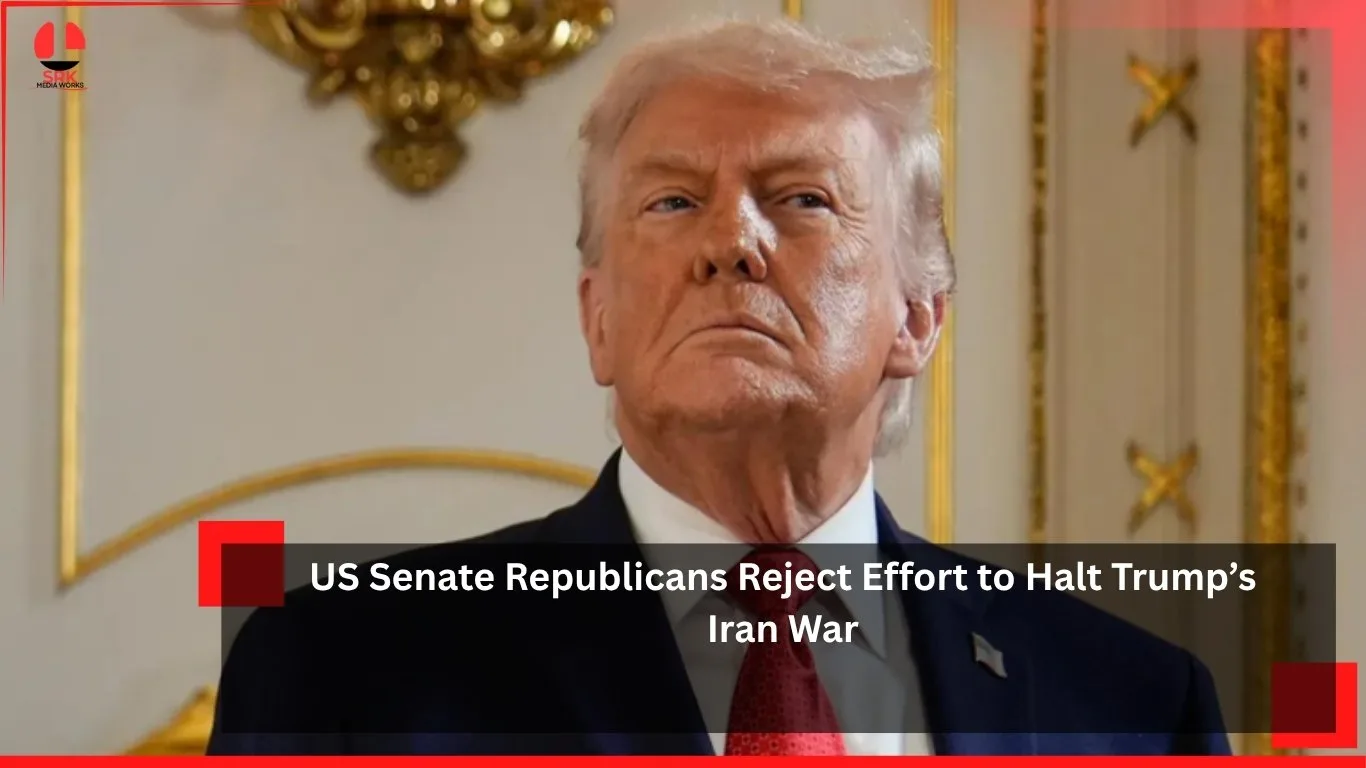
In a dramatic development on Capitol Hill, Senate Republicans have rejected a Democratic-led effort to halt President Donald Trump’s military campaign against Iran. The vote underscores the deep partisan divide over foreign policy and war powers, with Republicans largely backing Trump’s aggressive stance while Democrats warn of unchecked executive authority. The decision has sparked intense debate about constitutional limits, America’s role in the Middle East, and the future of US-Iran relations.
The Senate Vote
- Republican Majority: Senate Republicans voted overwhelmingly against measures aimed at restricting Trump’s ability to continue military operations in Iran.
- Democratic Push: Democrats argued that Congress must reassert its constitutional authority to declare war, warning against unilateral presidential action.
- Outcome: The rejection effectively gives Trump a green light to continue military operations without additional congressional approval.
Key Arguments
- Republican Position: Supporters of Trump’s policy claim that strong military action is necessary to deter Iran’s regional ambitions and protect US allies.
- Democratic Position: Opponents argue that unchecked war powers risk dragging the US into prolonged conflict, destabilizing the Middle East further.
- Constitutional Debate: The clash highlights ongoing disputes over the War Powers Resolution and the balance between executive and legislative authority.
Comparative Overview of War Powers Disputes
| Conflict | President | Congressional Response | Outcome |
|---|---|---|---|
| Vietnam War | Lyndon Johnson/Nixon | War Powers Resolution passed | Limited executive authority |
| Iraq War | George W. Bush | Authorization for Use of Military Force (AUMF) | Prolonged conflict |
| Iran War | Donald Trump | Senate rejection of limits | Expanded executive authority |
This table shows how past conflicts have shaped the debate over presidential war powers.
Pivot Analysis: War Continuation vs. Congressional Oversight
| Scenario | Military Impact | Political Impact | Public Sentiment |
|---|---|---|---|
| War continues unchecked | Expanded US operations | Strengthens Trump’s authority | Divided, with concerns over escalation |
| Congressional oversight enforced | Limited military scope | Weakens executive power | Public support for accountability |
The pivot analysis highlights the consequences of rejecting congressional oversight in wartime decisions.
Impact on US-Iran Relations
- Escalation Risk: Continued military operations increase the likelihood of direct confrontation.
- Diplomatic Fallout: Iran has condemned US actions, warning of retaliation and further instability.
- Regional Dynamics: Allies in the Middle East remain divided, with some supporting US pressure on Iran and others calling for restraint.
Domestic Reactions
- Republican Leaders: Praised the vote as a show of unity behind Trump’s leadership.
- Democratic Leaders: Condemned the decision, warning of unchecked presidential power.
- Civil Society: Advocacy groups called for renewed debate on war powers and accountability.
- Public Opinion: Polls suggest Americans are split, with concerns about both security and the risks of endless wars.
Broader Implications
The Senate’s rejection of efforts to halt Trump’s Iran war underscores the enduring struggle over war powers in US politics. It raises questions about the future of congressional authority, the sustainability of military campaigns, and America’s role in global conflicts. The decision could set a precedent for expanded executive authority in matters of war and peace.
Conclusion
Senate Republicans’ rejection of efforts to halt Trump’s Iran war marks a pivotal moment in US foreign policy. The vote strengthens Trump’s hand in pursuing military action while weakening congressional oversight. As tensions with Iran escalate, the debate over war powers and constitutional limits will remain central to America’s political and strategic future.
Disclaimer
This article is a journalistic analysis created for informational purposes. It does not represent official government statements or legal conclusions. Readers are encouraged to consult multiple perspectives for updates. The content is intended for educational and news reporting use only, without endorsing any political party or institution.