



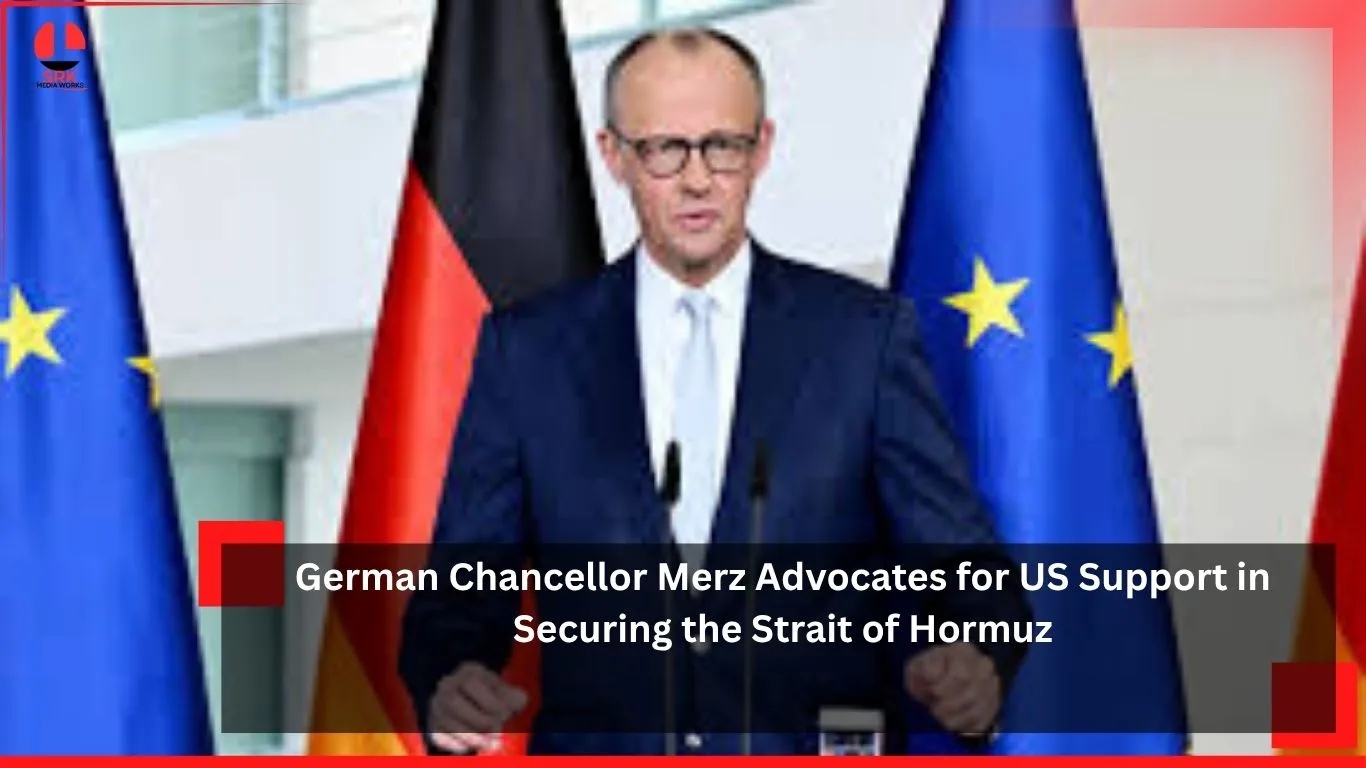
German Chancellor Friedrich Merz has called for stronger US involvement in securing the Strait of Hormuz, a vital maritime passage that carries nearly one-fifth of the world’s oil supply. His appeal comes amid rising tensions in the Middle East, where conflicts have threatened the stability of global energy markets and raised concerns about freedom of navigation. Merz emphasized that Germany and Europe cannot ensure maritime security alone and require close cooperation with the United States to safeguard international trade routes.
Importance of the Strait of Hormuz
The Strait of Hormuz is one of the most strategically significant waterways in the world. Located between Oman and Iran, it serves as a critical chokepoint for global energy supplies. Any disruption in the strait could have severe consequences for oil prices, shipping costs, and global economic stability.
Key Facts About the Strait of Hormuz
| Aspect | Details |
|---|---|
| Location | Between Oman and Iran |
| Global Oil Flow | ~20% of world’s oil passes through |
| Strategic Importance | Critical for energy security |
| Vulnerabilities | Regional conflicts, piracy, military tensions |
Merz’s Call for US Support
Chancellor Merz argued that Europe must work closely with the United States to ensure freedom of navigation in the Strait of Hormuz. He stressed that Germany’s naval capacity, while significant, is insufficient to guarantee security in such a volatile region without US backing.
- Appeal for Cooperation: Merz urged NATO allies to coordinate with Washington.
- Energy Security: Highlighted the risks of supply disruptions for Europe’s economy.
- Global Responsibility: Framed the issue as a collective challenge requiring transatlantic unity.
US Position
The United States has historically maintained a strong naval presence in the Gulf region to secure shipping lanes. Pentagon officials have reiterated their commitment to freedom of navigation, though recent conflicts have strained resources. Merz’s appeal is seen as an effort to reinforce transatlantic cooperation at a time of heightened geopolitical tensions.
- Military Presence: US naval forces patrol the Gulf to deter threats.
- Strategic Interest: Ensuring stability in global energy markets.
- Alliance Role: Supporting NATO partners in securing trade routes.
European Concerns
European nations, particularly Germany, rely heavily on energy imports that pass through the Strait of Hormuz. Rising tensions in the region have sparked fears of supply disruptions, prompting calls for stronger international cooperation.
European Dependence on Energy Imports
| Country | Dependence on Oil Imports | Vulnerability to Hormuz Disruption |
|---|---|---|
| Germany | High | Significant |
| France | Moderate | Moderate |
| Italy | High | Significant |
| Spain | Moderate | Moderate |
Global Reactions
Merz’s statement has drawn responses from international stakeholders:
- EU Leaders: Support calls for transatlantic cooperation.
- Middle Eastern Nations: Mixed reactions, with some welcoming US involvement and others wary of foreign military presence.
- China and Russia: Express caution, emphasizing sovereignty and regional stability.
Economic Implications
Disruptions in the Strait of Hormuz could trigger sharp increases in oil prices, affecting global markets. Merz’s appeal reflects concerns about economic stability and the need to prevent volatility.
Potential Economic Outcomes
| Sector | Impact |
|---|---|
| Oil Prices | Likely to rise if disruptions occur |
| Shipping | Increased insurance and transport costs |
| Global Trade | Delays and instability |
| European Economy | Vulnerable to energy shocks |
Historical Context
The Strait of Hormuz has been a recurring flashpoint in global politics. Past incidents, including tanker attacks and naval confrontations, have underscored its vulnerability. Merz’s appeal echoes previous calls for international cooperation to secure the passage.
Timeline of Key Events
| Year | Event |
|---|---|
| 1980s | Tanker wars during Iran-Iraq conflict |
| 2012 | Threats of blockade amid sanctions |
| 2019 | Tanker attacks blamed on Iran |
| 2026 | Merz calls for US support |
Strategic Implications
Merz’s statement highlights the strategic importance of transatlantic cooperation in addressing global security challenges. Analysts argue that securing the Strait of Hormuz requires not only military presence but also diplomatic engagement to reduce tensions.
- Military Cooperation: Joint patrols and intelligence sharing.
- Diplomatic Efforts: Dialogue with regional powers to prevent escalation.
- Economic Stability: Ensuring uninterrupted energy flows.
Public Sentiment
Public opinion in Germany reflects concern about energy security and global stability. While many support Merz’s call for US cooperation, others caution against deeper military involvement in the Middle East.
- Supporters: Emphasize the need for strong alliances.
- Critics: Warn of entanglement in regional conflicts.
- Neutral Observers: Call for balanced diplomacy and security measures.
Future Outlook
The coming months will be critical in determining whether Merz’s appeal leads to stronger US-European cooperation. NATO discussions are expected to focus on maritime security, while diplomatic efforts aim to reduce tensions in the Gulf.
Key Factors to Watch
| Factor | Potential Outcome |
|---|---|
| US Response | Could reinforce transatlantic cooperation |
| NATO Strategy | May prioritize maritime security |
| Regional Stability | Determines risk of disruption |
| Energy Markets | Likely to remain volatile |
Conclusion
German Chancellor Friedrich Merz’s call for US support in securing the Strait of Hormuz underscores the urgency of transatlantic cooperation in safeguarding global trade and energy security. With tensions rising in the Middle East, the appeal highlights the strategic importance of unity between Europe and the United States. The outcome will shape not only regional stability but also the resilience of global markets in the face of geopolitical challenges.
Disclaimer
This article is a comprehensive analytical report based on publicly available information and geopolitical developments. It is intended for informational purposes only and does not constitute diplomatic, military, or economic advice. Readers are encouraged to verify facts independently and consider multiple perspectives before forming conclusions.