




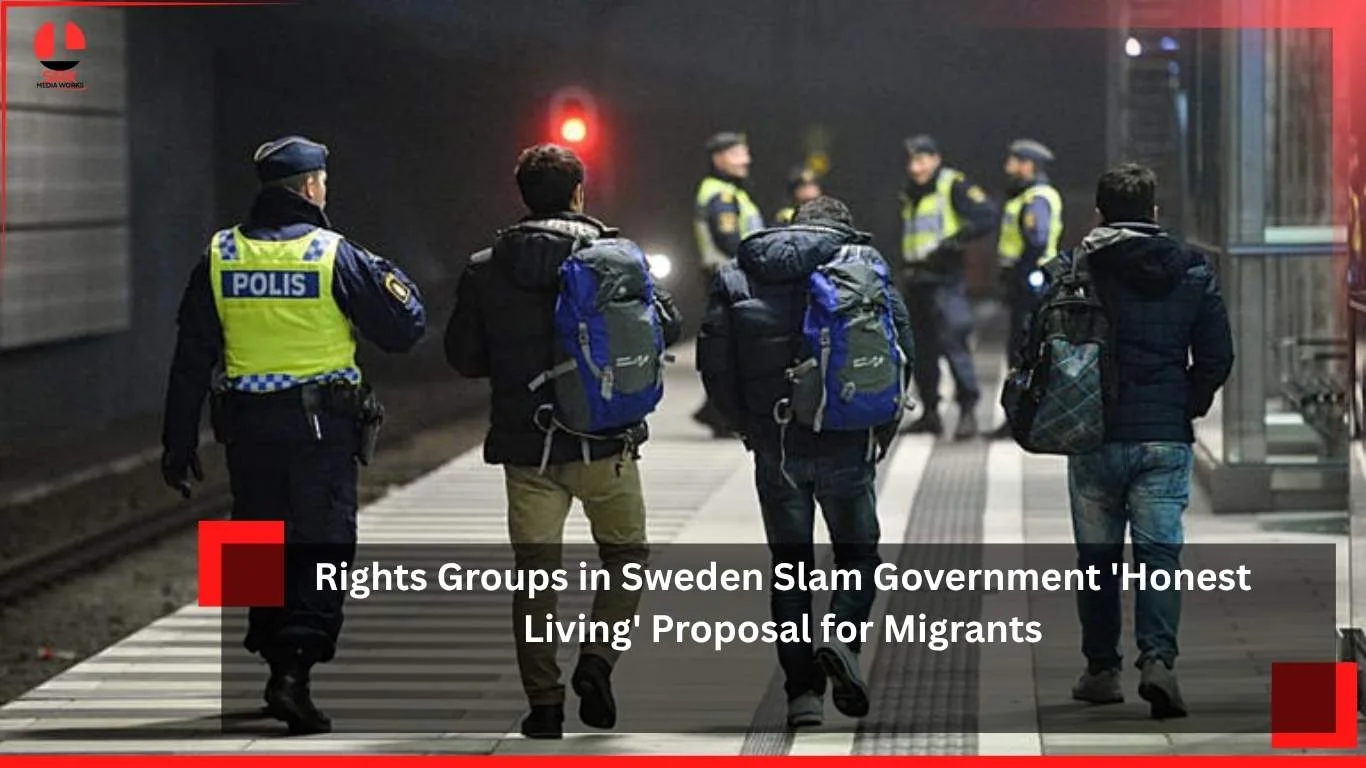
Sweden’s government has come under fire from rights groups after unveiling a controversial proposal requiring migrants to prove they are living “honestly” to qualify for residence permits. The measure, part of a broader immigration reform package, has sparked outrage among civil society organizations, legal experts, and humanitarian advocates who argue the plan is vague, discriminatory, and risks undermining Sweden’s reputation for human rights.
What the Proposal Entails
The “honest living” requirement would oblige migrants to demonstrate that they are not engaged in criminal activity or behaviors deemed inconsistent with Swedish values.
- Residency Condition: Migrants must show evidence of lawful conduct.
- Implementation Timeline: The proposal is scheduled for parliamentary debate later this year.
- Consequences: Failure to meet the standard could result in deportation or denial of residence permits.
Criticism from Rights Groups
Rights organizations argue that the proposal lacks clear legal definitions, leaving migrants vulnerable to arbitrary decisions.
- Vagueness: No precise definition of “honest living.”
- Discrimination: Could disproportionately affect marginalized communities.
- Legal Concerns: Risks violating international human rights obligations.
- Social Impact: May foster fear and insecurity among migrant populations.
Key Concerns Raised
| Concern | Explanation | Potential Impact |
|---|---|---|
| Legal Vagueness | No clear criteria for “honest living” | Arbitrary enforcement |
| Human Rights | May breach international conventions | Weakens Sweden’s global reputation |
| Social Cohesion | Creates mistrust among migrants | Risk of marginalization |
| Political Motives | Seen as populist measure | Electoral strategy questioned |
Government’s Position
The Swedish government defends the proposal as necessary to strengthen integration and ensure public safety. Officials argue that migrants who respect Swedish laws and values should have no difficulty meeting the requirement.
- Integration Focus: Encourages lawful conduct.
- Public Safety: Aims to reduce crime linked to migration.
- Political Messaging: Presented as a measure to reassure citizens.
Comparative Global Practices
Several countries have introduced behavioral conditions for residency, though Sweden’s proposal is seen as unusually broad.
| Country | Policy | Impact |
|---|---|---|
| Denmark | Integration contracts | Mixed results, criticized for rigidity |
| Germany | Language and employment requirements | Improved integration outcomes |
| UK | Good character tests for citizenship | Applied case-by-case |
| Sweden (Proposed) | “Honest living” requirement | Criticized for vagueness |
Public Sentiment
Public opinion in Sweden is divided. While some citizens support stricter immigration rules, others fear the proposal undermines Sweden’s humanitarian tradition.
- Supporters: Argue it ensures accountability.
- Critics: Warn of discrimination and abuse.
- Neutral Observers: Call for clearer definitions and safeguards.
Strategic Implications
The proposal has significant political and social implications:
- Domestic Politics: Strengthens government’s tough stance on immigration.
- International Reputation: Risks damaging Sweden’s image as a defender of human rights.
- Legal Challenges: Likely to face scrutiny in courts.
- Social Cohesion: Could deepen divisions between migrants and native citizens.
Future Outlook
The fate of the “honest living” proposal will depend on parliamentary debate and public pressure. Rights groups are expected to intensify campaigns against the measure, while the government seeks to rally support by framing it as a step toward safer communities.
Key Factors to Watch
| Factor | Potential Outcome |
|---|---|
| Parliamentary Debate | Could amend or reject proposal |
| Legal Challenges | Courts may strike down vague provisions |
| Public Opinion | Influences political momentum |
| International Pressure | May force Sweden to reconsider |
Conclusion
Sweden’s proposed “honest living” requirement for migrants has ignited fierce debate. Rights groups warn it is discriminatory and legally vague, while the government insists it is necessary for integration and public safety. The controversy underscores the tension between populist immigration policies and Sweden’s long-standing commitment to human rights. The coming months will determine whether the proposal becomes law or is reshaped under pressure from civil society and international scrutiny.
Disclaimer
This article is a comprehensive analytical report based on publicly available information and political developments. It is intended for informational purposes only and does not constitute legal or political advice. Readers are encouraged to verify facts independently and consider multiple perspectives before forming conclusions.