








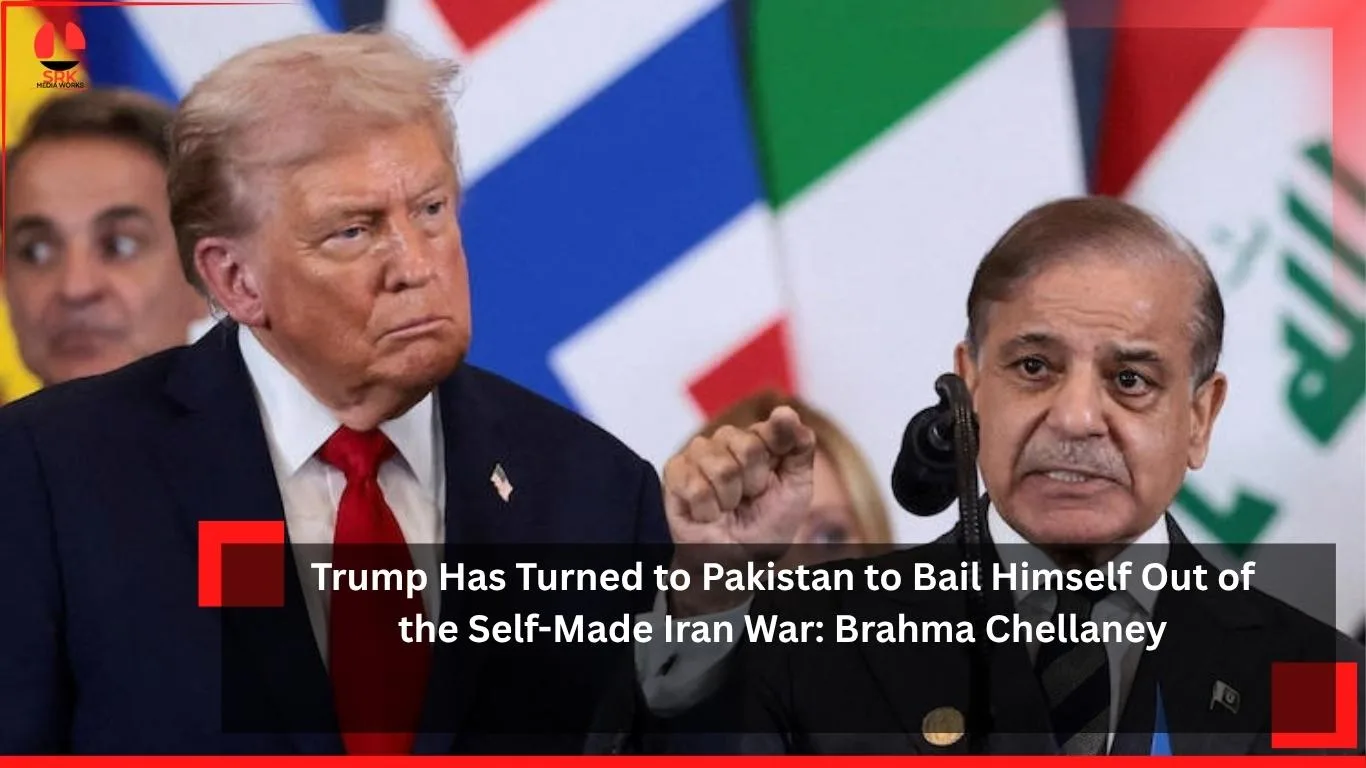
Strategic affairs expert Brahma Chellaney has sharply criticized US President Donald Trump’s handling of the Iran conflict, claiming that Trump has now turned to Pakistan to bail himself out of what he described as a “self-made war.” Chellaney’s remarks highlight the complex geopolitical maneuvering underway as Washington seeks to manage the fallout of escalating tensions with Tehran while balancing its regional alliances.
Chellaney’s Criticism
Chellaney argued that Trump’s aggressive policies toward Iran, including sanctions and military threats, have created a conflict that is both costly and destabilizing. According to him, Trump’s reliance on Pakistan reflects desperation rather than strategic foresight.
- Self-Made Conflict: Chellaney emphasized that the war was triggered by Trump’s own decisions.
- Pakistan’s Role: He suggested that Trump is leaning on Pakistan to mediate or provide logistical support.
- Strategic Weakness: The move is seen as undermining US credibility in the region.
Key Highlights of Chellaney’s Remarks
| Issue | Chellaney’s View | Implication |
|---|---|---|
| Iran War | Self-inflicted by Trump | Costly and destabilizing |
| Pakistan’s Role | Trump turning to Islamabad | Reflects desperation |
| US Credibility | Undermined by reliance | Weakens global standing |
US-Pakistan Dynamics
The United States has historically had a complicated relationship with Pakistan. While cooperation has existed in areas such as counterterrorism, mistrust has often overshadowed the partnership. Trump’s outreach to Pakistan amid the Iran war raises questions about Washington’s strategic calculations.
- Military Cooperation: Pakistan could provide logistical support for US operations.
- Diplomatic Mediation: Islamabad may act as a channel for dialogue with Tehran.
- Regional Influence: Pakistan’s ties with Iran and China complicate US reliance.
Comparative Analysis of US-Pakistan Relations
| Period | US Position | Pakistan’s Role |
|---|---|---|
| Cold War | Strategic ally | Supported US in Afghanistan |
| Post-9/11 | Counterterrorism partner | Mixed cooperation |
| Current Iran War | Seeking support | Potential mediator |
Economic and Military Costs
Chellaney’s criticism also underscores the financial burden of the Iran war. The US faces rising military expenditures, while Pakistan’s involvement could add further costs in terms of aid and diplomatic concessions.
Estimated Costs of US Engagement
| Category | Estimated Cost (USD Billions) |
|---|---|
| Military Operations | 400+ |
| Diplomatic Aid to Pakistan | 20–30 |
| Reconstruction & Stabilization | 200+ |
| Humanitarian Assistance | 50 |
Regional Reactions
Trump’s reliance on Pakistan has drawn mixed reactions from regional stakeholders:
- India: Concerned about US reliance on Pakistan, given its own tensions with Islamabad.
- Iran: Skeptical of Pakistan’s role, viewing it as aligned with US interests.
- China: Watches closely, given its strategic partnership with Pakistan.
- Middle Eastern Allies: Divided, with some supporting US efforts and others wary of Pakistan’s involvement.
Comparative Analysis of Regional Stakeholders
| Stakeholder | Reaction | Likely Impact |
|---|---|---|
| India | Concerned | Strains US-India ties |
| Iran | Skeptical | Limits mediation success |
| China | Strategic interest | Could leverage influence |
| Gulf States | Mixed | Regional uncertainty |
Strategic Implications
Chellaney’s remarks highlight broader strategic concerns:
- US Weakness: Reliance on Pakistan signals limited options.
- Regional Instability: Pakistan’s involvement may complicate dynamics.
- Global Credibility: US leadership questioned by allies and rivals alike.
Public Sentiment
Public opinion in the US reflects growing concern about the costs of the Iran war. Many citizens question why Trump is turning to Pakistan, a country often criticized for its inconsistent cooperation with Washington.
- Supporters of Trump: Argue that Pakistan’s involvement is pragmatic.
- Critics: View reliance on Islamabad as a sign of weakness.
- Neutral Observers: Call for diplomatic solutions rather than military escalation.
Future Outlook
The trajectory of the Iran war and Trump’s reliance on Pakistan will depend on several factors:
- Pakistan’s Willingness: Whether Islamabad actively supports US efforts.
- Iran’s Response: Tehran’s reaction to Pakistan’s involvement.
- US Domestic Politics: Pressure on Trump to reduce costs and seek alternatives.
- Global Diplomacy: Role of other powers in mediating the conflict.
Key Factors to Watch
| Factor | Potential Outcome |
|---|---|
| Pakistan’s Cooperation | Could stabilize or complicate conflict |
| Iran’s Reaction | Determines success of mediation |
| US Domestic Pressure | May force policy shift |
| Global Diplomacy | Could reduce reliance on Pakistan |
Conclusion
Brahma Chellaney’s sharp critique of Trump’s reliance on Pakistan to bail himself out of the Iran war underscores the complexities of US foreign policy. By labeling the conflict as “self-made,” Chellaney highlights the costs of aggressive policies and the risks of relying on a historically inconsistent partner. The coming months will reveal whether Trump’s strategy succeeds or further undermines America’s credibility on the global stage.
Disclaimer
This article is a comprehensive analytical report based on publicly available information and geopolitical commentary. It is intended for informational purposes only and does not constitute political endorsement or advice. Readers are encouraged to verify facts independently and consider multiple perspectives before forming conclusions.