








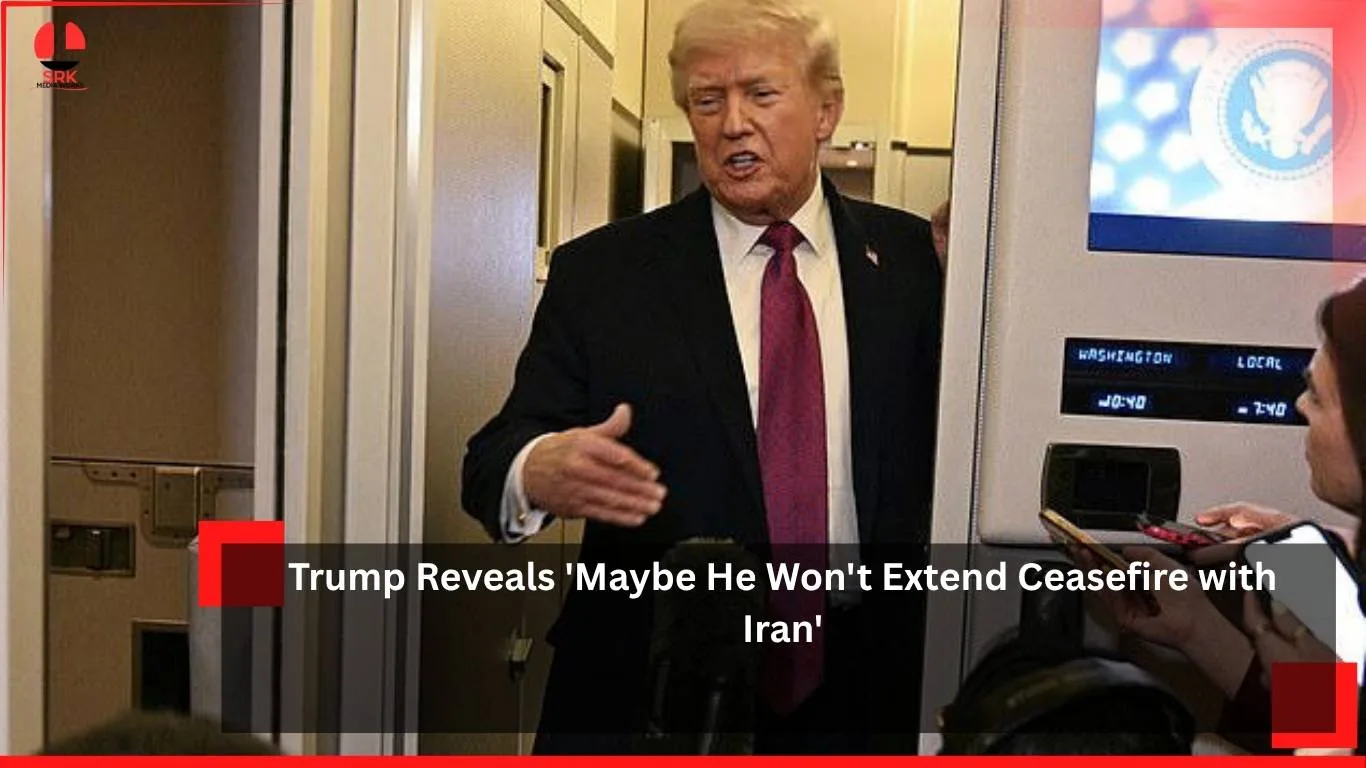
US President Donald Trump has hinted that the current ceasefire with Iran may not be extended, raising concerns about renewed hostilities in the Middle East. His statement, “maybe he won’t extend the ceasefire,” has sparked debate among global leaders, analysts, and markets, as the fragile truce remains critical for regional stability and global energy security.
Trump’s Statement
Trump’s remarks came during a press briefing where he discussed the ongoing situation with Iran. While acknowledging the temporary ceasefire had reduced immediate tensions, he suggested that extending it was not guaranteed. His comments have been interpreted as both a warning to Tehran and a signal to allies that the US is prepared for escalation if necessary.
- Uncertainty: Trump left open the possibility of ending the ceasefire.
- Strategic Message: Seen as pressure on Iran to comply with US demands.
- Global Concern: Raises fears of renewed conflict in the Gulf region.
Key Highlights of Trump’s Remarks
| Issue | Trump’s Position | Implication |
|---|---|---|
| Ceasefire Extension | “Maybe he won’t extend” | Uncertainty about continuation |
| Iran’s Compliance | Must meet US conditions | Pressure on Tehran |
| US Preparedness | Ready for escalation | Signals military readiness |
Iran’s Response
Iranian officials have criticized Trump’s statement, accusing the US of undermining peace efforts. Tehran insists it has respected the ceasefire and accuses Washington of using threats to maintain leverage.
- Accusation of Provocation: Iran claims Trump’s remarks destabilize the region.
- Commitment to Peace: Tehran insists it remains open to dialogue.
- Regional Diplomacy: Iran seeks support from allies to counter US pressure.
Global Reactions
The international community has reacted cautiously to Trump’s comments. European leaders have urged restraint, while Asian economies expressed concern about potential disruptions in oil supply.
Comparative Analysis of Global Stakeholders
| Stakeholder | Reaction | Likely Impact |
|---|---|---|
| EU | Calls for restraint | Diplomatic pressure on US |
| China | Concerned about oil supply | Economic caution |
| Russia | Criticizes US stance | Supports Iran |
| Gulf States | Divided | Regional uncertainty |
Economic Implications
The possibility of renewed conflict has already impacted global markets. Oil prices rose amid fears of supply disruptions through the Strait of Hormuz, a critical passage for global energy trade.
Potential Economic Outcomes
| Sector | Impact |
|---|---|
| Oil Prices | Increase due to uncertainty |
| Shipping | Higher insurance and transport costs |
| Global Trade | Potential delays and volatility |
| US Economy | Rising fuel costs for consumers |
Historical Context
The US-Iran relationship has been marked by decades of tension. Ceasefires have often been fragile, with both sides accusing each other of violations. Trump’s latest remarks echo past confrontations where temporary truces collapsed into renewed hostilities.
Timeline of Key Events
| Year | Event |
|---|---|
| 1979 | Iranian Revolution, US embassy crisis |
| 2015 | JCPOA signed |
| 2018 | US withdrawal from JCPOA |
| 2026 | Trump hints at ending ceasefire |
Strategic Implications
Trump’s statement highlights the strategic uncertainty surrounding US-Iran relations. Analysts warn that ending the ceasefire could escalate into a broader conflict, affecting not only the Middle East but also global stability.
- Military Readiness: US forces remain prepared for escalation.
- Diplomatic Pressure: Allies urge continuation of ceasefire.
- Regional Instability: Risk of spillover into neighboring countries.
Public Sentiment
Public opinion in the US reflects concern about the potential costs of renewed conflict. While some support Trump’s tough stance, others fear the economic and humanitarian consequences of escalation.
- Supporters: Emphasize deterrence and strength.
- Critics: Warn of financial and human costs.
- Neutral Observers: Call for balanced diplomacy.
Future Outlook
The fate of the ceasefire will depend on negotiations between Washington and Tehran. If Trump decides not to extend, the region could face renewed instability. Diplomatic efforts by global powers may play a crucial role in preventing escalation.
Key Factors to Watch
| Factor | Potential Outcome |
|---|---|
| US Decision | Determines continuation of ceasefire |
| Iran’s Compliance | Could influence Trump’s stance |
| Global Diplomacy | May reduce risk of conflict |
| Oil Prices | Likely to remain volatile |
Conclusion
Trump’s revelation that “maybe he won’t extend the ceasefire with Iran” has reignited fears of renewed conflict in the Middle East. While the current truce has provided temporary relief, uncertainty about its future threatens regional stability and global economic security. The coming weeks will be critical in determining whether diplomacy prevails or hostilities resume.
Disclaimer
This article is a comprehensive analytical report based on publicly available information and geopolitical developments. It is intended for informational purposes only and does not constitute diplomatic, military, or economic advice. Readers are encouraged to verify facts independently and consider multiple perspectives before forming conclusions.