








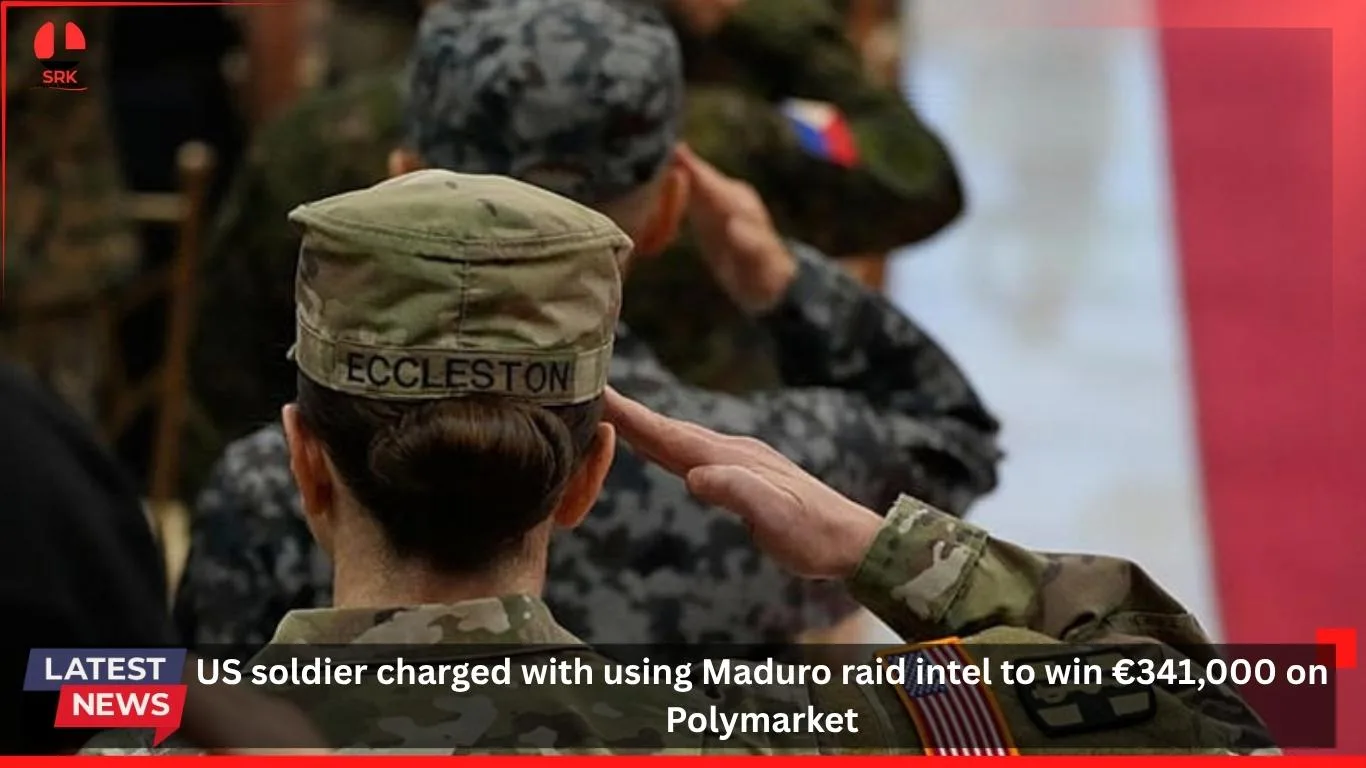
A U.S. soldier has been formally charged with exploiting classified intelligence about a raid targeting Venezuelan President Nicolás Maduro to place bets on the prediction market platform Polymarket, allegedly securing €341,000 in winnings. The case has drawn global attention, raising concerns about insider trading in decentralized markets, misuse of military intelligence, and the ethical boundaries of financial speculation.
Details of the Case
According to prosecutors, the soldier accessed sensitive information regarding a covert operation involving Maduro. Instead of maintaining confidentiality, he allegedly used the knowledge to place high-stakes bets on Polymarket, a blockchain-based prediction market where users wager on real-world events.
The soldier’s actions, investigators claim, violated both military codes and U.S. law, as classified intelligence was leveraged for personal financial gain. The case represents one of the first known instances where military intelligence has been directly tied to betting on decentralized platforms.
Key Allegations:
- Misuse of Classified Information: Accessing and exploiting sensitive military intelligence.
- Financial Gain: Winning €341,000 through bets on Polymarket.
- Violation of Trust: Breach of military ethics and national security protocols.
Polymarket and Prediction Markets
Polymarket is a decentralized platform where users can bet on outcomes of political, economic, and social events. While prediction markets are legal in certain jurisdictions, they are heavily scrutinized due to concerns about insider trading and manipulation.
This case highlights the vulnerability of such platforms to exploitation when participants have access to privileged information. It also raises questions about the regulation of decentralized finance (DeFi) and prediction markets.
Comparative Overview
| Aspect | Legal Prediction Markets | Decentralized Platforms like Polymarket |
|---|---|---|
| Regulation | Governed by financial authorities | Limited oversight, blockchain-based |
| Risk of Insider Trading | Monitored, penalties enforced | High risk, difficult to trace |
| Accessibility | Restricted in many countries | Global, open to anyone |
| Transparency | Controlled reporting | Blockchain records, but anonymity prevails |
Geopolitical Context
The raid targeting Maduro was a sensitive operation, and its disclosure could have had significant geopolitical consequences. By betting on its outcome, the soldier not only compromised military integrity but also risked exposing vulnerabilities in U.S. operations.
Iran, Russia, and China—all allies of Venezuela—have closely monitored U.S. actions in Latin America. The misuse of intelligence in this case could potentially undermine Washington’s credibility and complicate diplomatic relations.
Impact on Military Ethics
The case underscores the importance of maintaining strict ethical standards within the armed forces. Soldiers are entrusted with sensitive information, and misuse for personal gain undermines both national security and public trust.
Pivot Analysis: Military Ethics vs. Financial Exploitation
| Factor | Military Ethics Standard | Exploitation Outcome |
|---|---|---|
| Confidentiality | Protect classified information | Breach of trust, misuse of intel |
| Duty to Nation | Prioritize national security | Prioritize personal financial gain |
| Accountability | Uphold military codes | Violation of law and ethics |
| Public Trust | Strengthens credibility | Weakens confidence in armed forces |
Legal Proceedings
The soldier faces charges under U.S. law related to misuse of classified information, fraud, and insider trading. If convicted, he could face significant prison time and financial penalties. The case may set a precedent for how decentralized platforms are treated in legal contexts, particularly when linked to national security.
Broader Implications for Decentralized Finance
This incident highlights the challenges regulators face in overseeing decentralized platforms. While blockchain technology offers transparency, anonymity makes it difficult to enforce laws against insider trading.
Potential implications include:
- Stricter Regulation: Governments may push for tighter controls on prediction markets.
- Military Protocols: Armed forces may introduce stricter guidelines for personnel regarding financial activities.
- Global Debate: The case could spark international discussions on regulating DeFi platforms.
Public and Media Reaction
The case has generated widespread media coverage, with commentators debating the ethical and legal dimensions. Some argue that prediction markets inherently invite insider trading, while others emphasize the need for stronger military oversight.
Reactions Overview
| Group/Community | Reaction to Case | Potential Impact |
|---|---|---|
| Legal Experts | Concern over regulation gaps | Push for stricter laws |
| Military Analysts | Alarm at misuse of intelligence | Calls for stronger ethical enforcement |
| Financial Observers | Debate over prediction markets | Increased scrutiny of DeFi platforms |
| General Public | Shock at soldier’s actions | Erosion of trust in institutions |
Future Outlook
The case may serve as a turning point in how governments approach decentralized finance and prediction markets. It could lead to:
- New Legislation: Laws specifically targeting insider trading in DeFi.
- Military Reforms: Enhanced monitoring of soldiers’ financial activities.
- Global Cooperation: International efforts to regulate blockchain-based platforms.
Conclusion
The charging of a U.S. soldier for using Maduro raid intelligence to win €341,000 on Polymarket highlights the intersection of military ethics, financial speculation, and decentralized technology. The case underscores the risks of insider trading in prediction markets and raises urgent questions about regulation, accountability, and trust. As legal proceedings unfold, the incident is likely to shape future policies on both military conduct and decentralized finance.
Disclaimer
This article is based on publicly available information and analysis of geopolitical and financial developments. It does not represent endorsement or criticism of any individual or institution. The content is intended for informational purposes only, highlighting the dynamics of military ethics, decentralized finance, and insider trading. Readers are encouraged to explore diverse perspectives before forming conclusions.