









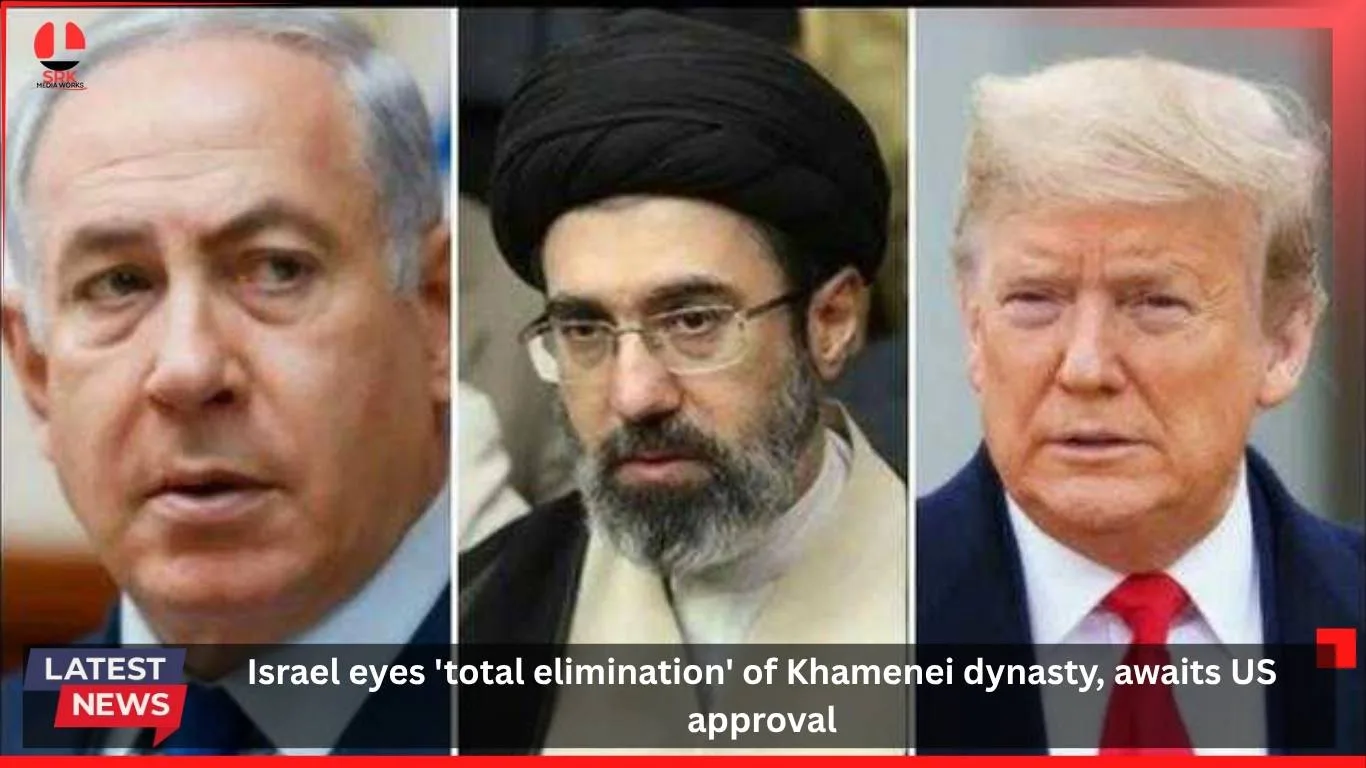
Israel is reportedly considering a strategy aimed at the “total elimination” of the Khamenei dynasty, a move that would mark a dramatic escalation in its confrontation with Iran. According to regional sources, Israeli officials are awaiting signals from Washington before advancing any such plan, underscoring the critical role of U.S. approval in shaping Israel’s security and foreign policy decisions.
Strategic Context
The Khamenei dynasty, led by Supreme Leader Ayatollah Ali Khamenei, has been at the center of Iran’s political and religious leadership for decades. Israel views the dynasty as the backbone of Iran’s regional influence, supporting groups such as Hezbollah and Hamas while advancing Tehran’s nuclear ambitions.
Israeli officials argue that dismantling the dynasty would weaken Iran’s ideological and political grip, potentially reshaping the Middle East’s balance of power. However, such a move carries immense risks, including regional instability and global repercussions.
Israel’s Position
Israel has consistently identified Iran as its most significant security threat. From nuclear development to proxy militias, Tehran’s influence has been a focal point of Israeli defense policy. The idea of targeting the Khamenei dynasty reflects Israel’s belief that Iran’s leadership is the root of its adversarial stance.
Key Objectives:
- Neutralize Leadership: Remove the dynasty’s influence over Iran’s political and military apparatus.
- Weaken Regional Proxies: Reduce support for Hezbollah, Hamas, and other allied groups.
- Prevent Nuclear Expansion: Disrupt Iran’s nuclear ambitions by destabilizing its leadership.
U.S. Role and Approval
Israel’s strategy hinges on U.S. approval. Washington’s backing is crucial for both diplomatic legitimacy and military coordination. While the U.S. has long opposed Iran’s nuclear program and regional activities, it has also sought to avoid direct confrontation that could destabilize global markets and alliances.
The Biden administration’s stance on Iran has been cautious, balancing sanctions with diplomatic engagement. Israel’s request for approval places Washington in a difficult position, weighing strategic benefits against potential fallout.
Comparative Analysis
| Factor | Israel’s Position | U.S. Position |
|---|---|---|
| Targeting Khamenei Dynasty | Viewed as essential for security | Concerned about global instability |
| Regional Stability | Believes elimination weakens Iran’s proxies | Fears escalation across Middle East |
| Nuclear Program | Seeks disruption through leadership change | Prefers diplomatic containment |
| Global Impact | Focused on regional dominance | Concerned about oil markets, alliances |
Regional Reactions
The prospect of targeting the Khamenei dynasty has sparked speculation across the Middle East. Allies and adversaries alike are closely monitoring developments.
Reactions Overview
| Country/Entity | Likely Reaction | Potential Impact |
|---|---|---|
| Iran | Strong condemnation, possible retaliation | Escalation of conflict |
| Hezbollah/Hamas | Mobilization against Israel | Intensified proxy warfare |
| Gulf States | Mixed, some may quietly support Israel | Shifts in regional alliances |
| Global Powers | Concern over instability, calls for restraint | Diplomatic pressure on Israel and U.S. |
Historical Context
Israel has previously undertaken targeted operations against Iranian scientists and military leaders, aiming to disrupt Tehran’s nuclear program and regional influence. However, the idea of eliminating an entire ruling dynasty represents a far more ambitious and controversial strategy.
Historically, leadership changes in the Middle East have often led to instability rather than resolution. The fall of regimes in Iraq and Libya, for example, created power vacuums that fueled conflict. Israel’s proposed strategy risks similar outcomes.
Pivot Analysis: Risks vs. Rewards
| Factor | Potential Rewards | Potential Risks |
|---|---|---|
| Leadership Elimination | Weakens Iran’s control | Creates power vacuum, instability |
| Proxy Groups | Reduces support for militias | Militias may retaliate aggressively |
| Nuclear Program | Disruption of leadership-driven ambitions | Accelerated clandestine development |
| Regional Stability | Israel gains strategic advantage | Escalation across Middle East |
Global Implications
The strategy carries significant global implications. Oil markets could face volatility if conflict escalates, while alliances may be tested as nations choose sides. The U.S., in particular, risks diplomatic fallout with European allies who favor engagement with Iran.
China and Russia, both of whom maintain ties with Tehran, may oppose any Israeli move, potentially deepening global divisions.
Public Discourse
Within Israel, the idea of targeting the Khamenei dynasty has sparked debate. Supporters argue it is necessary for long-term security, while critics warn of catastrophic consequences. Internationally, analysts caution that such a move could destabilize the region and undermine global security frameworks.
Future Outlook
The outcome depends largely on U.S. approval. If Washington supports Israel’s strategy, it could mark a turning point in Middle Eastern geopolitics. If not, Israel may be forced to reconsider or pursue alternative measures.
Looking ahead:
- Diplomatic Pressure: Global powers may push for restraint.
- Regional Escalation: Iran and its proxies could intensify operations.
- Strategic Shifts: Alliances may realign based on responses to Israel’s plan.
Conclusion
Israel’s consideration of the “total elimination” of the Khamenei dynasty represents one of the most ambitious and controversial strategies in its ongoing confrontation with Iran. While the move could weaken Tehran’s influence, it carries immense risks for regional stability and global security. With U.S. approval as the deciding factor, the world watches closely as Israel weighs its next steps in a volatile geopolitical landscape.
Disclaimer
This article is based on publicly available information and geopolitical analysis. It does not represent endorsement or criticism of any nation or policy. The content is intended for informational purposes only, highlighting the dynamics of Middle Eastern geopolitics, national security strategies, and global implications. Readers are encouraged to explore diverse perspectives before forming conclusions.