


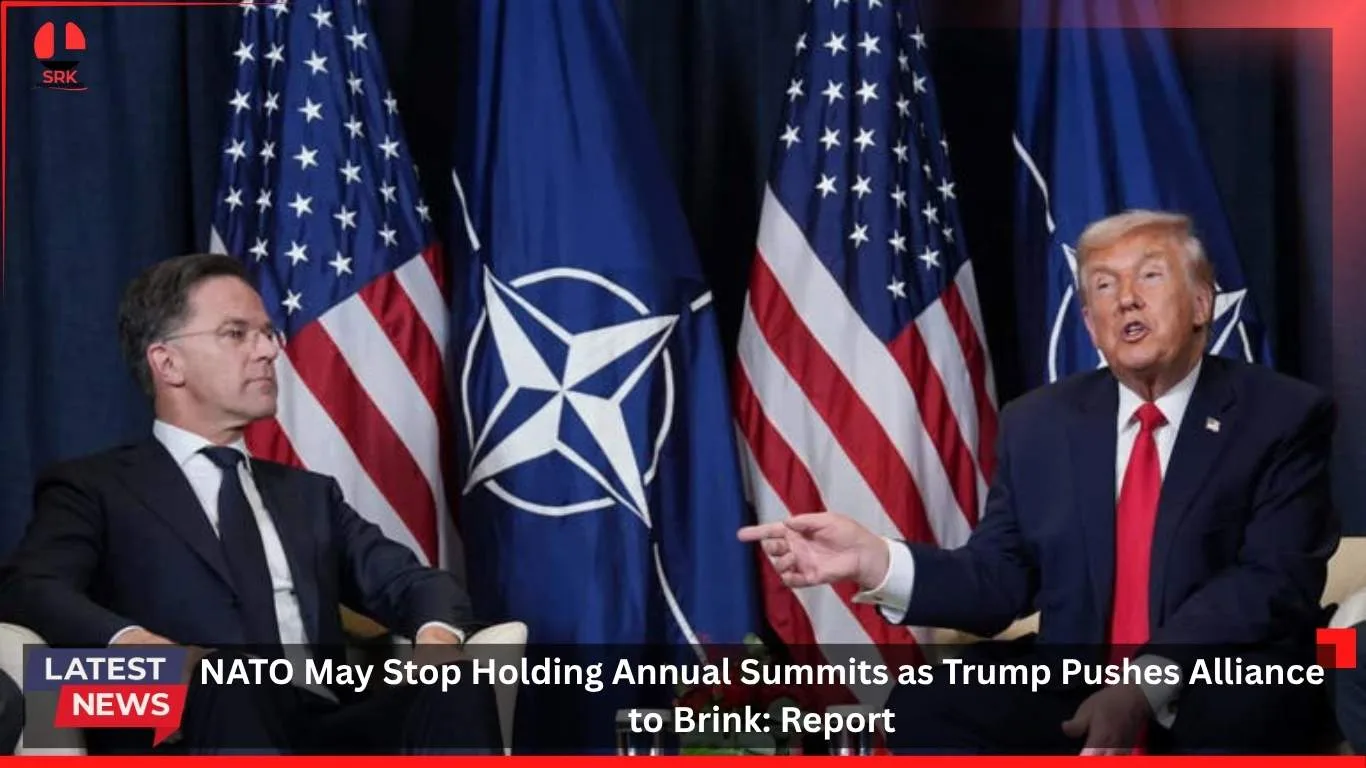
NATO is reportedly considering ending its tradition of annual summits, with insiders citing US President Donald Trump’s escalating hostility toward the alliance as a key factor. Diplomats revealed that the move is aimed at avoiding public confrontations with Trump, who has repeatedly criticized member states and threatened to quit NATO altogether.
Key Highlights
- Trump’s Hostility: Trump has berated NATO members for not supporting his military actions, especially against Iran.
- Summit Changes: NATO may skip its 2028 summit, Trump’s final full year in office.
- Alternative Proposal: Some members suggest holding summits every two years instead of annually.
- Current Schedule: Turkey will host the 2026 summit in June, Albania in autumn 2027.
- Diplomatic Concerns: Annual summits seen as pressure points that force “eye-catching results” rather than long-term planning.
Why NATO Is Considering the Change
- Avoiding Confrontations: Trump’s presence at summits has dominated discussions, overshadowing policy debates.
- Reducing Pressure: Diplomats argue fewer summits would allow for more thoughtful, long-term decision-making.
- Political Timing: Skipping 2028 avoids a high-profile clash during Trump’s last full year in office.
NATO Summit Timeline
| Year | Host Country | Status |
|---|---|---|
| 2026 | Turkey | Confirmed |
| 2027 | Albania | Confirmed |
| 2028 | TBD | Likely canceled |
| Future | TBD | Possible biennial format |
Trump’s Position on NATO
- Criticism: Trump has labeled NATO a “paper tiger” and questioned its relevance.
- Threats: He has openly considered quitting NATO.
- Pressure on Allies: Trump has singled out Spain, Italy, and the UK for not joining his military campaigns. Firstpost
Diplomatic Reactions
- Support for Fewer Summits: Some diplomats argue “better to have fewer summits than bad summits.”
- Concerns Over Stability: Analysts warn that reducing summits could weaken NATO’s visibility and unity.
- Internal Debate: While Trump is a factor, broader concerns about summit effectiveness also drive the discussion.
Implications
- For NATO: Risk of reduced cohesion and visibility.
- For Trump: Reinforces his influence in reshaping alliance traditions.
- For Global Security: Raises questions about NATO’s ability to project unity amid rising geopolitical tensions.
Conclusion
The report that NATO may stop holding annual summits underscores the strain Trump has placed on the alliance. While some members see fewer summits as a way to reduce drama and focus on long-term planning, critics warn it could signal weakening unity at a time of global instability.
Disclaimer
This article is a geopolitical news analysis created for informational purposes only. It reflects reported insider accounts and interpretations of NATO’s internal deliberations. Official decisions on summit scheduling and alliance policy will be confirmed only by NATO leadership and member states.