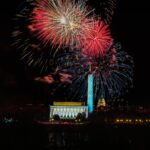

Setting the Stage for a Historic Night
As darkness falls over the National Mall this Independence Day, a family-owned pyrotechnics firm will attempt to shatter records by launching 850,000 individual fireworks over Washington, D.C. This 40-minute display, meticulously coordinated to span the capital’s skyline, represents the largest single fireworks event in recorded history.
The Evolution of Modern Pyrotechnics
Large-scale fireworks displays have served as a cornerstone of American Independence Day celebrations for decades, evolving from simple mortar shells into high-tech, computer-synchronized performances. The logistical complexity required for such a feat involves months of planning, thousands of man-hours, and precise digital choreography to ensure timing accuracy within milliseconds.
Engineering the Spectacle
The production team behind the event has integrated advanced wireless firing systems to manage the unprecedented volume of explosives. According to industry safety standards, the primary challenge remains the spatial distribution of shells, which must be launched from multiple barges along the Potomac River to prevent interference while maintaining a cohesive visual narrative.
Expert Insight and Safety Standards
Pyrotechnic safety experts emphasize that the scale of this launch requires rigorous adherence to Bureau of Alcohol, Tobacco, Firearms and Explosives (ATF) regulations. Dr. Marcus Thorne, a consultant in large-scale event logistics, notes that the density of the display requires a level of atmospheric monitoring never before utilized in urban environments. The use of low-smoke, high-luminosity compounds is expected to minimize the environmental impact while maximizing the visual intensity for millions of spectators.
Economic and Cultural Implications
For the District of Columbia, the record-breaking event is projected to draw an influx of tourism, significantly boosting local hospitality and transit sectors. Beyond the economic metrics, the display serves as a benchmark for the pyrotechnics industry, showcasing the capabilities of family-operated firms against global conglomerates. Analysts suggest that the success of this event may trigger a trend toward more frequent, massive-scale public celebrations as cities compete for tourism dominance.
Future Trends in Public Celebration
Industry observers are now watching how this event influences future municipal planning for major holidays. As technology continues to allow for more precise control over aerial displays, the integration of drone light shows alongside traditional fireworks is becoming an increasingly likely development. The industry is moving toward a hybrid model where physical pyrotechnics provide the visceral impact of sound and light, while drone swarms add complex geometric patterns, potentially setting the stage for even more elaborate sky-based performances in the coming years.