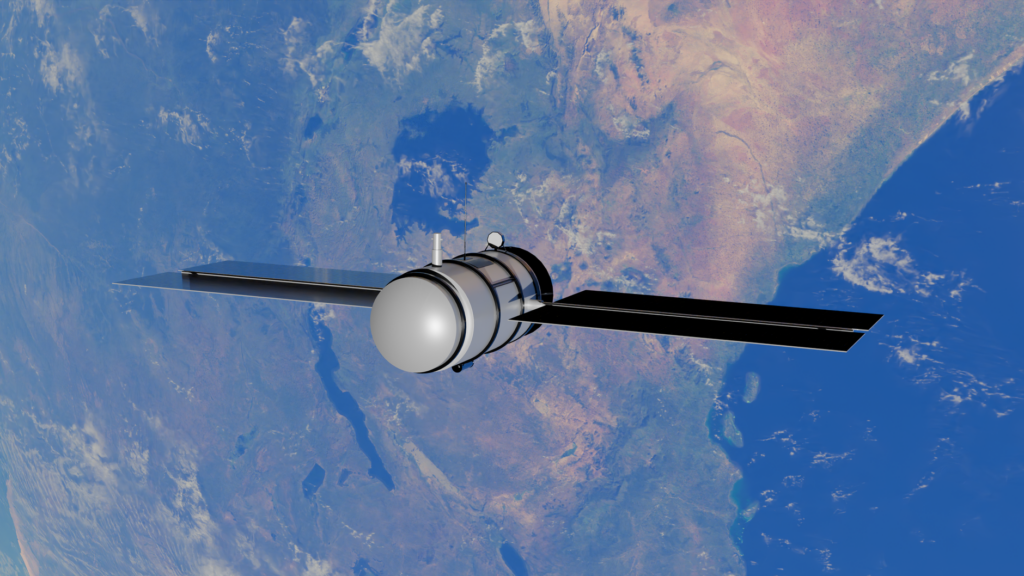

Introduction to Earth Observation Missions
Space agencies around the world continuously launch advanced technology into orbit to monitor environmental conditions, track weather patterns, and enhance national security measures. Among these spacefaring organizations, the Indian Space Research Organisation has established a strong reputation for cost-effective and highly precise satellite missions. Each mission requires careful planning regarding launch vehicles, payload capacities, and orbital mechanics to achieve mission success.
Selecting the correct orbital path is one of the most critical decisions engineers face during the early design phases of any satellite program. The choice of orbit dictates how much coverage a satellite can achieve, how effectively it can communicate with ground stations, and the amount of fuel required for station-keeping maneuvers throughout its operational lifetime. For the EOS-05 satellite, mission planners evaluated multiple trajectory options before finalizing a specific orbital profile.
Defining Geosynchronous and Geostationary Orbits
To understand the decision-making process behind the EOS-05 mission, it is helpful to examine the characteristics of different orbital classes. A geostationary orbit is a specialized type of circular orbit located directly above Earth equator at an altitude of approximately thirty-five thousand seven hundred and eighty-six kilometers. Objects placed in this specific circular path travel at the same rotational speed as Earth, allowing them to remain fixed over a single geographical point on the surface continuously.
In contrast, a geosynchronous orbit shares the same orbital period of roughly twenty-four hours matching Earth rotational period, but it does not strictly require a circular path or an equatorial alignment. A satellite in a geosynchronous orbit can have an inclination or an elliptical shape, which means it may trace out a figure-eight pattern in the sky relative to an observer on the ground. While geostationary orbits are technically a subset of geosynchronous orbits due to their matching periods, their distinct geometric differences offer varying benefits for specialized payloads.
Why ISRO Selected Geosynchronous Trajectory
When designing the EOS-05 mission, engineers had to weigh the technical trade-offs between a completely circular geostationary path and a flexible geosynchronous path. The selection of a geosynchronous orbit for EOS-05 was driven by specific mission objectives that required targeted regional observation rather than a purely fixed equatorial viewpoint. This orbital choice allows the spacecraft to optimize its observation capabilities over areas of specific interest to mission operators.
Furthermore, launching payloads into a standard circular geostationary orbit demands complex orbital insertion maneuvers, particularly regarding inclination changes if launched from higher latitude spaceports. By utilizing a geosynchronous trajectory, mission planners can optimize fuel consumption during the initial launch phase and extend the operational lifespan of the spacecraft. This efficiency aligns with broader engineering strategies aimed at maximizing return on investment for complex space missions.
Mission Benefits and Operational Impact
The deployment of the EOS-05 satellite into a geosynchronous orbit delivers several distinct operational advantages. Continuous data acquisition over targeted regions enables meteorologists, agricultural planners, and disaster management authorities to receive timely information. The spacecraft ability to maintain a synchronized period with Earth ensures reliable communication links and steady data transmission rates to ground control facilities.
As space technology evolves, the lessons learned from orbital mechanics decisions like the one made for EOS-05 will continue to shape future missions. Balancing technical constraints with scientific requirements remains a core competency for modern space agencies. Through careful planning and precise execution, missions like EOS-05 demonstrate the practical benefits of advanced satellite engineering in understanding and protecting our planet.