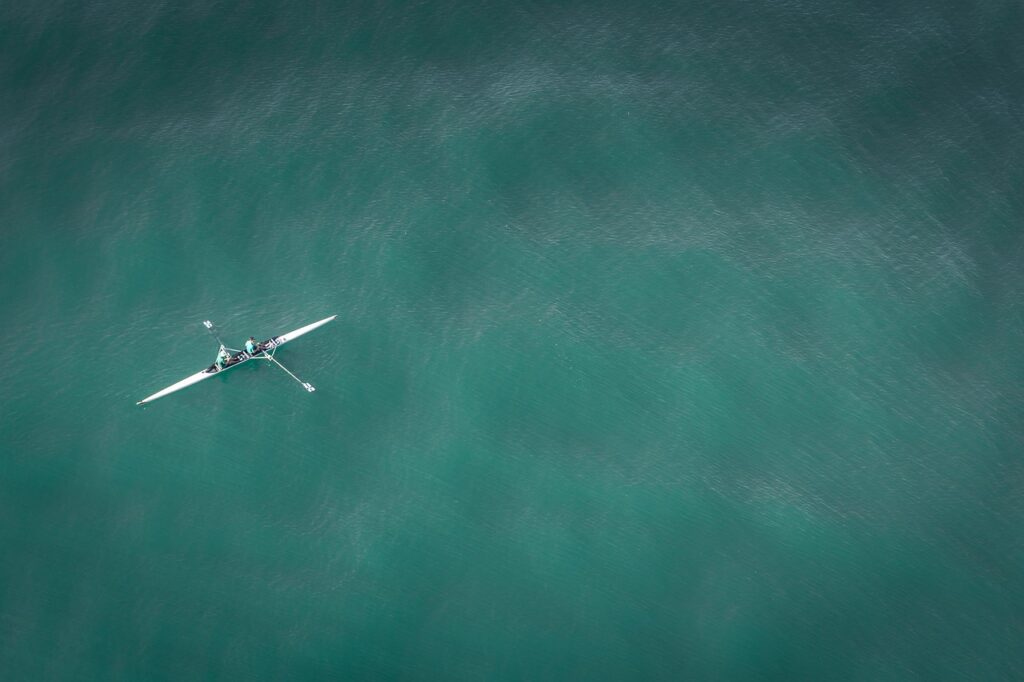

Historic Pacific Crossing
Kelsey Pfendler, a professional river-rafting guide based in the Grand Canyon, officially became the first American woman to complete a solo rowing expedition from California to Hawaii this week. Following a grueling 44-day journey across 2,300 miles of open ocean, Pfendler arrived at her destination aboard her custom rowboat, Lily, marking a significant milestone in maritime endurance sports as confirmed by the Ocean Rowing Society International.
The Context of Ocean Rowing
Solo ocean rowing is considered one of the most physically and mentally demanding feats in the world of extreme athletics. Unlike sailing, which relies on wind, rowing requires the athlete to maintain a consistent physical output while navigating unpredictable swells, severe weather, and the psychological isolation of being thousands of miles from land.
The route from the California coast to the Hawaiian Islands is a notoriously difficult passage, often characterized by strong trade winds and erratic currents. Historically, few individuals have attempted the crossing solo, and even fewer have successfully completed the transit without support vessels or external assistance.
The Journey of the Lily
Pfendler’s vessel, the Lily, was specifically engineered to withstand the punishing conditions of the Pacific. Throughout the 44-day transit, she navigated through significant wave heights and variable wind patterns that challenged her ability to maintain a steady heading.
Data tracked by the Ocean Rowing Society International highlights that Pfendler maintained a rigorous daily routine to manage the physical toll of constant rowing. Her success underscores a growing trend of endurance athletes pushing the boundaries of human capacity in remote, high-stakes environments.
Expert Perspectives on Endurance
Experts in maritime performance note that the primary obstacle for solo rowers is often not the physical act of rowing, but the cognitive load of navigation and self-preservation. Dr. Elena Vance, a sports psychologist specializing in extreme endurance, notes that the ability to remain focused while sleep-deprived and physically depleted is the true differentiator in these crossings.
Statistics from the Ocean Rowing Society suggest that the success rate for solo mid-Pacific crossings remains low due to the high risk of equipment failure and medical emergencies. Pfendler’s successful arrival serves as a case study in preparation and technical resilience in the face of environmental unpredictability.
Industry and Future Implications
For the adventure sports industry, Pfendler’s achievement validates the advancement of small-vessel technology and specialized training protocols. It provides a new benchmark for future expeditions and highlights the growing interest in human-powered oceanic travel.
Observers of the sport are now looking toward how these endurance records will influence the design of future rowboats and the development of safety technology for solo voyagers. As communication tools and satellite tracking systems become more sophisticated, the barrier to entry for such record-breaking attempts may lower, potentially leading to a surge in oceanic exploration by solo athletes in the coming years.