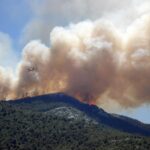

Three firefighters were killed and two others sustained injuries while battling active wildfires near the Colorado-Utah border, the U.S. Wildland Fire Service confirmed on Tuesday. The personnel were part of an interagency task force assigned to contain the Knowles and Gore fires, two separate incidents that have challenged containment efforts due to rugged terrain and shifting wind patterns.
The Context of Escalating Wildfire Risks
The Western United States is currently experiencing an active fire season exacerbated by prolonged drought conditions and high temperatures. Fire agencies have increasingly relied on interagency cooperation to manage large-scale incidents that cross state lines, pooling resources from federal, state, and local departments to protect communities and critical infrastructure.
The Knowles and Gore fires have burned thousands of acres of dry vegetation, creating volatile conditions for suppression crews. These fires occur within a landscape that has seen a significant increase in wildfire frequency and intensity over the past decade, a trend experts attribute to climate volatility and fuel accumulation in forest regions.
Operational Challenges and Incident Details
Officials have stated that the incident occurred while the crew was performing ground suppression operations in a remote section of the border region. The sudden shift in fire behavior, often triggered by erratic winds, left the firefighters with limited escape routes, according to preliminary reports from the scene.
The two injured firefighters were airlifted to regional medical centers for treatment. Their current conditions remain stable, though they are expected to undergo extensive recovery processes. The names of the deceased are being withheld pending notification of next of kin, in accordance with standard emergency protocol.
Expert Perspectives on Firefighter Safety
Safety experts emphasize that wildland firefighting is inherently hazardous, particularly when dealing with terrain that restricts the use of heavy machinery. Dr. Elena Vance, a wildfire management researcher, notes that current fire behavior models are struggling to keep pace with the rapid volatility of modern blazes.