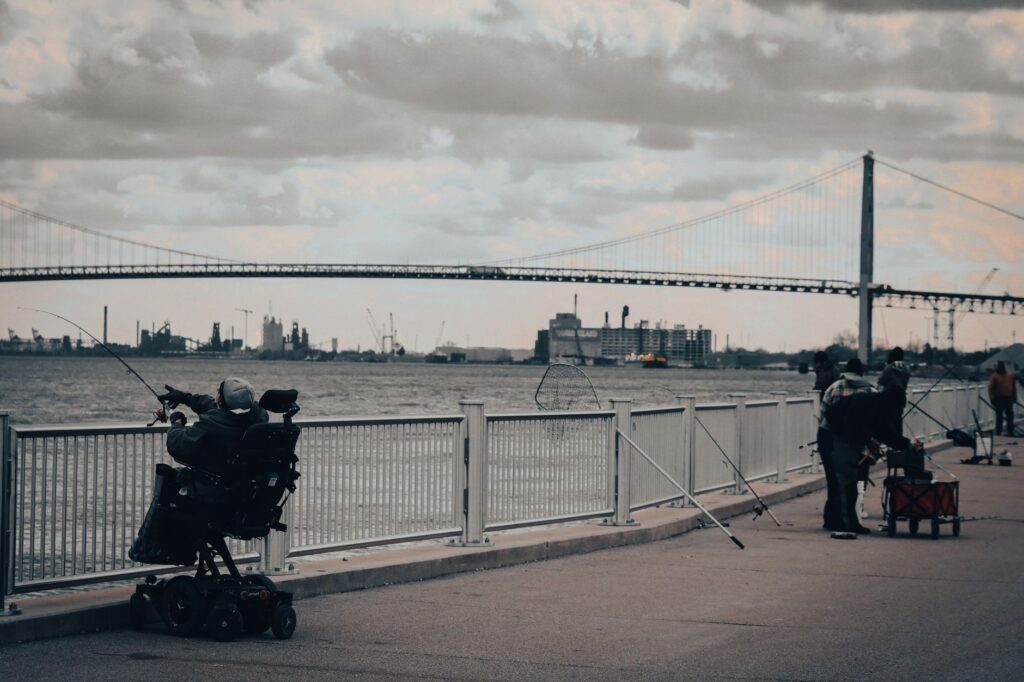

The Windsor-Detroit Bridge Authority (WDBA) confirmed that the $6.4 billion CAD ($4.7 billion USD) Gordie Howe International Bridge will officially open to traffic on July 27, 2025. Spanning 1.5 miles across the Detroit River, the mega-project will directly link Detroit, Michigan, with Windsor, Ontario, to resolve decades-long logistical bottlenecks at the busiest commercial land border crossing between the United States and Canada.
Construction officials announced the definitive target date after completing the main bridge deck connection last summer. The international crossing, named after the legendary Canadian hockey player who starred for the Detroit Red Wings, represents the first new bridge constructed over the Detroit River in nearly a century.
A Critical Link for North American Trade
For decades, commercial transit between Detroit and Windsor relied heavily on the Ambassador Bridge, a privately owned suspension span completed in 1929. While the Ambassador Bridge handles more than 25 percent of all merchandise trade between the United States and Canada, its lack of direct highway connections has long drawn criticism from logistics experts.
Currently, commercial trucks exiting Canada must navigate a series of local stoplights in Windsor before reaching the border. The Gordie Howe International Bridge eliminates this issue by providing a seamless, highway-to-highway connection between Interstate 75 in Michigan and Ontario's Highway 401.
According to the U.S. Department of Transportation, the Detroit-Windsor corridor facilitates over $100 billion USD in annual bilateral commerce. Supply chain disruptions, such as the week-long blockade of the Ambassador Bridge in 2022, highlighted the economic vulnerability of relying on a single major crossing point for the region's highly integrated automotive sector.
A Modern Engineering Marvel
Designed by legendary architect Erik Behrens and engineered by the consortium Bridging North America, the Gordie Howe International Bridge is a masterpiece of modern civil engineering. Once operational, it will stand as the longest cable-stayed bridge in North America, boasting a main span of 853 meters (0.53 miles) without any piers in the water.
The bridge features two massive A-frame towers rising 722 feet above the Detroit River, matching the height of Detroit's Renaissance Center. These towers anchor 216 stay cables that support the six-lane bridge deck, which is engineered to accommodate heavy commercial freight loads.
In addition to vehicular lanes, the bridge features a dedicated multi-use path for pedestrians and cyclists. This toll-free path will connect regional trail networks in Ontario to those in Michigan, marking a significant milestone for cross-border eco-tourism and community integration.
Economic Impacts and Port of Entry Capacity
The project includes the construction of massive, state-of-the-art ports of entry on both sides of the border. Spanning 167 acres in Detroit and 133 acres in Windsor, these plazas will rank among the largest border inspection facilities in North America.
The U.S. customs plaza features 36 inspection lanes for inbound traffic, while the Canadian plaza features 29 lanes. This expanded capacity is expected to dramatically reduce border wait times, saving logistics companies millions of dollars annually in fuel and idling costs.
Business leaders on both sides of the border have expressed optimism about the bridge's potential to attract new industrial investment. The Great Lakes Metro Chambers Coalition predicts that the improved transit times will bolster the regional manufacturing, agriculture, and retail supply chains.
Environmental and Community Benefits
The project team has prioritized minimizing the environmental footprint of the bridge and its surrounding infrastructure. The ports of entry utilize energy-efficient LED lighting, water-reclamation systems, and extensive green spaces to buffer local residential neighborhoods from highway noise and emissions.
Additionally, a $20 million CAD Community Benefits Plan has funded local infrastructure improvements, job training programs, and neighborhood revitalization initiatives in Detroit's Delray neighborhood and Windsor's Sandwich community. These historic areas have historically borne the brunt of industrial pollution and heavy truck traffic.
By diverting thousands of diesel trucks daily from local municipal roads directly onto interstate highways, the new bridge is projected to significantly improve local air quality indices in both Southwest Detroit and West Windsor.
Looking Ahead: The Final Stretch to July
As the July 27 opening date approaches, construction crews are focusing on the final phases of the project. These tasks include installing the bridge deck waterproofing, laying the final asphalt wearing surface, and completing the installation of electrical, security, and tolling systems.
Over the coming months, border agencies from both nations, including U.S. Customs and Border Protection and the Canada Border Services Agency, will conduct extensive simulations to test the integrated technology systems at the ports of entry. Public opening ceremonies, including a planned pedestrian walk and bicycle ride across the bridge, are expected to take place in the weeks leading up to the official ribbon-cutting.