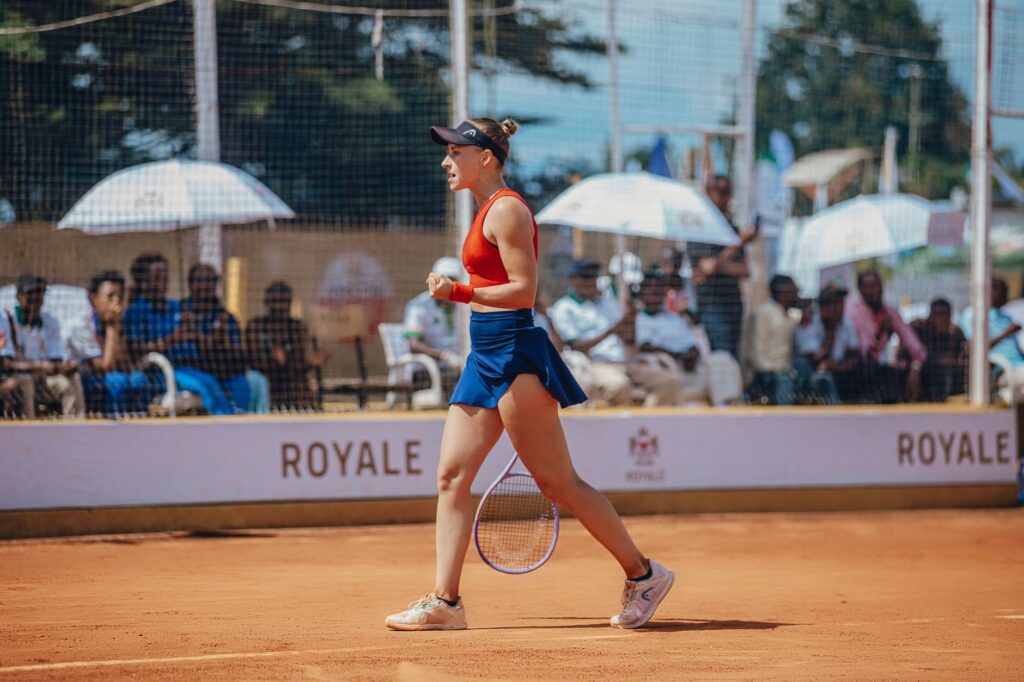

In a stunning display of athletic resurgence, Czech tennis sensation Linda Noskova captured back-to-back singles titles at Berlin and Wimbledon over a historic seven-week summer stretch, propelling her to a career-high world ranking of No. 7. The 19-year-old’s rapid ascent on the grass courts of Europe marks a definitive turning point in her young career, transforming her from a promising challenger into a bona fide Grand Slam champion. This remarkable run has stunned tennis analysts, who watched her transition from early-season struggles to absolute dominance on the sport’s most prestigious stage.
The journey from the clay courts of Paris to the lawns of London required a complete tactical and mental overhaul. Only two months ago, Noskova faced consecutive early-round exits, raising questions about her ability to handle the pressure of high-stakes tour matches. Her sudden turnaround began in mid-June at the Berlin Open, where she secured her first grass-court title, laying the groundwork for her historic run at the All England Club.
A Dramatic Turnaround on Grass
Historically, transitioning to grass is considered one of the steepest learning curves in modern tennis due to the low bounce and slick movement required. Noskova’s early-season hardcourt campaign was marked by inconsistent performances and physical fatigue, leaving her outside the top 30. However, the unique physical demands of grass courts seemed to unlock a new dimension in her playing style.
Her breakthrough in Berlin changed everything, providing the tactical confidence and physical momentum needed to conquer the historic lawns of Wimbledon. Sports scientists note that grass courts reward players who can take the ball early and maintain a low center of gravity. Noskova adapted to these requirements faster than any of her peers, utilizing her natural power to dictate play from the baseline.
This rapid adaptation is particularly impressive given her limited competitive experience on the surface prior to this year. By securing consecutive titles in Berlin and London, she became the youngest player to win both events in the same calendar year since the turn of the century.
Deconstructing the Seven-Week Surge
Noskova’s march to the Wimbledon title was defined by statistical dominance, particularly behind her first serve. According to WTA tournament data, she won an astonishing 78% of her first-serve points throughout the fortnight and saved 14 of 18 break points faced. This clinical efficiency under pressure allowed her to navigate difficult matches against more experienced opponents.
In Berlin, she defeated three top-10 opponents en route to the trophy, proving her baseline power could disrupt the defensive rhythm of the world’s best players. By the time she arrived in London, sports analysts noted a distinct shift in her on-court demeanor, characterized by a calmer, more aggressive tactical approach. She seemed completely unbothered by the historic weight of playing on Centre Court.
“Her ability to take the ball early on the rise is perfectly suited for grass,” noted veteran tennis analyst Mary Carillo during the tournament broadcast. “What we are seeing is a player who has suddenly synchronized her immense power with elite-level court positioning, leaving her opponents with virtually no time to react.”
Continuing a Rich National Legacy
Noskova’s triumph also adds another chapter to the rich history of Czech tennis, particularly on grass. The Czech Republic has consistently produced elite grass-court champions, including legends like Martina Navratilova, Jana Novotna, and Petra Kvitova. Noskova’s aggressive, left-to-right baseline patterns draw frequent comparisons to Kvitova’s championship-winning style.
Local tennis clubs in Prague are already reporting a surge in youth enrollment, a phenomenon local sports authorities attribute directly to Noskova’s high-profile victories. Her success serves as a powerful reminder of the robust player development pipeline that exists within the Czech tennis federation.
Behind the scenes, Noskova attributes her turnaround to a revised training regimen initiated shortly before the clay season ended. Working closely with her coaching team, she focused heavily on low-impact lateral movement drills and shortening her backswing to adapt to faster ball speeds. This adjustment allowed her to neutralize heavy baseline hitters while maintaining her signature aggressive groundstrokes.
Shaking Up the WTA Hierarchy
Noskova’s entry into the top 10 significantly disrupts the current power dynamics of the WTA Tour, which has recently been dominated by a select group of veteran players. At just 19 years old, she becomes the youngest player in the current top 10, injecting fresh rivalry and unpredictability into the upcoming hardcourt season. Her sudden rise forces top-ranked players to recalibrate their defensive strategies to counter her high-velocity flat groundstrokes.
Commercial analysts predict a substantial surge in her marketability ahead of the North American hardcourt swing. Major athletic brands are already competing for her endorsement, recognizing her appeal to younger demographics who are drawn to her calm demeanor and explosive style of play.
The global tennis community now turns its focus to the hard courts of North America, where sports scientists and fans alike will watch to see if Noskova can translate her grass-court mastery back to high-bounding surfaces. Her ability to defend her new ranking and handle the pressure of being a marked player will define the next phase of her career. Opponents will undoubtedly study her recent matches closely, searching for weaknesses in a game that currently looks nearly flawless.