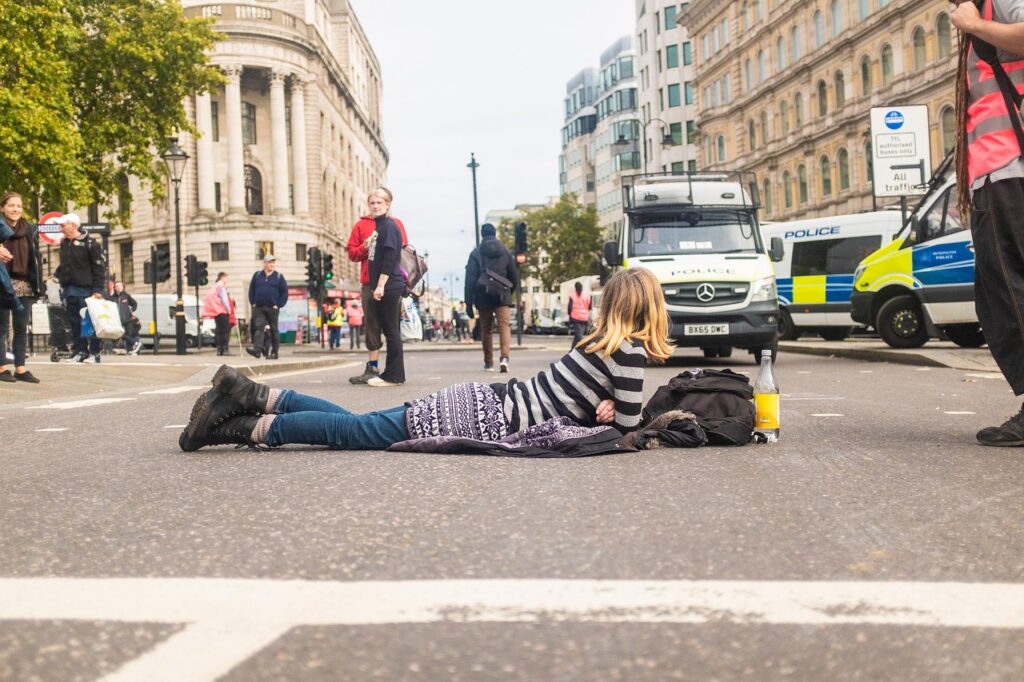

On Monday, Delhi police resorted to a baton-charge near Parliament Street after thousands of Cockroach Janta Party (CJP) protesters clashed with security forces while attempting to breach barricades during a march toward Parliament. The demonstration, aimed at highlighting public health and sanitation grievances, escalated rapidly ahead of a scheduled high-profile meeting between CJP spokespersons Ashutosh Ranka and Sourav Das and Union Health Minister J.P. Nadda.
Context Behind the CJP Mobilization
The CJP, a political group advocating for urban sanitation reform and public health accountability, organized the march to demand immediate federal intervention in municipal hygiene standards. Tension had been building for weeks following reports of deteriorating public health infrastructure in several major urban centers. The march represented a culmination of these grievances, drawing thousands of supporters from neighboring states to the national capital.
Adding to the political weight of the demonstration, renowned climate activist Sonam Wangchuk, currently under medical observation, also sought to join the protest. In a formal letter written to the administration of Safdarjung Hospital, Wangchuk expressed his solidarity with the movement and requested permission to join the march to Parliament, highlighting the intersection of environmental and public health concerns.
Clashes on Parliament Street
The situation turned volatile in the afternoon when protesters reached the heavily barricaded Parliament Street. According to eyewitnesses and security officials, a segment of the crowd attempted to bypass the physical barriers erected by the Delhi Police to prevent unauthorized access to high-security zones. In response, law enforcement personnel deployed water cannons and initiated a baton-charge to disperse the crowd, leading to chaotic scenes and several minor injuries.
Security forces defended their actions, stating that the crowd had breached the permitted limits of peaceful assembly. “Our primary objective was to maintain law and order and prevent unauthorized entry into high-security zones surrounding Parliament,” a senior Delhi Police official stated under anonymity. Conversely, CJP organizers accused the police of using excessive force against peaceful demonstrators who were merely exercising their democratic rights.
The clashes caused severe traffic disruptions across central Delhi, particularly around Connaught Place, Janpath, and the Central Secretariat area. Commuters faced long delays as police diverted traffic and closed several metro station exits as a precautionary measure to control the crowd flow.
High-Stakes Talks and Expert Analysis
Amidst the unrest, a diplomatic channel opened as CJP spokespersons Ashutosh Ranka and Sourav Das prepared to meet with Union Health Minister J.P. Nadda. The meeting is expected to address the core demands of the protesters, including increased budgetary allocation for urban sanitation, stricter enforcement of waste management protocols, and institutional reforms in public health administration.
Public health experts suggest that the protest highlights a growing national concern over urban health crises. According to a recent report by the Centre for Science and Environment (CSE), over 60 percent of municipal waste in major Indian cities remains untreated, posing severe long-term health risks to urban populations. “The intersection of public health and political activism is becoming more pronounced as citizens demand accountability for basic living standards,” noted Dr. Arvinder Singh, an independent public health analyst.
The government’s response to the CJP’s demands will be closely watched by policy analysts. Observers note that while the Swachh Bharat Mission has made significant strides in toilet construction, waste processing and systemic urban sanitation still face massive infrastructure deficits that require federal intervention.
Implications and What to Watch Next
The outcome of the meeting between CJP representatives and Health Minister J.P. Nadda will likely dictate the next phase of the agitation. A successful dialogue could establish a framework for policy reforms in urban sanitation, while a deadlock may trigger further protests across other metropolitan areas in India.
Observers are also closely watching the medical status and potential involvement of Sonam Wangchuk, whose participation could significantly amplify the movement’s national profile and draw international attention. Security agencies in Delhi remain on high alert, with additional personnel deployed around key government installations to prevent further disruptions in the coming days.