








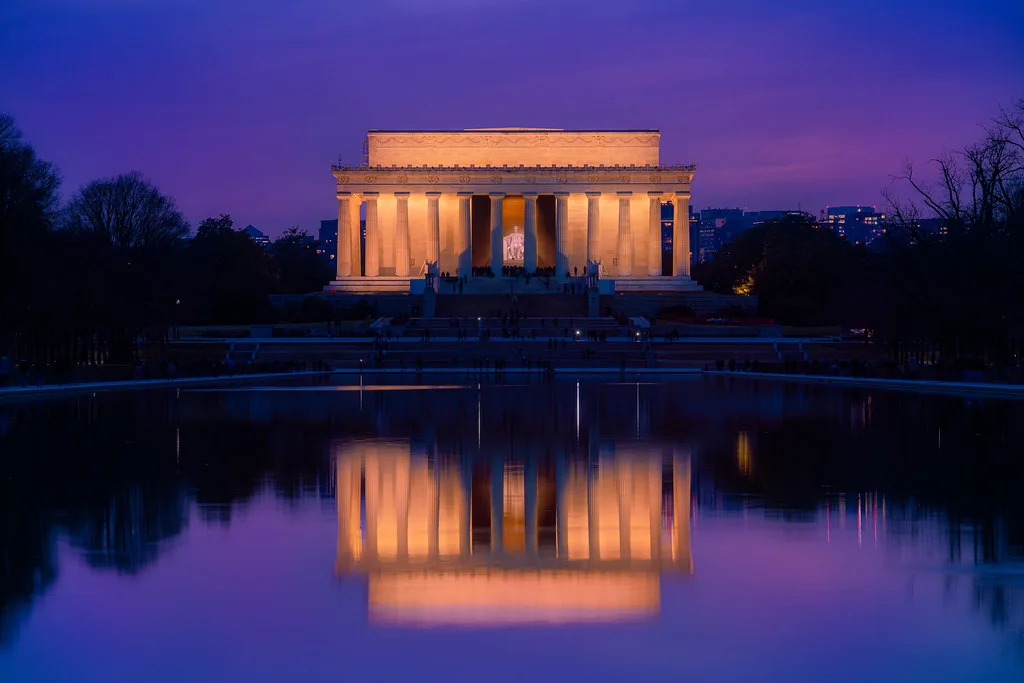
President Donald Trump recently announced the completion of extensive structural and aesthetic repairs to the Lincoln Memorial Reflecting Pool in Washington, D.C., marking the end of a multi-month renovation project aimed at addressing chronic water quality and structural leakage issues. The National Park Service oversaw the efforts, which targeted the pool’s aging filtration systems and the underlying concrete basin that has struggled with significant water loss for years. Officials now face the critical test of whether these interventions will provide a long-term solution to the site’s persistent maintenance challenges.
A Legacy of Structural Struggle
The Reflecting Pool, a centerpiece of the National Mall, has long served as a testament to American history, yet it has been plagued by engineering difficulties since its inception. The current basin, completed in 2012, replaced a previous structure that suffered from severe settling and cracking, but even the modern iteration has faced ongoing battles with algae blooms and mechanical failures.
Previous reports from the National Park Service indicated that the pool lost hundreds of thousands of gallons of water daily due to seepage. These losses forced frequent, costly closures to facilitate repairs, disrupting the experience for millions of annual visitors who flock to the site to view the Lincoln Memorial.
Technical Upgrades and Modernization
The recent construction focused on upgrading the circulation pumps and installing advanced filtration technology designed to improve water clarity and reduce chemical dependence. Engineers also reinforced the expansion joints that have historically served as the primary source of leakage across the 2,000-foot-long expanse.
“The objective was to transition from reactive maintenance to a more sustainable, predictive management model,” noted an infrastructure consultant familiar with the project. By integrating sensor-based monitoring, the National Park Service aims to detect pressure drops and leaks in real-time, potentially saving the government millions in future repair costs.
Expert Perspectives on Sustainability
Civil engineers remain cautiously optimistic about the renovation’s efficacy. While the mechanical upgrades are substantial, experts point out that the sheer size of the pool and its exposure to the elements make it inherently difficult to maintain.
Data from the Department of the Interior suggests that the high humidity and temperature fluctuations in the D.C. region place immense stress on concrete infrastructure. Without a rigorous, ongoing maintenance schedule, even the most sophisticated repairs may succumb to the same environmental degradation seen in previous decades.
Implications for the National Mall
For the millions of tourists and local residents who visit the National Mall each year, the completion of the project signifies a return to the pristine aesthetic that defines the site. A functional pool is essential for the visual integrity of the vista connecting the Lincoln Memorial to the Washington Monument.
Looking ahead, industry observers are watching to see if this renovation project will set a new precedent for how federal landmarks are preserved. As the National Park Service manages an aging portfolio of historical assets, the success of the Reflecting Pool repairs could serve as a pilot program for implementing smart-city technology into national monument management.
Future efforts will likely focus on long-term sustainability metrics, specifically monitoring the reduction of water waste and the effectiveness of the new filtration systems during the peak summer months. Observers should watch for upcoming maintenance reports to determine if the pool finally maintains a stable water level through the next fiscal year.