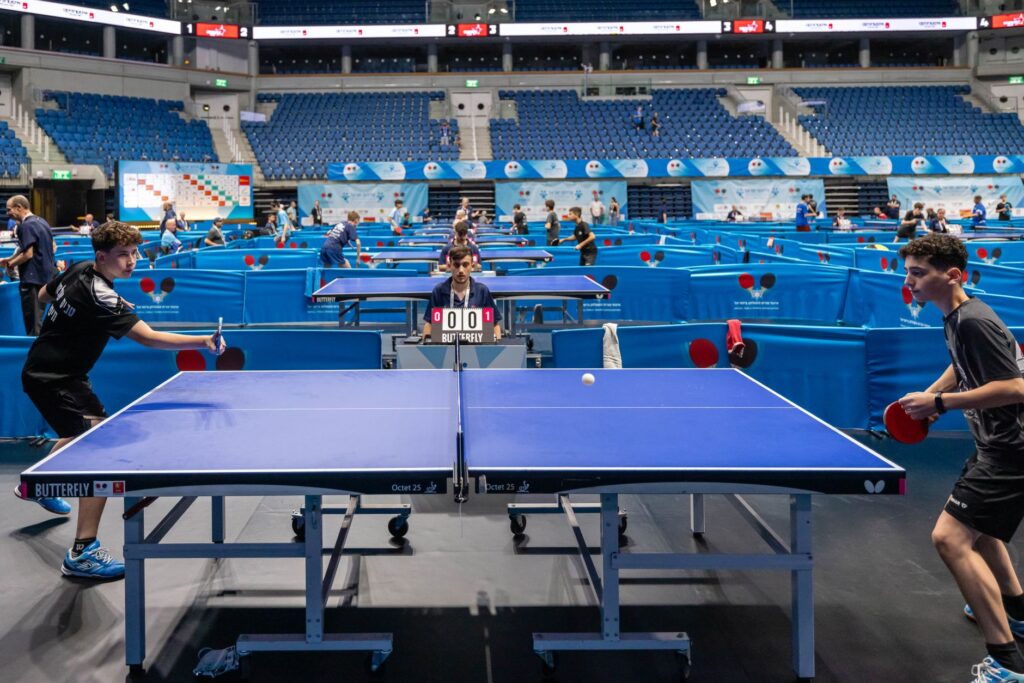

Indian table tennis star Sathiyan Gnanasekaran is leveraging a wave of positive team chemistry as Delhi Dabang eyes a crucial semifinal berth in the ongoing Ultimate Table Tennis (UTT) league this weekend. The franchise-based tournament, currently reaching its climax, serves as the immediate battleground for Sathiyan before he transitions directly to national duty at the Commonwealth Table Tennis Championship (CTTC) in New Delhi and the subsequent Asian Games in Aichi-Nagoya, Japan. This intense competitive window represents a critical juncture for Indian table tennis as the nation’s top athletes prepare for elite continental competition.
The Psychological Edge: Delhi’s “Momentum of Happiness”
Sathiyan has lauded Delhi Dabang’s current run, describing the team’s internal environment as a “momentum of happiness” that has transformed their campaign. This psychological ease has proved vital in a league defined by rapid formats, sudden-death points, and high-stress encounters. The unique franchise format of UTT mixes domestic talent with international stars, requiring rapid adaptation and cohesive team dynamics under immense pressure.
“When the team is happy and relaxed, the performance on the table naturally elevates,” Sathiyan noted during a media interaction. Delhi Dabang’s management has focused heavily on building camaraderie off the court, a strategy that appears to be paying dividends as the league reaches its business end. Analysts point out that in a sport as mentally demanding as table tennis, emotional support from the bench can swing tight three-game matches in a matter of minutes.
Bridging the Gap: The Role of Ultimate Table Tennis
India’s table tennis trajectory has risen sharply over the past decade, driven in large part by structured leagues like the UTT. By providing domestic players with regular exposure to world-class competitors, the league has demystified international opposition for younger Indian athletes. Facing top-tier global players on a weekly basis has built tactical resilience and self-belief across the Indian contingent.
According to recent International Table Tennis Federation (ITTF) data, Indian players are consistently breaching the top 50 global rankings, a testament to the sport’s growing depth in the country. The financial viability and competitive exposure provided by franchise leagues have bridged the gap between domestic circuits and the rigorous demands of the international tour. Coaches believe this exposure is the primary catalyst behind India’s recent historic performances at major multi-sport events.
The Road to New Delhi and Aichi-Nagoya
The conclusion of the UTT league this weekend marks only the beginning of a relentless competitive cycle for India’s top paddlers. Immediately after the final matches, Sathiyan will travel to New Delhi to join the national squad for the Commonwealth Table Tennis Championship. The CTTC represents the final major competitive window for Indian athletes to fine-tune their strategies and build match fitness before heading to the Asian Games.
This transition from franchise teammate to national representative requires immense mental and physical adaptability. In the UTT, players compete alongside international rivals, whereas the upcoming championships will see them unite under the national tricolor to face global powerhouses. The quick turnaround leaves virtually no room for recovery, highlighting the intense physical conditioning required of modern table tennis professionals.
Physical Demands and Tactical Adjustments
The Commonwealth Table Tennis Championship in New Delhi is poised to serve as a critical litmus test for the Indian coaching staff. With formidable teams from across the Commonwealth participating, the tournament offers high-intensity match practice under championship conditions. Chief national coaches view this event as the perfect staging ground to assess player fitness, refine doubles combinations, and implement tactical variations.
Following the CTTC, the focus shifts entirely to the Asian Games in Aichi-Nagoya, which remains the pinnacle event of the season for Asian athletes. The Asian continent dominates global table tennis, with powerhouse nations like China, Japan, and South Korea setting the gold standard. For Indian paddlers, securing a podium finish in Aichi-Nagoya requires peak physical form and tactical precision, making the current competitive run indispensable.
Future Outlook: A Crucial Month for Indian Table Tennis
The immediate focus remains on the high-stakes UTT matches scheduled over the coming days, where Delhi Dabang will fight to secure its place in the knockout stages. Fans and selectors alike will closely monitor Sathiyan’s form and physical endurance during these high-pressure franchise matches. His ability to maintain this positive momentum under pressure will be critical for Delhi’s title aspirations.
As the league wraps up, the spotlight will instantly shift to the national camp in New Delhi. The performance of the Indian contingent at the CTTC will provide crucial indicators of their readiness for the monumental challenge awaiting them in Aichi-Nagoya. The coming weeks will ultimately test whether India’s table tennis revolution can translate domestic momentum into historic continental glory.