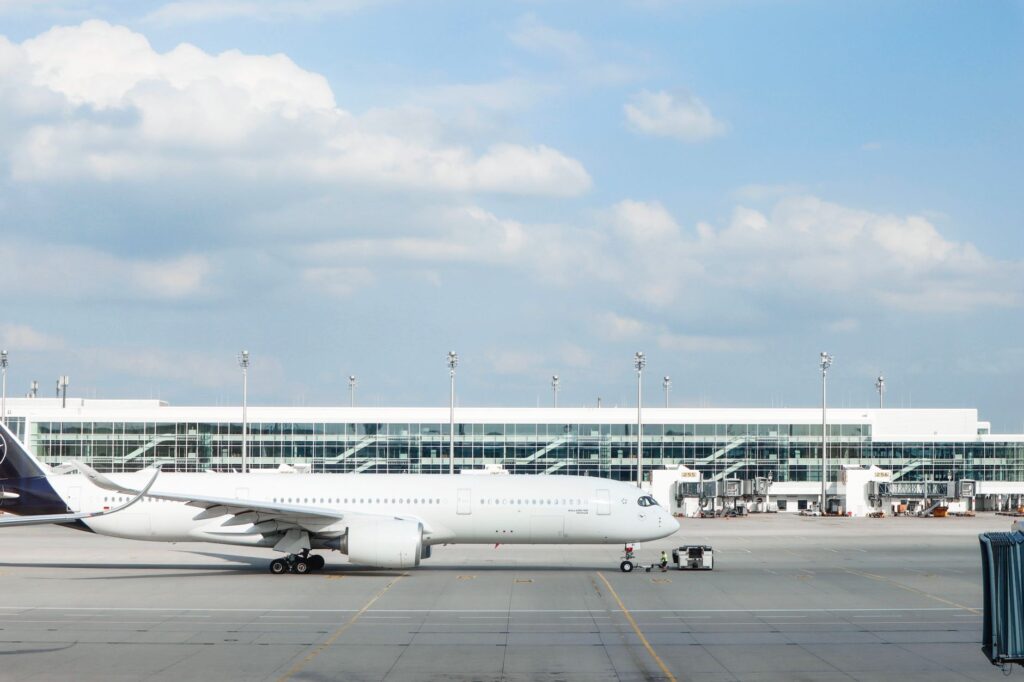

India’s primary air carriers, IndiGo and Air India, have formally voiced strong opposition to the Adani Group’s prospective entry into the commercial airline operator market, submitting warnings to regulatory authorities in New Delhi over critical conflicts of interest. The major airlines argue that allowing a dominant airport infrastructure operator to run a commercial passenger airline creates an unfair competitive advantage across the domestic aviation supply chain. They contend that such deep vertical integration could squeeze existing carriers out of prime operational slots, inflate ground operating fees, and harm broader industry employment.
Infrastructure Dominance Meets Aviation Ambition
The conflict emerges at a pivotal moment for Indian civil aviation, which has rapidly expanded to become the world’s third-largest domestic aviation market. The Adani Group, through its subsidiary Adani Airport Holdings Limited (AAHL), currently controls eight major airports across the country, including hubs in Mumbai, Ahmedabad, Jaipur, and Lucknow, alongside the upcoming mega-project at Navi Mumbai. Through these assets, the conglomerate manages over 25 percent of India’s total passenger traffic and roughly 33 percent of its air cargo movement.
While the Adani Group has previously focused on airport modernization, real estate, and cargo logistics, hints of its ambition to operate a direct passenger carrier have sent shockwaves through the industry. The group’s vast footprint in airport management gives it direct control over gate allocations, landing schedules, retail spaces, and aviation security infrastructure. Existing carriers contend that combining these infrastructure privileges with commercial fleet operations jeopardizes the neutrality required of airport operators.
Vertical Integration and Conflict of Interest Concerns
At the center of the debate is the concept of vertical integration within a heavily regulated public utility space. When an entity owns both the airport facility and an operating fleet, neutral resource allocation becomes compromised. Representatives from both InterGlobe Aviation (IndiGo) and the Tata-owned Air India group have urged the Ministry of Civil Aviation and the Competition Commission of India (CCI) to intervene immediately.
An Air India official, speaking on condition of anonymity, stated that allowing an airport monopoly to launch a carrier creates an unmanageable structural conflict. “It is a recipe for conflict of interest as well as squeezing other players; such a consolidation across the value chain not only kills competition but also results in fewer jobs,” the official asserted during preliminary regulatory discussions. The airlines fear that an Adani-owned carrier could receive preferential treatment in prime morning and evening landing slots, reduced parking rates, and priority during air traffic control holding patterns.
Market Concentration and Economic Impacts
The Indian domestic airline market currently exists in a near-duopoly following the consolidation of Air India with Vistara and the sustained market dominance of IndiGo. Directorate General of Civil Aviation (DGCA) data indicates that IndiGo holds approximately 60 percent of domestic market share, while the Air India Group commands nearly 28 percent. Smaller regional carriers hold the remaining slice, leaving little room for systemic inefficiency.
Airlines argue that true market competition relies on neutral airport hosts that treat all commercial fleets equally. If an airport owner favors its internal airline, third-party operators face higher turnaround costs and operational delays. Industry analysts point out that increased overheads for existing airlines could lead to route rationalization, scaled-back expansion plans, and localized layoffs across ground crews, maintenance staff, and administrative divisions.
Regulatory Crossroads and What to Watch Next
Civil aviation regulators now face a crucial policy decision regarding structural ownership caps and firewall mandates between airport managers and airline operators. Historically, global aviation hubs have enforced strict separation between airport operators and airline companies to preserve fair market access and maintain transparent pricing for consumers. European and North American regulatory frameworks, for instance, explicitly discourage cross-ownership models that give infrastructure operators direct commercial leverage over carrier operations.
Industry watchers will be closely tracking upcoming policy announcements from the Ministry of Civil Aviation and the Competition Commission of India regarding cross-ownership rules. Regulators are expected to review whether structural firewalls will be sufficient or if an explicit ban on airport operators holding commercial airline licenses will be required. The eventual regulatory decision will set a precedent for infrastructure investment in emerging aviation markets, determining whether India’s air space remains open to multi-player competition or slides toward end-to-end conglomerate control.