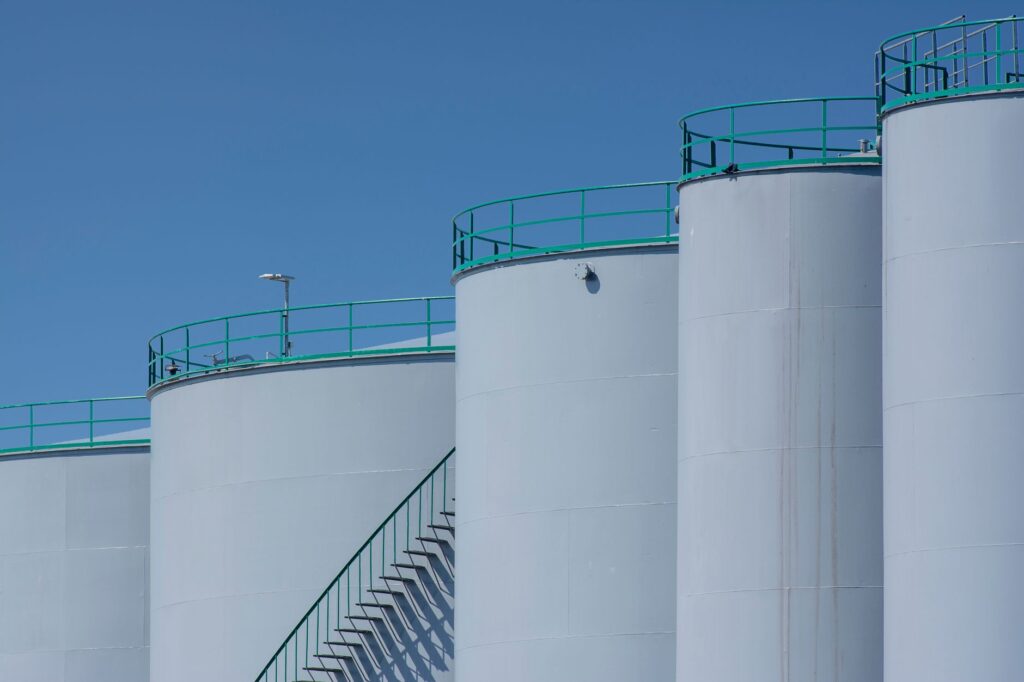

The Indian government is advancing plans to execute the second phase of its Strategic Petroleum Reserve (SPR) program through a Public-Private Partnership (PPP) model, committing an estimated ₹14,527 crore to fortify national energy security amidst ongoing global market volatility.
Building on Phase-1 Foundations
To understand India’s expanding energy buffer strategy, one must look at the foundation established during Phase-1 of the national infrastructure drive. The initial phase successfully established a cumulative storage capacity of 5.33 million metric tonnes (MMT) of crude oil across three strategically located underground rock caverns in southern India.
These operational facilities include 1.33 MMT in Vishakhapatnam, Andhra Pradesh, 1.5 MMT in Mangaluru, Karnataka, and 2.5 MMT in Padur, Karnataka. Managed under the Ministry of Petroleum and Natural Gas, these reserves were created to protect the domestic economy from international oil supply shocks and sudden geopolitical dislocations.
However, rapidly expanding domestic industrial demand and prolonged global supply chain vulnerabilities have prompted New Delhi to significantly scale up its stockpiling infrastructure. Expanding reserve capacity is now viewed by policymakers as a core requirement for economic resilience.
The Phase-2 PPP Model Framework
The Phase-2 expansion marks a strategic shift in funding and project execution by adopting a Public-Private Partnership framework rather than relying solely on direct state capital outlay. Under this public-private arrangement, private concessionaires will construct, operate, and maintain new strategic petroleum reserve facilities.
The capital expenditure, estimated at ₹14,527 crore, will facilitate the creation of state-of-the-art underground storage caverns designed for long-term crude preservation. The framework allows private partners to trade or lease a portion of the capacity commercially while retaining a mandatory strategic threshold strictly reserved for national emergencies.
This hybrid structure significantly reduces the immediate fiscal burden on the central government while introducing private sector efficiency into inventory management. By blending commercial viability with strategic reserve mandates, India aims to attract global energy majors, sovereign wealth funds, and primary commodity traders to invest directly in national storage infrastructure.
Enhancing National Energy Sovereignty
Energy analysts emphasize that expanding underground storage facilities is critical for a nation that imports nearly 85 percent of its crude oil requirements. The additional storage built under Phase-2 is expected to significantly extend the country’s emergency crude buffer, granting domestic refiners greater supply predictability.
“Transitioning to a PPP model for strategic reserves aligns India with evolving global energy safety standards,” notes Dr. Rajiv Nayan, a senior energy policy research fellow in New Delhi. “It effectively converts static storage assets into commercially active infrastructure that yields regular revenue while ensuring national emergency reserves remain intact during crises.”
Official project documentation indicates that combining the existing 5.33 MMT from Phase-1 with the proposed Phase-2 sites will dramatically improve the national import cover duration. Furthermore, the strategic placement near major coastal refiners will optimize logistics and reduce overall distribution overhead across regional energy corridors.
Economic and Market Implications
For international investors and private energy entities, the Phase-2 program opens significant long-term commercial opportunities within one of the world’s fastest-growing energy markets. Participating companies will gain enhanced commercial positioning, coastal pipeline access, and integrated trade pathways within the domestic refining network.
The announcement is also expected to stimulate major activity within the specialized engineering, procurement, and construction (EPC) sector. Building deep underground rock and salt caverns requires advanced technical expertise, specialized drilling infrastructure, and complex geotechnical modeling, providing major opportunities for global and local engineering conglomerates.
What to Watch Next
Market participants and prospective investors are closely monitoring the upcoming release of the official bidding documents and concession parameters by the Indian Strategic Petroleum Reserves Limited (ISPRL). Key factors under scrutiny include the exact operational split between commercial and strategic stocks, lease periods, and minimum equity participation requirements.
Additionally, regulatory updates regarding crude oil re-export permissions and tax incentives for private concessionaires will determine the overall level of international interest. As global energy dynamics shift toward supply security, the successful execution of India’s ₹14,527 crore Phase-2 reserve drive will serve as a major test case for private-sector participation in strategic national infrastructure.