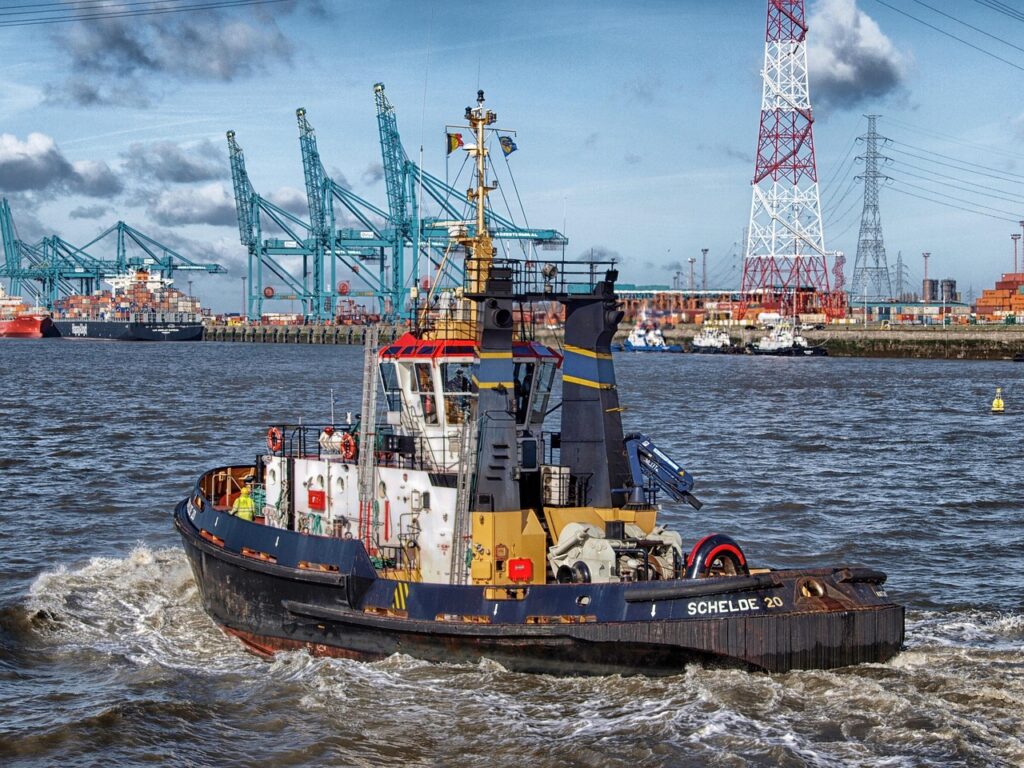

A commercial tugboat captain pleaded guilty in federal court this week following a catastrophic maritime collision in Biscayne Bay that killed three young children and injured a sailing counselor. Federal prosecutors revealed that the captain proceeded through the busy Miami waterway while his visual field was severely obstructed by the massive steel barge he was pushing. The admission of guilt marks a critical turning point in a tragic incident that has ignited fierce debate over harbor management and commercial shipping oversight in shared urban waterways.
Context Surrounding Biscayne Bay Maritime Operations
Biscayne Bay serves as a high-density marine corridor where heavy commercial industrial traffic intersects daily with recreational boaters, paddleboarders, and youth sailing academies. Managing the coexistence of slow-maneuvering commercial vessels and lightweight recreational craft has long posed complex safety challenges for South Florida maritime authorities.
Under long-standing federal navigation rules and international maritime agreements, vessel operators are strictly required to maintain a proper visual lookout at all times. When tugboats operate in a “pushing ahead” configuration—where a flat-decked steel barge is propelled from behind—the bow of the barge creates a substantial blind spot directly in front of the vessel, extending hundreds of feet forward depending on the load height and water line.
Details of the Collision and Prosecutorial Findings
According to court documents filed by federal prosecutors, the fatal incident occurred during a clear afternoon as a local summer camp conducted routine sailing instruction near Key Biscayne. The tugboat was pushing a heavy commercial barge through a designated channel, moving at standard cruising speed toward a local transit terminal.
Investigators established that the captain failed to post a secondary lookout at the forward bow of the barge, nor did he utilize available electronic camera feeds or auxiliary craft to clear the visual blind zone created by the cargo. As a result, the captain was entirely unaware of the small, wind-powered sailboat operating directly within the vessel’s obstructed path.
The barge struck the small sailboat, capsized the vessel, and dragged it underwater before crew members realized an impact had occurred. Emergency crews from the U.S. Coast Guard, Miami-Dade Fire Rescue, and local marine patrol units launched a rapid search and rescue operation, recovering the victims from the water. Despite immediate medical intervention, three young campers succumbed to their injuries, while the camp counselor suffered severe trauma.
Expert Analysis and Safety Data
Maritime safety experts indicate that operator negligence regarding forward visibility remains one of the most preventable yet frequent causes of harbor collisions involving commercial towing units.
“When pushing a barge of significant length, an operator elevated in a rear wheelhouse simply cannot see the immediate surface of the water directly ahead of the barge’s bow,” said Captain Eleanor Vance, a veteran maritime safety auditor and former Coast Guard investigator. “Federal regulations explicitly require dedicated lookouts or technological substitutes to bridge that visual gap. Omitting that safety protocol in a crowded bay populated by youth sailing programs is fundamentally dangerous.”
Data compiled by the U.S. Coast Guard’s Maritime Safety Information System indicates that visual obstruction and failure to maintain a proper lookout contribute to more than 30 percent of all commercial towing casualties in coastal waters. While collisions between commercial barges and small recreational craft represent a small fraction of overall boating accidents, they carry a disproportionately high mortality rate due to the immense mass and momentum differential between the vessels.
Regulatory Implications and What to Watch Next
The guilty plea under federal criminal provisions, including charges under the historical Seaman’s Manslaughter Statute, sets a stern legal precedent regarding operator accountability in public waterways. Industry observers note that the case is likely to accelerate pending policy changes across municipal and federal regulatory bodies.
In response to the tragedy, maritime advocacy groups and regional safety boards are urging the Federal Aviation Administration and Coast Guard to mandate automated proximity radar and mandatory forward-facing camera telemetry on all commercial tugs operating in non-exclusive channels. Simultaneously, Miami-Dade County officials are reviewing proposals to establish strict separation buffers between commercial transit channels and designated recreational zones during peak hours for youth watersports activities.
Attention now turns to the upcoming federal sentencing hearing, where the captain faces substantial prison time. Legal experts and maritime trade organizations will be watching closely to see how the court balances individual criminal liability with broader systemic safety reforms across the commercial towing industry.