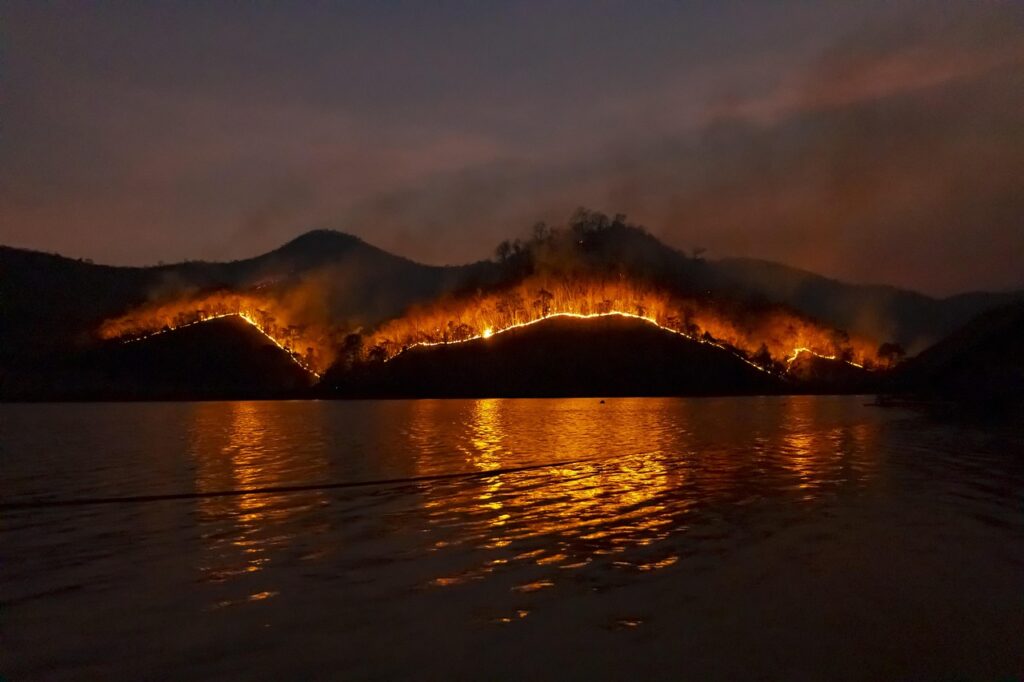

Wildfire Crisis Escalates in Western Utah
High winds and record-breaking temperatures are currently fueling a rapidly expanding wildfire in Utah, forcing emergency evacuations and stretching local firefighting resources to their breaking point. Simultaneously, on the other side of the country, federal aviation authorities are investigating a mid-air collision between a JetBlue passenger jet and a drone during the aircraft’s final approach to John F. Kennedy International Airport in New York.
The Growing Threat of Western Wildfires
The Utah wildfire, which began earlier this week, has been exacerbated by an unseasonable heatwave and sustained high winds across the Great Basin. According to the National Interagency Fire Center, these conditions have created a ‘perfect storm’ for fire growth, as dry vegetation acts as highly combustible fuel. Local authorities have implemented mandatory evacuation orders in several rural districts as smoke plumes continue to reduce air quality across the region.
Aviation Safety Concerns Amidst Drone Proliferation
In a separate but equally concerning incident, a JetBlue flight reported a physical collision with a drone while descending into JFK Airport on June 29. While the aircraft landed safely without injury to the passengers or crew, the incident has reignited national debates regarding the regulation of unmanned aerial systems (UAS) near major transportation hubs. Federal Aviation Administration (FAA) data indicates that reports of drone sightings by pilots have surged over the last decade, raising questions about current detection and enforcement capabilities.
Data and Expert Analysis
Meteorologists point to the persistent high-pressure systems sitting over the Western United States as the primary driver for the current wildfire intensity. Climate models suggest that these heat domes are becoming more frequent, leading to longer fire seasons that begin earlier in the spring and extend deep into the autumn months. The insurance industry has noted that the resulting property damage in the West is reaching record levels, prompting a reassessment of risk modeling for homeowners in fire-prone zones.
Regarding aviation safety, the Air Line Pilots Association has long advocated for more robust ‘geofencing’ technology—software that prevents drones from operating within restricted airspace near airports. Despite existing FAA rules that prohibit drone flight within five miles of an airport without explicit authorization, the accessibility of consumer-grade drones makes total compliance difficult to enforce. Aviation experts warn that a collision with a drone, which can weigh several pounds and contain lithium-ion batteries, poses a significant risk to an aircraft’s flight control surfaces and engines.
Future Implications for Public Safety
For residents in the American West, the immediate outlook remains precarious as fire crews struggle to gain containment in volatile weather conditions. The focus will likely shift toward improved early warning systems and more stringent land management practices to mitigate the impact of future blazes. Meanwhile, the aviation industry is expected to push for enhanced radar technology capable of identifying small drones, as well as stricter penalties for operators who violate restricted airspace.
Observers should watch for upcoming congressional hearings regarding the FAA’s reauthorization, which may include new provisions for drone identification and tracking. Additionally, as the summer heat intensifies, the intersection of climate volatility and public infrastructure security will likely remain a top priority for federal and state agencies throughout the remainder of the year.